Category Archives: Related Links
COMMISSIONER AO IEONG SEONG MEETS WITH DIRECTOR OF PUBLIC PROSECUTIONS OF HONG KONG, MS. YANG MEI KEI.
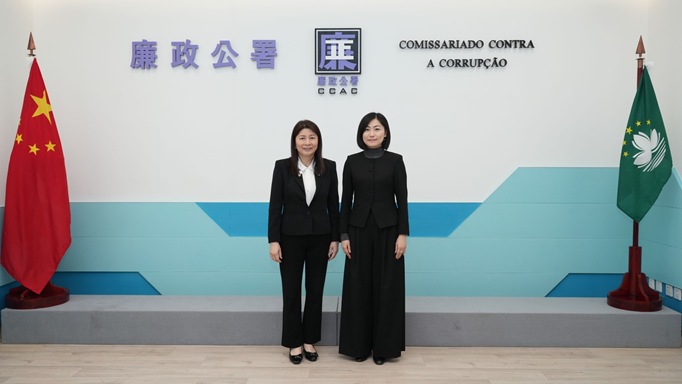
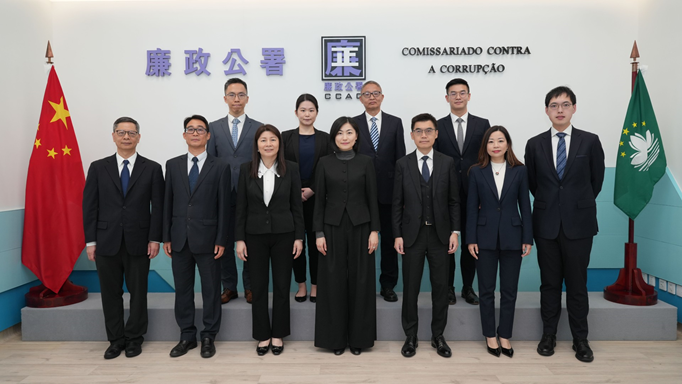
The Commissioner Against Corruption, Ao Ieong Seong, welcomed a delegation from the Department of Justice led by the Director of Public Prosecutions of the Hong Kong SAR, Yang Mei Kei, at the integrity education base of the Branch Office in Taipa of the CCAC this afternoon (11th February).
The delegation visited the facilities at the integrity education base and was given an introduction by the CCAC’s staff about the history and functions of the CCAC and its actions of community outreach and multi-media promotion.
According to Ao Ieong Seong, in addition to the fight against corruption, the CCAC also attaches great importance to promoting integrity messages to the society, especially focusing on developing honesty and uprightness in teenagers as well as primary and secondary school students, so that the seedlings of integrity may take root in the new generation of Macao.
Yang Mei Kei agreed that corruption fighting should start with prevention and integrity education. She also praised the facilities at the integrity education base and expected that both sides will maintain a close relationship with each other.
The delegates who paid the visit with Yang Mei Kei included the Deputy Director of Public Prosecutions, Chau Tin Hang, and the Acting Senior Public Prosecutor, Wan Pui Hin, among others. Meanwhile, the Deputy Commissioner cum Director of the Anti-Corruption Bureau of the CCAC, Wong Kim Fong, and the Chief of Cabinet of the Commissioner Against Corruption, Chan In Chio, attended the meeting. The delegation of Hong Kong was accompanied by the Chief of Office of the Prosecutor General, Wong Hio Nam, and the Prosecutor Coordinator of the Public Prosecutions Office, Lai U Hou.
OMBUDSMAN ANNOUNCES RESULTS OF DIRECT INVESTIGATION OPERATION INTO EFFECTIVENESS OF ADMINISTRATIVE SUPPORT PROVIDED FOR COMPLAINT HANDLING BY SECRETARIAT OF MEDICAL COUNCIL OF HONG KONG UNDER DEPARTMENT OF HEALTH AND DEPARTMENT OF HEALTH’S REGULATORY ROLE.

The Ombudsman, Mr. Jack Chan, today (5 February) announced the completion of a direct investigation operation into the effectiveness of administrative support provided for complaint handling by the Secretariat of the Medical Council of Hong Kong (“MCHK”) under the Department of Health (“DH”), and the DH’s regulatory role. The Office of The Ombudsman (“the Office”) made 21 improvement recommendations to the authorities.
Please click here to watch the live replay of our press conference.
It has come to the attention of the Office that in October 2025, some media reported on a 15-year delay by the MCHK in handling a complaint concerning an infant left with cerebral palsy, while the MCHK Secretariat (“the Secretariat”) was unable to explain the delay. The MCHK stayed the proceedings permanently on the grounds that too much time had passed for the medical practitioner under complaint to be given a fair hearing. The incident raised significant public concern from all sectors. Subsequently, further media reports emerged alleging that the MCHK had delayed handling complaints involving the death of a woman after childbirth, and the death of a patient after taking prescribed medication. All the above cases were outstanding for nearly 10 years or even longer. The public is therefore extremely concerned about any inadequacies in the mechanism and process of the MCHK and its Secretariat for handling complaints.
Mr. Chan said, “The Office shares the wide community concern about whether a proper and effective mechanism and process are in place for handling complaints against medical practitioners. We, therefore, initiated a direct investigation operation into DH. During our investigation into the Secretariat under the DH’s establishment, the Office also found systemic issues and inadequacies in the management and operation of the MCHK’s complaint-handling and monitoring mechanism. Given the Office’s duty to enhance the quality and standards of public administration, promote administrative fairness, take into account significant public interest and respond to community concerns, we also give a detailed account of relevant findings and observations in this report. We endeavour to promote and facilitate the Government’s review of any room for improvement in existing legislation, systems, administrative support and resource allocation, thereby ensuring that the MCHK can effectively fulfil its statutory functions on handling complaints against medical practitioners.”
The Office’s investigation found that the Secretariat provides the MCHK with administrative support, including that for investigations and disciplinary proceedings into public complaints against registered medical practitioners for professional misconduct. While Secretariat staff are all civil servants under the DH’s establishment, they are under the direct leadership of the MCHK and perform duties as Secretariat staff to support the MCHK in discharging its statutory functions under the Medical Registration Ordinance (“MRO”). The MCHK directly supervises and manages the handling and progress of complaints against registered medical practitioners, and is accountable to the public for its effectiveness.
As the Secretariat’s role is to provide secretarial and administrative support, the Office considers its functions to be solely providing the MCHK with support service and acting under the latter’s direction. The MCHK, as the organisation vested with this power by the MRO, certainly plays the most important role in handling such complaints. The powers conferred on the MCHK by the law naturally entail corresponding responsibilities, and should not leave an impression with the public on an unclear delineation of responsibilities between the MCHK and the Secretariat. From a macro perspective, the Government has an overall supervisory role over the healthcare sector.
Regarding the complaint processing time, the Government amended the MRO in 2018. One of the objectives was to clear the MCHK’s then existing backlog of over 700 cases within three years, followed by the completion of most inquiry cases within the two years thereafter. During the social unrest stemming from the riots in 2019 and 2020, the number of complaints received by the MCHK surged to 3,286 and 3,356 respectively, far exceeding the annual average of 576 complaints over the preceding five years. Between 2020 and 2025, the MCHK completed a total of 263 cases by inquiry, or an annual average of 44 cases. From receiving a complaint to completing the inquiry, more than 75 per cent were completed within five years, but a few cases took much longer, including 11 cases (4 per cent) which took as much as 10 to 15 years. Evidently, the MCHK’s efficiency in complaint handling fell short of the objectives set upon the legislative amendment. However, compared with the 132 cases (or an annual average of 21 cases) completed by inquiry in the five years (i.e. from 2013 to 2017) preceding the 2018 amendment to the MRO, the current number of cases handled by inquiry has more than doubled.
Pursuant to the MRO, the MCHK’s complaint handling involves independent quasi-judicial proceedings, during which it is essential to safeguard the legitimate rights and full participation of all parties, and ensure procedural justice. Some complaints may involve complex procedures. However, overall speaking, the current investigations and disciplinary proceedings into complaints against medical practitioners are excessively long and fall far short of public expectations. This situation has serious implications, and may cause unfairness, for both complainants and complainees. Cases involving serious professional misconduct, if it has really existed, may even pose a risk to patient safety. The Secretariat should make more effort to provide administrative support in managing and prioritising complaints, thereby facilitating the MCHK’s effective exercise of its quasi-judicial functions and powers under the MRO.
Between 2020 and 2025, the median processing time for each stage of completed inquiry cases was as follows: 10.4 months for the initial consideration stage by a Preliminary Investigation Committee (“PIC”), 14 months for the PIC deliberation stage and 11 months for the inquiry stage. Yet, certain cases took a significantly long time at the initial consideration, PIC deliberation and inquiry stages. For instance, one case took 102.1 months (or around 8.5 years) at the initial consideration stage by the PIC, probably with periods of inaction.
As of December 2025, the MCHK had a backlog of 895 complaint cases, of which, most were outstanding for less than two years from the date of receiving the complaint (755 cases or 84 per cent). However, a small fraction of cases were outstanding for extremely long periods, including a case which is now at the pre-PIC stage seven years after being received by the MCHK.
The Office is pleased to note that since the 2018 amendment to the MRO, the number of cases completed by the MCHK each year has increased significantly, and the time taken for inquiries has been shortened. The Office also recognises the surge in cases stemming from past circumstances, and notes that the MCHK undertook a review in January 2025 with measures implemented to improve the efficiency of complaint handling, such as assigning senior officers to co-ordinate and monitor the progress of cases, with a dual-track mechanism established for monitoring; enhancing the case tracking functionality of the complaints information system, and comprehensively reviewing and updating all ongoing cases; and regularly compiling monthly progress reports for review and follow-up. These measures aim to enhance overall operational efficiency through strengthened monitoring of complaint cases, optimising workload distribution and workflows, plug the loopholes identified and resolve bottlenecks. The Office commends the MCHK for proactively undertaking a review and implementing measures with positive results.
Nevertheless, the Office considers that the statistics cited above reflect that the MCHK’s progress in complaint handling is still too slow, resulting in a persistent backlog of cases. There remains an urgent need to critically review and thoroughly improve the complaint-handling process.
The Office considers that the Government should urge the Secretariat to use its best efforts to support the MCHK’s review of complaint-handling procedures, substantially strengthen the monitoring of the progress of cases, effectively expedite the handling of complaint cases, and clear the backlog as soon as possible.
The Office also found that DH conducts the performance appraisals of Secretariat staff, all of whom are DH staff, without consulting the MCHK. This indicates a lack of communication between DH and the MCHK. Moreover, it is questionable how DH could assess the performance of Secretariat staff without consulting the MCHK over the years. The Office recommends that DH establish a communication mechanism with the MCHK to assess the performance of Secretariat staff, and draw up objective criteria as the basis for the appraisals of Secretariat staff.
The Office also identified several other improvement areas required of the MCHK, including ascertaining with complainants whether a case also involves circumstances requiring referral to the coroner, considering how to make effective use of information from inquests, and reaching out to complainants not required to testify at disciplinary inquiries to ascertain whether they need simultaneous interpretation service during the proceedings.
Mr. Chan said, “The Office recognises that the MCHK’s decision to refer cases to an inquiry panel for inquiry is based on relevant legislation. On the other hand, the public may not be fully aware of the MCHK’s complaint handling procedures. Statistically, the fact that most cases are not referred to an inquiry panel can raise public doubt. The Office considers that the Government should remind the MCHK to enhance transparency in complaint handling, and explain to the public why some complaints are not pursued or substantiated. This will enable the public to understand the MCHK’s regulatory role and responsibilities, as well as the substance and purpose of its complaint handling mechanism, thereby upholding society’s confidence in the regulatory system over the healthcare sector in Hong Kong.
“The Office urges the MCHK to continue striving for excellence, diligently fulfilling its mission of ensuring justice, maintaining professionalism and protecting the public, and proving itself worthy of the trust of complainants, complainees, society and the public.”
The Office’s major recommendations for improvement to the authorities include:
- Encouraging the MCHK to draw on the principles of good public administration, including efficiency, fairness, reasonable and proper conduct, having a people-oriented mindset and openness. It should promote awareness within the MCHK and request the sector to understand the pursuit of good public administration and public expectations, and expedite the handling of public complaints against medical practitioners for alleged professional misconduct;
- Urging the Secretariat to support the MCHK’s formulation of administrative guidelines to ensure the effective operation of its complaint-handling process. For instance, it should consider setting and publishing reasonable and effective target timelines for each key stage of complaint handling, thereby seriously discharging its obligations towards complainants and complainees;
- Urging the MCHK to critically explore streamlining procedures, such as adopting the facts established by the court, or inviting experts who have testified at an inquest to serve as expert witnesses in the MCHK’s disciplinary inquiry to save time for remitting cases back to the PIC due to new expert opinions;
- Urging the MCHK to perform diligently its substantive supervisory duties over the Secretariat, including requiring the Secretariat to fully support the MCHK’s work with clear reporting on the progress of the case and backlog status;
- Urging the MCHK to step up the management and performance supervision of Secretariat staff;
- Explicitly stipulating the MCHK’s powers and responsibilities and ensuring that the MCHK is accountable to society and the public;
- To strike a balance between professional autonomy on one hand, and the principles of fairness, openness and social accountability and public expectations on the other, and in light of overseas experience, the authorities should consider properly increasing the proportion of lay members in the MCHK to widely incorporate knowledge, experience and views from all sectors of society, thereby comprehensively optimising the governance system and structure;
- Enhancing the legislation to strengthen the MCHK’s complaint review mechanism, including allowing complainants to request a review by the MCHK directly, thereby safeguarding the basic rights of complainants and complainees, and strengthening public confidence in the mechanism for handling complaints;
- Without compromising the fairness, urging the MCHK to provide complainants and complainees with regular updates on case progress as far as possible;
- DH should consult the MCHK when conducting performance appraisals for Secretariat staff;
- DH should adopt and consider objective criteria, such as case processing efficiency and backlog status, for the performance appraisals of Secretariat staff; and
- Exploring the feasibility of resolving medical disputes that do not involve professional conduct of medical practitioners by mediation.
All 21 recommendations made are accepted by the authorities.
The full investigation report is available on the website of the Office of The Ombudsman for public information.
TANZANIAN TAX OMBUDSMAN DELEGATION VISITS WAFAQI MOHTASIB’S OFFICE.
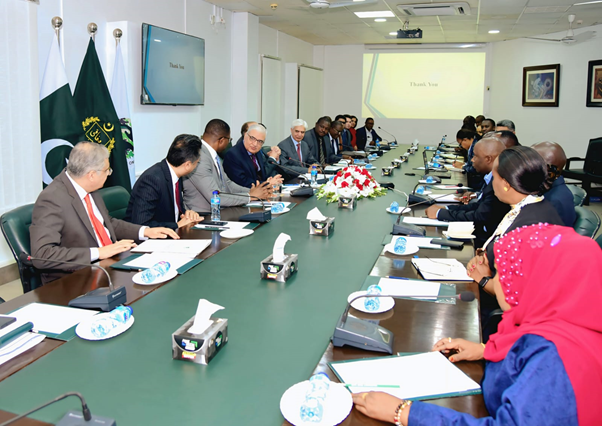
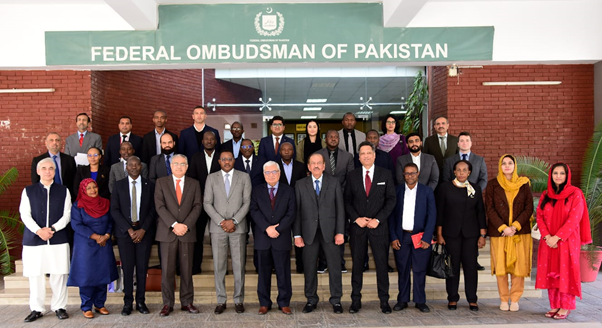
- Tanzanian Tax Ombudsman Delegation visits Wafaqi Mohtasib’s Office,
- Receives briefing on Wafaqi Mohtasib’s role and functions,
- Mohtasib emphasizes need for closer professional cooperation.
Islamabad: 18 February 2026 – Owing to persistent efforts for speedy resolution of public complaints, the Institution of Wafaqi Mohtasib has emerged as the poor man’s court, enjoying the trust and confidence of the general public.
This was stated by the Wafaqi Mohtasib (Federal Ombudsman), Mr. Ejaz Ahmad Qureshi while talking to a 17-member delegation from the Tax Ombudsman Service of Tanzania (TOST), headed by Mr. Erasmus Vincent Mtui, which called on him at the Wafaqi Mohtasib Secretariat here today.
He said that it has processed and decided a record number of 261,101 complaints during the outgoing year 2025, as against 223,198 cases decided in 2024. This increase in the number of complaints decided has been attributed to initiatives like the Khuli Katcheries (Open Courts), Outreach Complaint Resolution (OCR) mechanism, the Informal Resolution of Disputes (IRD) and Inspection Visits of government agencies and departments. It has achieved an unprecedented implementation rate of 96.8% during the year, he maintained.
Mr. Qureshi further informed that with a view to enhancing outreach and accessibility, a number of new Regional Offices and Complaint Collection Centres (CCC) have been established during the last two years mostly in the remote and far off regions of the country. Now the institution has presence in 28 cities across the country, which is instrumental in dispensing administrative justice virtually at the doorsteps of the people. He particularly called for exchange of experiences and best practices between the two institutions in areas of public sector accountability and institutional capacity building.
Later, the delegation was given a detailed presentation on the Federal Ombudsman’s mandate, operational modalities, role and functions, particularly the mechanism for receipt and disposal of public complaints. It was followed by a lively Question/Answer session.
The leader of the Tanzanian delegation commended the outstanding performance of the Wafaqi Mohtasib’s Institution, saying that it is rendering very useful service to the people. He emphasised the need to establish closer professional linkages between the Wafaqi Mohtasib’s Institution and Tax Ombudsman of Tanzania to their mutual advantage.
The delegation also visited the Asian Ombudsman Association (AOA)’s Secretariat located in the Wafaqi Mohtasib’s Office premises, wherein it was briefed on its history and evolution alongwith Pakistan’s pioneering role in the establishment of the Association. It was informed that the country currently holds its Presidentship and playing an active role in carrying out its mandated functions and activities.
PUBLIC DEFENDER MEETS SCHOOL CHILDREN.
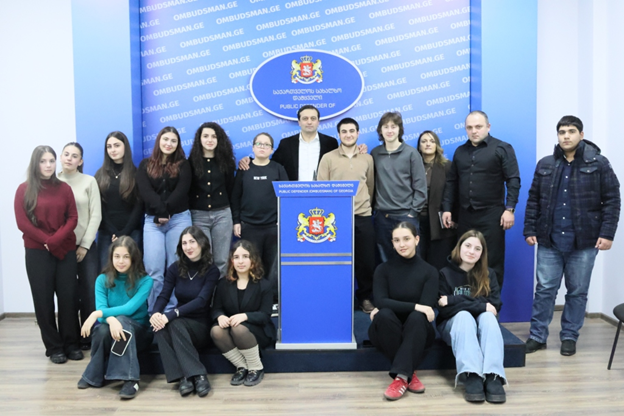
On January 23, 2026, the Public Defender of Georgia hosted students of Tbilisi Gogita Kiknadze Public School No. 182.
Levan Ioseliani introduced the students to the human rights protection system, the mandate of the Public Defender’s Office and the main areas of activity. He spoke in detail about the importance of knowledge of human rights in the everyday life of young people.
The students showed interest in specific aspects of the Office’s activities, including, in particular, the right to freedom of expression and education. In addition, their questions concerned the steps taken by the Public Defender in relation to legislative amendments and in general in the direction of protecting children’s rights.
The students had the opportunity to personally receive answers to issues of interest to them from the Public Defender.
The meeting took place on January 24 – International Day of Education.
TIMOR-LESTE HOSTS KEY ASEAN WORKSHOP ON MIGRATION AND HUMAN RIGHTS.
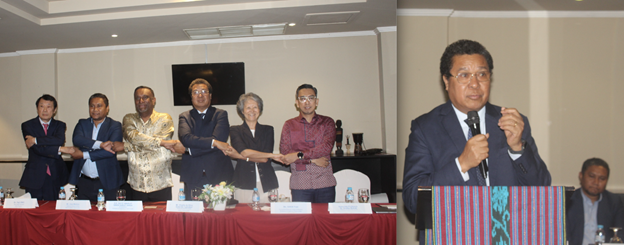
Dili, 27 January 2026– The Ombudsman for Human Rights and Justice, Virgílio da Silva Guterres “Lamukan”, delivered opening remarks at a major three-day workshop on International Migration and Human Rights this week. The event, held from January 27-29, 2026, at Novo Turismo in Dili, was organized by the Ministry of Foreign Affairs and Cooperation in coordination with the Japan International Cooperation Agency (JICA) and Universiti Kebangsaan Malaysia (UKM). The workshop marks a significant step in strengthening Timor-Leste’s engagement on regional issues following its accession as a full ASEAN member in October 2025.
In his address, the Ombudsman framed migration as a fundamental “human story” of hope and dignity, while also highlighting Timor-Leste’s specific realities as a country of origin, transit, and destination. He stressed that migrants are rights-holders and states are duty-bearers, calling for policies cantered on human rights and enhanced regional cooperation within ASEAN. The PDHJ was prominently involved, with Deputy Ombudsman for Good Governance, Rigoberto Monteiro, leading a session on protection mechanisms for migrant workers from the perspectives of the state, ASEAN, and National Human Rights Institutions.
The comprehensive agenda, led by resource person Associate Professor Dr. Andika Wahab of UKM, covered critical themes including an overview of ASEAN’s migration landscape, labour migration, forced migration, trafficking in persons, and the intersection of migration with development. The workshop aimed to translate knowledge into concrete policy reforms and strengthen institutional capacity, particularly for the PDHJ, which regularly handles complaints related to migrant worker rights violations and recruitment malpractices.
The workshop brought together 22 nominated PDHJ staff members, government officials, diplomats, and development partners for interactive discussions. It served as a platform to enhance coordination among national institutions and align Timor-Leste’s migration governance with ASEAN frameworks and international human rights standards, ensuring the protection of migrants’ rights as both a legal obligation and a moral imperative for the nation.
COOPERATION ESTABLISHED BETWEEN THE OMBUDSMEN OF UZBEKISTAN AND MALAYSIA.
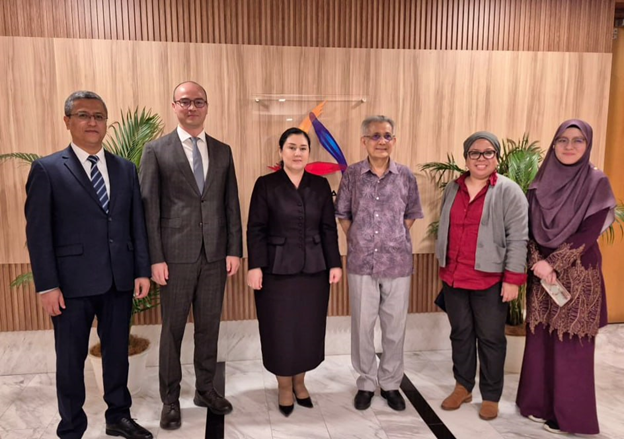
On 21 January of this year, the Commissioner of Oliy Majlis of the Republic of Uzbekistan for Human Rights (Ombudsmen), Feruza Eshmatova, held a meeting with the Chairperson of the Human Rights Commission of Malaysia (SUHAKAM), Dato’ Seri Mohd Hishamudin Md Yunus.
During the meeting, the parties exchanged experience on issues related to mandates in the field of protecting human rights and freedoms, the activities of national institutions, practices of handling complaints, as well as cooperation with parliaments.
At the conclusion of the meeting, a “Roadmap” aimed at further strengthening bilateral cooperation in the field of human rights, exchanging experience, and implementing joint initiatives was approved.
For information: The Human Rights Commission of Malaysia (SUHAKAM) was established under the “Human Rights Commission of Malaysia Act” adopted by Parliament in 1999 and has been operating since 2000. Today, the Malaysian Ombudsman is accredited with “A” status by the Global Alliance of National Human Rights Institutions.
On the same day, a meeting was organized at the Embassy of Uzbekistan in Malaysia with compatriots living and studying in Malaysia. During the meeting, an open and active dialogue was held with citizens, and their appeals and opinions were heard.
240 CITIZENS RECEIVE PENDING DUES OF RS230 MILLION AFTER INTERVENTION OF HONOURABLE OMBUDSMAN PUNJAB.

The Office of the Ombudsman Punjab has achieved another major milestone in resolving pending financial issues of citizens, ensuring the disbursement of Rs 230 million to 240 citizens across the province through effective, timely and proactive intervention.
The recovered amounts pertained to group insurance, family pension, General Provident (GP) Fund, financial relief as well as marriage, farewell and death grants.
The affected citizens had approached the Honourable Ombudsman Punjab after repeated refusals or delays by the departments concerned in releasing their pending dues. Taking prompt notice of the complaints, the Honourable Ombudsman Punjab issued directives to the relevant departments, leading to successful recoveries and payments.
As a result, Rs 191.832 million was paid to 110 citizens as arrears, Rs 9.950 million to 29 citizens as family pension, Rs 1.935 million to seven citizens as death grant, Rs 14.5 million to 57 citizens as marriage grant, Rs 390,000 million to eight citizens as financial relief, Rs 10.039 million to 21 citizens as GP Fund, Rs 575,000 to four citizens as group insurance, and Rs 825,000 to four citizens as farewell grant.
Reaffirming its commitment, the Office of the Ombudsman Punjab stated that it would continue its uninterrupted efforts to safeguard citizens’ rights and ensure the swift and hassle-free resolution of public grievances, in line with its mandate to provide prompt justice.
THE OMBUDSMAN RECEIVES THE DELEGATION HEADED BY THE PRESIDENT OF THE UNION OF MEDIATORS OF THE TURKIC WORLD.
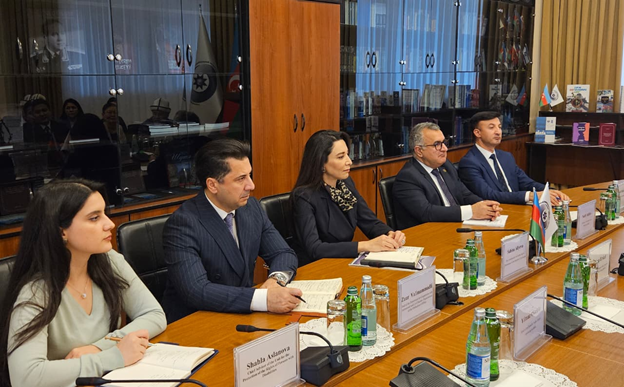
Ms. Sabina Aliyeva, the Commissioner for Human Rights (Ombudsman), received Mr. Yakup Erikel, the President of the Union of Mediators of the Turkic World. Mr. Orozbek Sydykov, Deputy Minister of Justice of the Kyrgyz Republic, and mediators from Kyrgyzstan attended the meeting.
During the meeting, the Ombudsman emphasized that the Republic of Azerbaijan attaches great importance to cooperation with Turkic states and that consistent measures are being implemented to further develop existing relations.
Sabina Aliyeva noted that the Association of Ombudsmen and National Human Rights Institutions of Turkic States (TÜRKOMB) was established with the aim of further strengthening unity and cooperation among Turkic states in the field of protection of human rights and freedoms.
The Ombudsman spoke about the implementation of mediation in Azerbaijan and the legal reforms carried out in this area. She noted that, in order to review applications related to mediation activities, improve legislation, and organize awareness-raising efforts, a close cooperation exists between the Ombudsman Office and the Mediation Council.
Yakup Erikel, President of the Turkic World Mediators Union, who led the delegation, expressed his gratitude to Ombudsman Sabina Aliyeva for her warm reception.
A mutual exchange of views on issues of common interest also took place during the meeting.
OMBUDSMAN PUNJAB OFFICE ACTIVELY PARTICIPATES IN WEBINAR ON ISO 9001:2015 HELD UNDER AFRICAN OMBUDSMAN RESEARCH CENTRE.
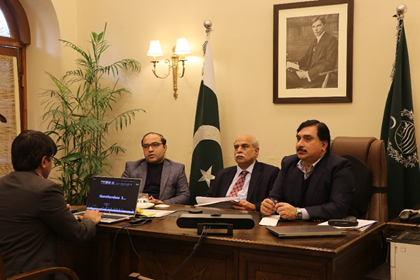
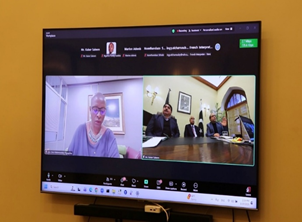
The African Ombudsman Research Centre (AORC) organized a webinar on 20th January 2026 titled “Implementing ISO 9001:2015: Strengthening Quality Management and Accountability in African Ombudsman Institutions”. The Office of the Ombudsman Punjab (Pakistan) took part as a featured contributor, sharing practical experience and institutional insights on the application of the ISO 9001:2015 Quality Management System (QMS) within an ombudsman framework.
Secretary, Ombudsman Punjab, Kaiser Saleem highlighted the meaning and importance of ISO 9001:2015 in improving institutional performance and enhancing the quality of public service delivery.
Advisor (Research) Ahmad Yar Khan elaborated on the effective role of ISO 9001:2015 QMS in strengthening accountability mechanisms and improving service quality, while Advisor Samiullah gave a comprehensive briefing on the practical steps involved in the implementation of ISO 9001:2015 QMS in the Ombudsman Office.
Ayesha Hamid, Ombudsman Punjab, IOI First Vice President and Director Asian Region IOI concluded the webinar by announcing an international internship opportunity at the Office of the Ombudsman Punjab, offering practical exposure to ISO 9001:2015 implementation and the OPMIS framework.
COMPREHENSIVE INSPECTION OF HIRING PRACTICES AT PUBLIC SERVICE-RELATED ORGANIZATIONS UNCOVERED 832 CASES OF FAIR HIRING VIOLATIONS.
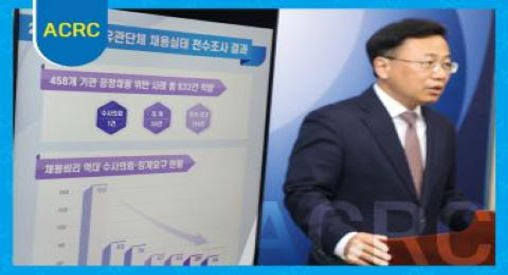
– ACRC announced results from an inspection of 931 public service-related organizations
– 34 hiring corruption cases detected; implicated persons referred for investigation and disciplinary action requested
The Anti-Corruption and Civil Rights Commission (ACRC, Chairperson Ryu Chul Whan) announced the results of a comprehensive inspection of hiring practices, conducted from February to October this year with central ministries including the Ministry of Economy and Finance, local governments, and offices of education, covering 931 public service-related organizations.
Of a total 1,423 organizations, 492 were excluded from this year’s inspection because they had no hiring in the previous year or had no hiring corruption in the past three years.
The inspection examined whether new hires conducted by public service-related organizations in 2024 were carried out appropriately in accordance with relevant laws and guidelines, through parallel investigations by each organization’s supervisory body and the ACRC.
The inspection revealed 832 cases of violations of fair-hiring regulations across 458 organizations, of which 34 constituted hiring corruption subject to referral for investigation or disciplinary action. This is an 81.3% decrease from 2019, when there were 182 hiring-corruption cases, showing a steady yearly decline.
| Category | 2019 | 2020 | 2021 | 2022 | 2023 | 2024 | 2025 | |
| Hiring irregularities | Referrals for investigation | 36 | 9 | 5 | 4 | 2 | – | 1 |
| Disciplinary actions | 146 | 74 | 71 | 43 | 42 | 39 | 33 | |
| Negligence | Cautions/Warnings | 1,160 | 862 | 799 | 774 | 823 | 822 | 798 |
In the 34 hiring-irregularity cases uncovered in this inspection, the most common types were in following order: arbitrary selection of successful candidates (8 cases), arbitrary conduct of screening (8 cases), and inadequate verification of eligibility and disqualifying factors (5 cases)
※ Examples of the most frequently detected hiring irregularities:
① Arbitrary selection of successful candidates: Upon the establishment and announcement of the hiring plan, it was decided that successful candidates would be selected in order of highest total interview scores, however, during the actual interview process, the criteria for selecting successful candidates were arbitrarily changed, and candidates were selected in a manner that did not even meet the arbitrarily changed criteria.”
② Arbitrary conduct of screening: Despite knowing that the internal applicant did not meet the hiring qualification standards under the personnel regulations, the applicant was arbitrarily selected.
③ Inadequate verification of eligibility/disqualifications: the decision to hire the prospective employee was made without conducting the required background check for disqualifying factors.
Among the detected cases, one particularly egregious violation-illegal interference in hiring that severely undermined fairness-was referred for criminal investigation. The remaining 33 cases, which involved serious negligence that could affect candidate rankings, will be subject to disciplinary action.
< Case Referred for Investigation >
| ◦ In order to bring Applicant B’s screening score up to the passing threshold, HR team leader A gave a new scorecard to Evaluator C and requested a re-evaluation. C re-scored the applicant to meet the passing threshold. A then shredded the original scorecard and submitted the new one received from C.
* However, upon receiving a protest from an audit staff member, the scores were restored to those on the original scorecard. |
Additionally, 798 instances of negligence subject to “cautions or warnings” in the hiring process were identified.
The ACRC will continuously monitor implementation to ensure proper dispositions for 45 individuals involved in the 34 hiring-corruption cases and remedial measures for the 12 victims.
Lee Myung-soon, ACRC Vice Chairperson, said, “Thanks to consistent, sustained government efforts to eradicate hiring corruption in the public sector and foster a culture of fair hiring, it’s encouraging that such corruption is decreasing. However, we cannot yet claim that the public fully feels these results.”
He added, “Going forward, the ACRC will continue to lay the groundwork to ensure that future generations, who will carry our society forward, can receive fair evaluations in the hiring process, which is the first gateway to perform economic activity.”