UN-RECOGNIZED K-ANTI-CORRUPTION SYSTEMS TO BE SHARED DIRECTLY WITH KAZAKHSTAN.
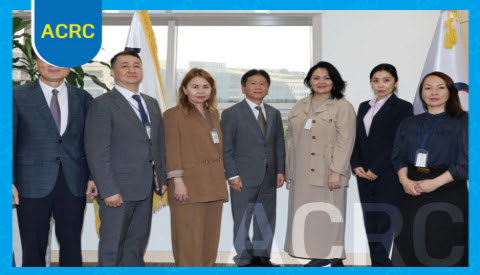
– The ACRC will conduct a three-day anti-corruption training program in Kazakhstan from November 25 to 27, 2025, to disseminate Korea’s flagship anti-corruption systems, including the Comprehensive Integrity Assessment of Public Institutions (CIA) and the whistleblower protection system.
(25, November. 2025, ACRC)
The Anti-Corruption and Civil Rights Commission (ACRC, Chairperson Ryu Chul Whan) announced that it will share Korea’s flagship anti-corruption systems the Comprehensive Integrity Assessment of Public Institutions (CIA) and the whistleblower protection system with Kazakhstan directly.
From November 25 to 27, 2025, the Anti-Corruption Training Institute (ACTI) under the ACRC visited Astana, the capital of Kazakhstan, and Almaty, one of the country’s major cities, and ran a training course on institutional improvements in corruption prevention for around 100 participants. Participants included officials from the Agency of the Republic of Kazakhstan for Civil Service Affairs and the Anti-Corruption Service of the National Security Committee, as well as other anti-corruption-related agencies, along with compliance officers from public institutions and public enterprises.
This program was carried out as part of the ACRC’s official development assistance (ODA) projects. As a follow-up to the invitation training program hosted by the Government of Kazakhstan in June 2025, it was designed to support the effective introduction of Korea’s anti-corruption systems in Kazakhstan, including the Comprehensive Integrity Assessment of Public Institutions (CIA).
The Republic of Korea is the only country in the world to have achieved both democracy and economic development in tandem. It is regarded as a model country, as reflected in its steady upward trend in Transparency International’s annual Corruption Perceptions Index (CPI). Accordingly, requests for training from countries seeking to learn Korea’s anti-corruption policies and implementation experience have continued to increase.
In particular, the Comprehensive Integrity Assessment of Public Institutions (CIA) first introduced by the Republic of Korea in 2002 as the world’s first system of its kind won the 1st prize in the category of “Preventing and Combating Corruption in the Public Service” at the 2012 United Nations Public Service Awards (UNPSA), and has been shared with about ten countries, including Indonesia, Viet Nam, Thailand, Uzbekistan, and Algeria.
In addition, Korea’s protection system for corruption reporters and public interest whistleblowers has been internationally recognized for its excellence, including being featured in the United Nations Office on Drugs and Crime (UNODC)’s 2015 “Resource Guide on Good Practices in the Protection of Reporting Persons.”
Kim Se-shin, Director of the ACRC’s Anti-Corruption Training Institute, said, “Given that Kazakhstan is the Republic of Korea’s largest trading partner among Central Asian countries and a key partner for cooperation in Central Asia, we will further expand cooperation and exchanges in the field of anti-corruption.”
He added, “We will continue to disseminate K-anti-corruption policies throughout the international community, take the lead in advancing democracy worldwide, and further enhance the Republic of Korea’s international standing.”