Category Archives: Related Links
DEPUTIES ELECT THE COMMISSIONER FOR HUMAN RIGHTS.
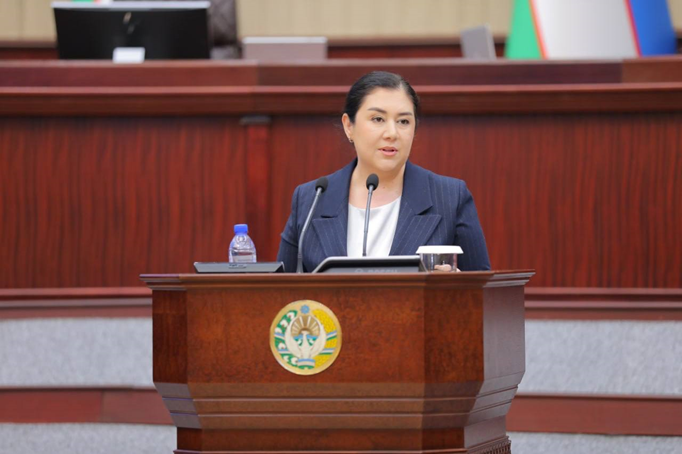
At a regular plenary session of the Legislative Chamber of the Oliy Majlis, deputies considered the issue of electing the Authorized Person of the Oliy Majlis of the Republic of Uzbekistan for Human Rights (Ombudsman).
In accordance with Clause 16 of Article 93 of the Constitution of the Republic of Uzbekistan and Article 6 of the Law “On the Authorized Person of the Oliy Majlis of the Republic of Uzbekistan for Human Rights (Ombudsman),” the candidacy of Feruza Eshmatova was recommended for the position of Commissioner for Human Rights.
Following a question-and-answer session and subsequent discussions, the deputies supported the candidacy of Feruza Eshmatova and elected her as the Authorized Person of the Oliy Majlis of the Republic of Uzbekistan for Human Rights (Ombudsman).
WORK OF SOCIAL ASSISTANTS: RESULTS OF THE WEEK IN VARIOUS DISTRICTS OF THE REPUBLIC.
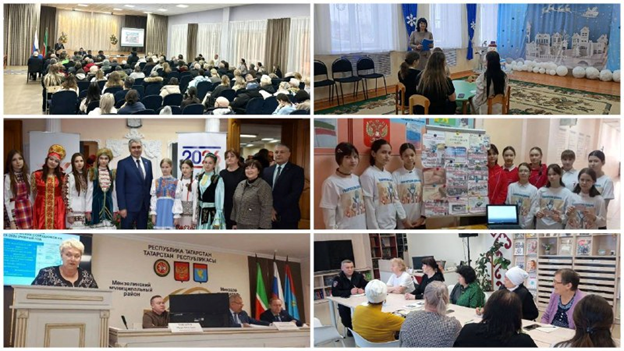
Last week Social Assistants worked actively in various districts of the Republic:
– In the Aktanyshsky district worked within the framework of psychological, medical and pedagogical commission.
– In particular, I would like to mention the extensive and diverse work carried out in the Baltasim region. Our social assistant participated in the meeting of the housing commission, where three citizens’ appeals were considered. On the Day of Full Liberation of Leningrad from the fascist blockade, an action was held in memory of «Blockaded bread» and evening-requiem «Paths of Memory», aimed at forming in schoolchildren respect for the prowess of the older generation and awareness of the value of human life.
– In the Pestrecchi district held classes of the School of Legal Knowledge on the topics «Fraud today» and «Health – our main wealth». The lecturers were the head of the investigative department of the Ministry of Internal Affairs of Russia for the Pecherechin district, the head of the Sberbank office and the head of the GAUS polyclinic «Pestrechinsk central district hospital».
– In the Menzelinskiy district, an extended session of the district commission for juvenile affairs presented a report on work to prevent offenses among schoolchildren.
– Work on receiving citizens continued. In the Arsk district there was a joint reception with the head of the district, as well as a reception of citizens with the district prosecutor. In the districts of Pestrecan and Zelenodolsk, receptions were held jointly with the heads of the executive committees of the districts.
– Citizens’ gatherings continue actively – this week our public assistants from the Menzelinsky, Bavlinsky and Lenogorsk districts took part in them.
The work of Social Assistants in the districts of the republic continues!
CHIEF OMBUDSMAN OF TÜRKIYE MR. MEHMET AKARCA PRESENTED THE “2025 ANNUAL REPORT” OF THE OMBUDSMAN INSTITUTION TO THE JOINT PARLIAMENTARY COMMITTEE.
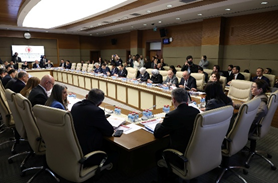
Chief Ombudsman of Türkiye Mr. Mehmet Akarca presented the “2025 Annual Report” of the Ombudsman Institution to the Joint Committee, composed of the members of the Petition Committee and the Human Rights Inquiry Committee of the Grand National Assembly of Türkiye (GNAT), on 10 February 2026. During his presentation, Mr. Akarca shared information regarding the work of the Institution in 2025, including data on the number of complaints, files, decisions, and amicable settlements, and noted that the Ombudsman Institution continues to play a guiding role in ensuring that public administrations act in accordance with the principles of the rule of law, human rights, and good administration.
THE OMBUDSMAN HAS PRESENTED THE 2025 ANNUAL REPORT.

According to Article 14 of the Constitutional Law of Azerbaijan “On the Ombudsman of Azerbaijan,” the 2025 annual report of the Ombudsman on the protection of human rights in the Republic of Azerbaijan has been prepared.
No later than two months after the end of the current year, the Ombudsman submits the annual report to the President of the Republic of Azerbaijan and presents it to the Parliament. The annual report is also submitted to the Cabinet of Ministers, the Constitutional Court, the Supreme Court, and the Prosecutor General.
The Ombudsman’s annual report was submitted to the President of the Republic of Azerbaijan on 24 February 2026 in accordance with the procedure established by the Constitutional Law and was forwarded to the relevant state authorities.
The 2025 report reflects the activities of the Ombudsman in restoring human rights and freedoms stated in the Constitution of Azerbaijan and in international treaties binding on the country, which were violated by state authorities, municipalities, other institutions, and officials, along with activities to prevent human rights violations, the results of legal awareness-raising and scientific-analytical work, cooperation with the public and civil society organizations, and international relations, as well as recommendations and suggestions to ensure more effective protection of human and civil rights and freedoms.
The Parliament of Azerbaijan will hear the report before making it public.
THE EXPERT COUNCIL, TOOK STOCK OF THE WORK OF THE INSTITUTE OF THE HUMAN RIGHTS COMMISSIONER IN THE REPUBLIC OF TATARSTAN FOR 2025.

The past year has been a landmark as the Institute of the Human Rights Commissioner celebrated its 25th anniversary. In 2025, the Office of the Commissioner received 8,401 applications from citizens. The most pressing issues are the protection of the conscripts, housing and communal services, social security, convicted persons’ rights and the right to housing.
During the year, we held 52 personal receptions, during which 523 people contacted us, carried out 411 verification activities and also organized 8 telephone hotlines, through which 387 calls were received.
In our work, we have paid special attention to the protection of the rights of soldiers and conscripts, support for SFOR members and their families, social security issues, housing rights, as well as the protection of the rights of convicts. Based on the results of this work, a draft annual report has been prepared and proposals have been formulated which will form the basis of our activities in 2026.
INAUGURATION OF RENOVATED REGIONAL OFFICE IN SHEIKHUPURA.
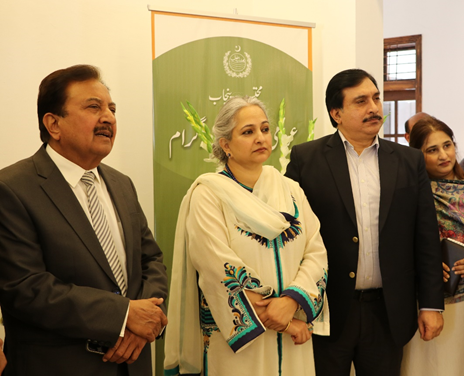
12 February 2026, Sheikhupura: The Office of the Ombudsman Punjab conducted an inauguration ceremony of the renovated Regional Office Sheikhupura. The inauguration was carried out by Ombudsman Punjab, Ms. Ayesha Hamid, accompanied by Mr. Kaiser Saleem, Secretary, and Advisor Sheikhupura Regional Office, Malik Muhammad Aslam.
The upgraded facility has been designed to provide a more accessible, efficient, and transparent platform for the redressal of public complaints against government departments, ensuring a more conducive environment for citizens seeking administrative justice.
ACRC HAS BEEN ALLOCATED A BUDGET OF KRW 111.7B FOR 2026 AND WILL FOCUS ON ENHANCING THE CONVENIENCE OF THE PEOPLE AND DISSEMINATING THE CULTURE OF INTEGRITY.

– Enhance the convenience of the people by integrating non-emergency consultation calls to 110, and expanding the platform of people’s rights and interests with the artificial intelligence
– Strengthen the petition handling process by establishing the “Conflict Mediation Consultation Council” and managing “Civil Consultation for Unusual Petitions”
– Work for the dissemination of anti-corruption culture by building an integrity education curriculum in universities
The 2026 budget of the Anti-Corruption and Civil Rights Commission (ACRC, Acting Chairperson Han Sam Suk) has been confirmed as KRW 111.7B, up 6.6B from last year’s 105.1B.
The ACRC has allocated the budget under the three strategic goals for President Lee’s administrative vision “People-centered country, where everyone is happy,” which are: resolve people’s grievances by proactive and practical response; institutional improvement based on the people’s voice, and resolve grievances through administrative appeal; and update anti-corruption laws and regulations and disseminate the culture of integrity.
Key items for the budget of the Commission are as follows:
First, allocate a budget for integrating non-emergency consultation calls to 100 to address the people’s inconvenience. The ACRC will gradually expand the integration and connection service to 697 institutions from today’s 150, so people can be relayed to the most adequate consultation number once they call 100. At the same time, the representative numbers of central administration agencies will be also streamlined to 100 for easier and more convenient consultation.
※ Integration of non-emergency consultation calls to 110: newly allocate KRW 4.93B (2026)
Second, work for the platform for people’s rights and interests to equip with the AI technology for easier petition filing and efficient petition handling. Under this goal, the present e-People platform will adopt AI technology to provide real-time conversational petition services* from 2027, and support agile petition handling by prioritizing safety and disaster-related emergency petitions and automatically merging repeated petitions.
* AI model dedicated for petitions which communicates with the petitioner like a chatbot
※ Communication system, including establishment of AI-based platform: KRW 3.35B (2025) → 3.9B (2026, up by 16.4%)
Third, actively address collective complaints and unusual complaints which cause massive amounts of social costs by increasing the budget for the collective complaints handling system for the overall government such as building the “Conflict Mediation Consultation Council” and operating “Civil Consultation for Unusual Complaints.” Moreover, support for the civil grievance handling commissions located in local governments will be strengthened to vitalize local ombudsmen to focus the commission’s capacity for the thorough relief of people’s rights and interests.
※ Intestigative activity for grievance petitions: KRW 1.6B (2025) → 1.9B (2026, up by 18.7%)
Fourth, strengthen integrity education for the younger generation to firmly settle the culture of integrity in society as a whole. The Commission will make integrity education mandatory so that the younger generation – students in primary, secondary, and universities – can naturally learn integrity and a sense of ethics from their early lifespan. At the same time, the ACRC will expand customized integrity education based on age group, including “on-site classroom for integrity experience” and “special classes for integrity courses in universities.”
※ Disseminate the culture of integrity including integrity education expansion: KRW 2.41B (2025) → 2.97B (2026, up by 23.1%)
Acting Chairperson Han of the ACRC said “The ACRC will prioritize addressing people’s grievances to continuously realize ‘people-centered country, a nation where everyone is happy’ and further endeavor for the Corruption Perceptions Index to be placed in the solid 20s.”
CCAC RELEASES INQUIRY FINDINGS ON THE CONSTRUCTION PROJECT ON LAND PLOT 134 OF ZAPE.
The CCAC completed the inquiry into the construction project located at Avenida do Dr. Rodrigo Rodrigues No. 465-513 (i.e. “Land Plot 134 of ZAPE”). The CCAC verified that the Public Administration had already suggested the maximum building height on the land plot be lowered from 90 metres in the original plan to 60 metres in response to the intervention of the United Nations Educational, Scientific and Cultural Organization (UNESCO) World Heritage Centre. Currently, the plan and the building proposal of the land plot and so forth can only proceed upon resolution by the World Heritage Centre in the next phase. Additionally, the public works departments’ use of the relevant administrative guideline in expressing the maximum permissible plot ratio and coverage ratio and so on in processing the original draft planning proposal does not constitute administrative illegality or irregularity.
According to a complaint from an association received by the CCAC, the draft planning proposal of Land Plot 134 of ZAPE, published in 2020, which proposed the construction of 90-metre high buildings aroused public concern as it might affect the view of the world heritage, the Guia Lighthouse. Moreover, it claimed that the plot ratio and coverage ratio had not been specified in the draft, which were allegedly against the Urban Planning Law.
Following its analysis, the CCAC pointed out that the public works departments had, in accordance with the provisions of the Urban Planning Law, stipulated that the project should comply with Administrative Guideline no. 01/DSSOPT/2009, where definitions of land coverage ratio, net coverage ratio, plot ratio, and net plot ratio are laid down in Table II of point 5.2. Given that the administrative guideline is publicly available and downloadable online, through which a maximum net plot ratio and a maximum net coverage ratio can be calculated, and that the public works departments use it as the vetting and approval standard for building height and site building indicators, the CCAC believes that the public works departments’ use of the aforesaid guideline in expressing the maximum permissible plot ratio and coverage ratio in processing the draft planning proposal does not constitute administrative illegality or impropriety.
Moreover, the Public Administration, in response to the resolution passed by the World Heritage Centre, completed the first and second phases of “Heritage Impact Assessment of the Area around Avenida Dr. Rodrigo Rodrigues” and “Heritage Impact Assessment and Urban Design of the Area around Avenida do Dr. Rodrigo Rodrigues”, which suggested that the maximum building height on Land Plot 134 of ZAPE should be 60 metres above sea level. Later, it will submit the complete heritage impact assessment (HIA) and urban design study to the World Heritage Centre and its advisory bodies for review. Meanwhile, the Cultural Affairs Bureau and the public works departments have already publicly and repeatedly stated that they will suspend vetting and approval of plans and building proposals involving the area around Avenida Dr. Rodrigo Rodrigues including Land Plot 134 of ZAPE until the findings of the aforesaid reports are officially accepted by the World Heritage Centre.
The CCAC has reported to the Chief Executive on the inquiry findings in accordance with the law Commission Against Corruption of the Macao Special Administrative Region.
CHIEF OMBUDSMAN MR. MEHMET AKARCA AND THE ACCOMPANYING DELEGATION MET WITH PUBLIC.
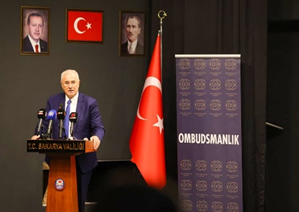
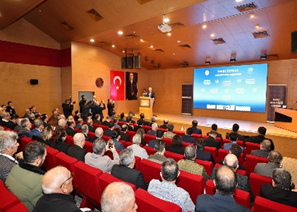
Chief Ombudsman Mr. Mehmet Akarca, Ombudsmen Mr. Ertunç Erkan Balta, Mr. Abdullah Cengiz Makas, Mr. Özcan Yıldız and the Secretary General of the Ombudsman Institution Mr. Mehmet Doğan, met with public in Çorum on 4 February 2026, in Sakarya on 11 February 2026, and in Düzce on 12 February 2026.
Within the scope of the “Ombudsman Meets the Public” program, Chief Ombudsman Mr. Mehmet Akarca emphasized that the Ombudsman Institution, as the voice of citizens, examines all acts and actions of public administrations with a justice-based and human rights-oriented approach. Stressing that fairness-based investigation is highly important because justice must uphold not only rules but also conscience, Mr. Akarca highlighted that applications are free of charge, require no formal procedures, can be submitted online, and are finalized within six months at the latest. He shared that approximately 21,034 complaints were received in 2025, noting that many disputes were resolved through amicable settlements and recommendations. Mr. Akarca also underlined the Institution’s broader role in identifying root causes of grievances, preparing special reports, and providing guidance to public administrations to prevent recurring issues. Additionally, he pointed to growing engagement with youth through Ombudsman clubs established at 156 universities and various awareness programs on justice and human rights.
During the meetings held in Çorum, Sakarya, and Düzce, Mr. Akarca reiterated that the Ombudsman Institution is an independent constitutional body affiliated with the Grand National Assembly of Türkiye (GNAT), serving as an effective complaint mechanism and a bridge of fairness between citizens and administrations. He highlighted recent efforts to make application processes faster and more transparent, while also referencing key reports published in 2025, including the Strategy Document on the Rights of the Child, the Child-Friendly Decision Writing Guide, the report on Strengthening Institutional Coordination in Combating Violence against Women: The Central Anatolia Example, and the report on Differences in Workers’ Pension Amounts Based on Application Dates. Governors and local officials addressed participants at the events, and the Ombudsman delegation listened directly to citizens’ complaints, requests, and suggestions. As part of the programs, the delegation conducted a series of institutional visits to municipalities, universities, bar associations, and professional organizations, reinforcing cooperation and dialogue at the local level.
OLD COMPLAINTS AND INCREASING COLLECTIVE CONFLICTS WILL BE ADDRESSED, AS ACRC OPERATES THE “COLLECTIVE CONFLICT MEDIATION BUREAU” IN EARNEST.
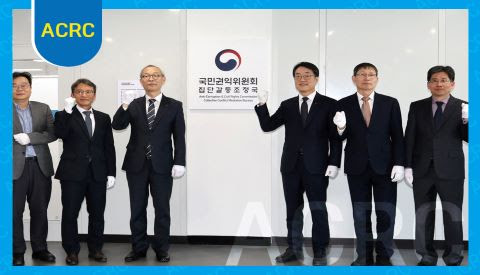
– Dedicated personnel under the Collective Conflict Mediation Bureau will work in line with civil counselors and conflict management officials of respective institutions to actively address age-old, habituated complaints and collective conflicts as of Jan. 27
The Collective Conflict Mediation Bureau under the Anti-Corruption and Civil Rights Commission (ACRC, Acting Chairperson Han Sam Suk) officially launches on Jan 27th to specifically address old, habitual complaints that are being filed repeatedly along with the complex, fierce complaints on collective conflict which happen during the people’s daily livelihood.
The ACRC held a board-hanging ceremony for the Collective Conflict Mediation Bureau at the KT&G Sejong Centre, along with Mr. Han Sam Suk, Acting Chairperson of the ACRC, and
Mr. Joo Jin Woo, Public Conflict Mediation Secretary of the Presidential Office, in the afternoon of Jan. 27th.
The ACRC has been focused on the practical resolution of complaints on collective conflict and repetitive, frequent habitual complaints to realize the administrative philosophy of “People-centered, Field-centered, Achievement-centered” since the launch of the new administration in June 2025 which values the sovereignty of the people.
As a result of the seven months of active resolutions – such as mediation and agreement – with the new administration, 46 collective conflict complaints were addressed and 9,375 people were directly benefited, showing an increasing trend over the same period in the previous year.
Representative cases are as follows: Mediation to come up with safety measures for tourist attractions at Guryongpo of Pohang-si in Gyeonsangbuk-do Province for the better and safer lives of the people (Jul. 2025), Mediation on bridging built-up soil area at Yanggu-si, Gangwon-do under the cooperation without silos based on mutual communication (Aug. 2025), Mediation on the safe commute of three middle and high schools students of Seongnam-si, Gyeonggi-do Province, a practical mediation for various people based on the perception that the field always has an answer (Oct. 2025), and Mediation on building a power cable for Korea Electric Power Corporation (KEPCO) at Dangjin-si, Chungcheongnam-do Province, an endeavor as an active mediator for the interests of a long-standing issue (Dec. 2025).
When it launches, the Collective Complaint Mediation Bureau will prioritize addressing age-old unusual petitions that are being filed repeatedly and continuously due to dissatisfaction or distrust of the results – and start its duty.
Its aim is not simple completion but addressing petitions so that they are not raised again, by attentively listening to and persuading the petitioners while closely cooperating with related agencies and professionals, while analyzing the causes and structures of repetition and connecting them to institutional improvement.
The Bureau will bring in 100 people including officials from the Collective Complaint Mediation Bureau, professionals in communication, counsel, and law, and civil counselors who are former public officials, and people who are in charge of the work in relevant agencies. They will be grouped considering the characteristics of the agenda items and operate as dedicated teams, for effective and systematic resolution of the petitions.
At the same time, the Commission prepared and is under discussion with the National Assembly regarding the revised bill of the Act on the Prevention of Corruption and the Establishment and Management of the Anti-Corruption and Civil Rights Commission (Article 45-2, Paragraph 5) for every institute to have “Officials on Collective Conflict Management” to be centered on difficult agenda items such as unusual petitions and petitions on collective conflict for the improvement of all institutes’ capabilities in addressing their own agenda.
The age-old collective conflict complaints which involve multiple people and various interests, which used to be handled by the divisions under the ACRC’s Ombudsman Bureau based on the content of the petitions, will now be covered by the Collective Conflict Mediation Bureau.
For the administrative service to meet the people’s expectations, the Commission will conduct in-depth inspections by the increased number of professionals, customized mediation based on the importance, difficulty, and urgency of the agenda, and work for institutional improvement by proactively figuring out potential area of collective conflicts and cooperating with the relevant agencies.
People who want collective conflict petitions to be addressed can reach out to the e-People platform and the method will be the same as usual.
The ACRC will strengthen its solid cooperation system with the Office of the Public Conflict Mediation Secretary of the Presidential Office, as well as central administration, local government, and public institutions. The Commission will systematically respond to the pending major collective conflict items as one of the agencies in charge of governmental meetings on public conflict mediation.
It will proactively find and mediate potential areas of collective conflicts during the execution of the national agenda such as the energy expressway and balanced regional development. Complaints that are closely connected to the lives of the people and repeated complaints will be prioritized and investigated to come up with the solutions regardless of their scale.
The Acting Chairperson Han of the ACRC stated that “People want the government to listen to the voice of the field, address the long-standing collective conflict complaints, and actively engage in and mediate the stakeholders. The Collective Conflict Mediation Bureau which launches today will listen to the voices of the people and do our best to make improvements based on field experience and capabilities so that people can feel the difference.”
The Public Conflict Mediation Secretary of the Presidential Office said the “The Collective Conflict Mediation Bureau will be the key organization which comprehensively mediates habitual, repetitive conflicts and collective complaints which involve various stakeholders. I expect the organization to be at the center and listen to the people’s voices from the closest position, resolve the repeated conflicts, and conduct the necessary mediation in a timely manner. My Office will work closely with the ACRC, prevent repeated complaints from being raised again, and build a system which proactively manages and mediates collective conflicts to reduce social costs and enhance public trust.”