Category Archives: Related Links
CHIEF OMBUDSMAN MR. MEHMET AKARCA MEETS WITH ANKARA REPRESENTATIVES OF MEDIA ORGANIZATIONS.
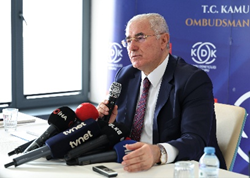
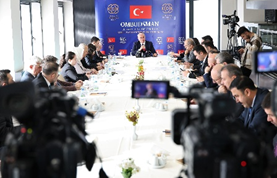
Chief Ombudsman of Türkiye, Mr. Mehmet Akarca, met with the Ankara representatives of media organizations on 9 January 2026 to share information on the work carried out by the Ombudsman Institution in 2025 and its outlook for 2026. The meeting was attended by Ombudsmen Mr. Ertunç Erkan Balta, Ms. Fatma Benli Yalçın, Mr. Sadettin Kalkan, Mr. Abdullah Cengiz Makas, Mr. Özcan Yıldız, and the Secretary General of the Ombudsman Institution Mr. Mehmet Doğan.
In his speech, Mr. Akarca congratulated members of the press on 10 January, Working Journalists’ Day, and emphasized the indispensable role of the press in democracy. He noted that the Ombudsman Institution received 21,034 complaints in 2025, bringing the total number of applications since the Institution began receiving complaints in 2013 to 262,000, with resolution rates exceeding 93 percent.
Emphasizing that the Ombudsman Institution is not an alternative to the judiciary but a complementary mechanism that helps reduce the courts’ workload, Mr. Akarca highlighted that complaints can be lodged free of charge through flexible procedures, including online. He added that complaints are finalized within a maximum of six months and examined based on the Constitution, national legislation, international conventions, the case-law of the European Court of Human Rights, and judicial precedents.
Mr. Akarca also stated that throughout 2025 the Ombudsman Institution organized public meetings and youth-oriented programs, and conducted visits to prisons, child advocacy centers, and various public institutions. Following his speech, he answered questions from members of the press.
INTEGRITY PROMOTION ACTIVITIES OF THE COMMISSION AGAINST CORRUPTION (CCAC) IN 2025.
In 2025, the Commission Against Corruption (CCAC) carried out a wide range of integrity promotion initiatives, covering public outreach, professional sector engagement, youth and campus education, volunteer training and international exchange:
- Public Outreach and Media Campaigns: Integrity messages were widely disseminated through microfilms, TV advertisements, campus activities, and the International Anti-Corruption Day campaign, ensuring broad community engagement.
- Professional Sector Training: Tailored legal and governance seminars were delivered to healthcare and financial institutions, reinforcing compliance awareness and fostering integrity culture in professional fields.
- Educational Resources Development: Workshops on short video production, children’s integrity stories, and the expansion of the Integrity Teaching Materials Advisory Group enriched teaching tools and enhanced integrity education quality.
- Youth and Campus Advocacy: Programs and projects engaged university and secondary school students, nurturing a new generation of integrity leaders through training, exchanges, and campus-based initiatives.
- Strengthening Volunteer Forces: New members joined the Integrity Volunteer Team, receiving training and participating in social and promotional activities to spread integrity values.
- International Exchange and Innovation: Macau youth teams showcased anti-corruption technology solutions at international competitions and forums, promoting cross-regional collaboration and innovation in integrity education.
Overall, the CCAC’s 2025 promotional activities built a multi-layered and multi-channel integrity network, combining local and international efforts, campus and community engagement, and educational and professional initiatives to further strengthen Macau’s culture of integrity.
CONFERENCE ON PRESCHOOL, INCLUSIVE AND GENERAL EDUCATION.
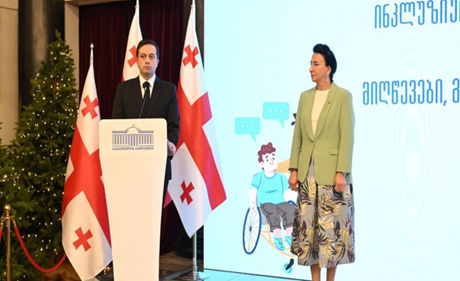
On December 17, 2025, Public Defender Levan Ioseliani participated in a conference organized by the Parliamentary Temporary Commission on Women and Children’s Issues. The topics discussed at the conference included achievements, challenges and future prospects at the level of preschool, inclusive and general education.
In his speech, the Public Defender focused on the importance of access to education and issues of coordinated work, which implies the involvement of both teachers and professional groups, as well as parents, in the process.
“Despite the steps taken, there are still many serious challenges in the field, which the Public Defender has identified within the framework of his activities.
In the field of preschool education, the shortage of inclusive education specialists in the regions is particularly noteworthy. It is also necessary to raise the awareness of employed personnel, improve accessibility of kindergarten infrastructure for children with various disabilities, and effectively monitor inclusive preschool education at the local level. It is important to properly identify children with special educational needs, who are left beyond preschool education, in all municipalities and refer them to appropriate services.
As for general education, it is important to use modern assistive technologies, alternative and augmentative communication tools in the teaching process of students with special educational needs, and strengthen individualized support services. It is necessary to strengthen professional supervision, coordination of the inclusive education process, and internal monitoring in schools. Coordinated work among members of education plan groups and increased involvement of parents of children with disabilities in this process represents a challenge”,” said Public Defender Levan Ioseliani.
ADMINISTRATIVE PENALTY IMPOSED ON 31 UZBEK STUDENTS IN RUSSIA REVOKED AS A RESULT OF COOPERATION BETWEEN OMBUDSMEN.
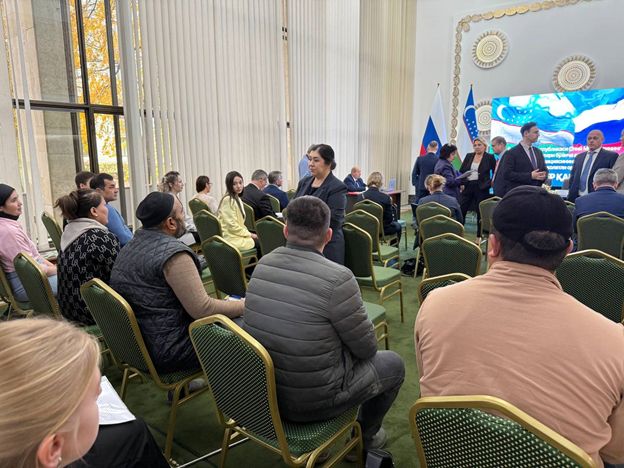
Within the framework of the visit of the Commissioner for Human Rights of the Oliy Majlis (Ombudsman) to the Russian Federation in October of this year, a mobile reception for citizens was held at the Embassy of Uzbekistan in Moscow with the participation of the ombudsmen of both countries, aimed at studying issues faced by compatriots.
During the mobile reception, appeals were also received from 31 Uzbek students studying at the National Research University “Higher School of Economics” (HSE) located in the Russian Federation. It was found that the university administration had failed to timely inform the authorized bodies about the extension of students’ migration registration. As a result, the students remained in the territory of the Russian Federation for more than 90 days and were assessed as having violated migration regulations. According to the students, they were required to pay an administrative fine in the amount of 40,000 rubles.
The situation was taken under control by the Commissioner for Human Rights of the Russian Federation, and an inspection was conducted in cooperation with the Migration Service of the Ministry of Internal Affairs of the Russian Federation.
Following the review, a decision was made to extend the period of temporary stay for foreign students. In addition, territorial internal affairs bodies were instructed, as an exception, not to apply administrative penalties such as fines or administrative expulsion from the territory of the Russian Federation to these students.
Most importantly, had this issue not been resolved in a timely manner, the students could have been administratively expelled from the territory of the Russian Federation.
As a result of this intervention, the issues of not only Uzbek students but also more than 200 students from Kazakhstan, Kyrgyzstan, Tajikistan, Azerbaijan, Moldova, and Belarus studying in Russia were positively resolved.
In a letter addressed to the ombudsman, the Commissioner for Human Rights of the Russian Federation informed that the issue raised by the students had been resolved positively and noted that cooperation between ombudsmen is yielding practical results in the protection of human rights.
THE OMBUDSMAN SABINA ALIYEVA PARTICIPATED IN THE IMPLEMENTATION OF THE AMNESTY ACT.
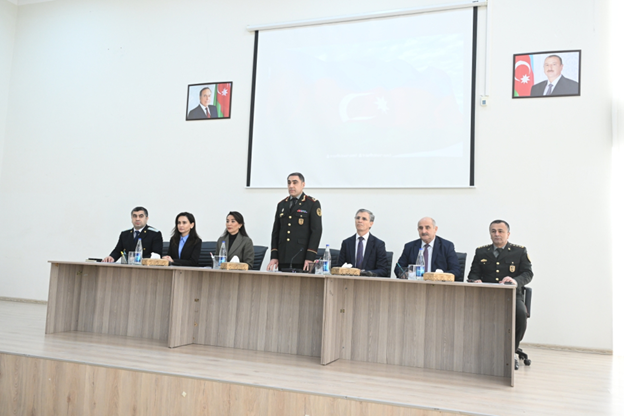
The Commissioner for Human Rights (Ombudsman) of the Republic of Azerbaijan, Sabina Aliyeva, has participated in the implementation process of the Amnesty Act initiated by President Ilham Aliyev of the Republic of Azerbaijan. As part of the implementation of the Amnesty Act, the Ombudsman visited Penitentiary Institution No. 4 and Correctional Facility for Juveniles under the Penitentiary Service of the Ministry of Justice.
In her speech, the Ombudsman stated that one of the key directions of the legal reforms implemented by National Leader Heydar Aliyev in the field of protecting human rights and freedoms was the humanization of penal policy. She noted that these reforms are currently being successfully continued by President Ilham Aliyev, and that the First Vice-President of the Republic of Azerbaijan, Mehriban Aliyeva, also carries out extensive activities in this area. She emphasized that the application of the principles of humanism, mercy, and an individual approach in penal policy constitutes an important component of this policy in the country. The Ombudsman further highlighted that the institutions of pardon and amnesty serve as legal mechanisms for these principles, contributing to the strengthening of the rehabilitative nature of punishment and facilitating the reintegration of convicted persons into society as reformed individuals.
The Ombudsman congratulated the individuals covered by the amnesty act and their family members, emphasizing the importance of the social adaptation and reintegration into society of those released from penitentiary institutions, and called on them to make use of the opportunities provided.
In conclusion, the Ombudsman once again expressed her gratitude to President Ilham Aliyev for the initiative to declare the amnesty.
Later, Ombudsman Sabina Aliyeva gave an interview to media representatives.
On the Ombudsman’s instruction, staff of the Office also took part in the implementation of the amnesty act at other penitentiary institutions.
It should be noted that the Amnesty Act submitted to the Parliament by the President is expected to apply to more than 20,000 people in total. Of these, more than 5,000 convicted persons are expected to be released from imprisonment; the sentences of more than 3,000 persons sentenced to imprisonment will be reduced; over 7,000 convicted persons will be released from the penalty of restriction of liberty; nearly 4,000 convicted will be released from other penalties not related to deprivation of liberty or from conditionally imposed sentences; and more than 1,000 individuals are expected to be released from criminal liability.
MEETING OF PUBLIC DEFENDER’S CONSULTATIVE COUNCIL FOR MONITORING THE PROMOTION, PROTECTION AND IMPLEMENTATION OF THE CONVENTION ON THE RIGHTS OF PERSONS WITH DISABILITIES.
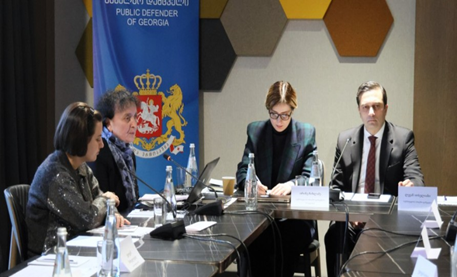
On December 24-25, 2025, the Consultative Council of the Public Defender of Georgia for the Monitoring of the Promotion, Protection and Implementation of the Convention on the Rights of Persons with Disabilities held its 40th meeting.
At the opening of the meeting, Public Defender Levan Ioseliani spoke about the importance of the issues on the agenda, including the amendments to be made to the Council’s Statute.
The meeting presented information on the activities carried out in the past period within the framework of monitoring the promotion, protection and implementation of the Convention on the Rights of Persons with Disabilities. Members of the Council spoke about the lack of targeted services for persons with disabilities and challenges related to the quality of existing services. Special attention was paid to the process of launching the personal assistant service for persons with disabilities and the associated difficulties, as well as the importance of accessibility as a key principle of the Convention and the implementation of the right, and the necessity of monitoring.
The meeting discussed the planned amendments to the Statute of the Consultative Council for the Monitoring of Promotion, Protection and Implementation of the Convention on the Rights of Persons with Disabilities. The draft amendments were prepared to bring the Statute closer to the principles of the Convention and were submitted to the visiting members of the Council for their opinions.
During the discussion held within the framework of the meeting, the positions of the visiting members of the Council were heard on the amendments to be made to individual articles. The participants of the meeting agreed that the opinions expressed would be reflected in the amendments and would be discussed at the next meeting of the Council.
The event was held with the funding of the European Union project – “Support to the Public Defender’s Office”.
NATIONAL FESTIVAL FOR PROMOTING TRANSPARENCY AND ELIMINATING CONFLICTS OF INTEREST.
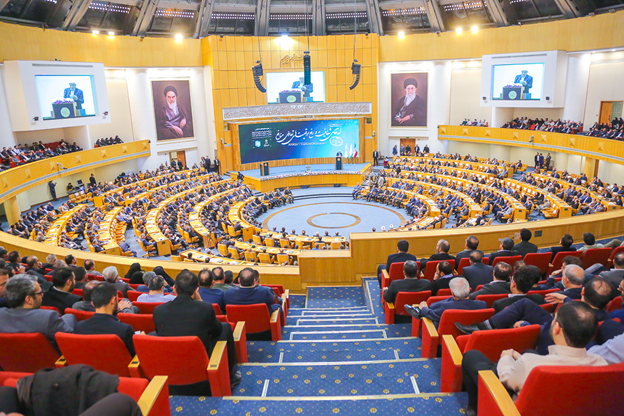
According to the Public Relations Office of the General Inspection Organization (GIO), the National Festival for Promoting Transparency and Eliminating Conflicts of Interest a nationwide event focused on transparency, accountability and reducing conditions that enable conflicts of interest was held today with senior officials in attendance. The festival’s principal aims are to strengthen public trust and to support sound governance.
The festival evaluated and ranked executive bodies in two areas — enhancing transparency and managing conflicts of interest — and honored top performers. Beyond these operational goals, the initiative emphasizes sustainable administrative integrity and the cultivation of a culture of accountability. Organized in line with the Supreme Leader’s guidance and structured around four pillars — policy, prevention, oversight and anti-corruption action — the festival is also supported by the Head of the Judiciary’s directives and the Transformation and Excellence framework.
A homegrown measurement model
A principal achievement is the development of the country’s first indigenous model for measuring transparency and managing conflicts of interest. Prepared in cooperation with academic centers including Jahad-e Daneshgahi, the model was developed through more than 30 expert sessions and roughly 3,000 hours of research. It draws on five legal categories (supreme documents, information-transparency laws, financial/economic transparency, contract/procurement transparency, and laws related to citizens’ rights) and comprises 12 macro-dimensions and 53 core indicators.
Scope, methodology and resources
In this cycle 254 entities from the three branches were assessed: 161 national and 93 provincial bodies. Approximately 570 GIO inspectors participated across a 70-day assessment period. The process involved 70 academic specialists and 560 representatives of executive agencies for data submission, verification and adjudication. Seven technical working groups met in over 500 sessions to finalize evaluations.
The evaluation reviewed 350 provisions from relevant policies, laws and regulations and used a 258-question instrument covering issues such as regulator/operator overlap, gift practices, and statutory data disclosures. The program provided about 5,920 person-hours of training for assessment officials. A dedicated platform enabled institutional self-reporting, followed by field verification and extensive joint meetings, ultimately identifying three national and three provincial top performers.
From festival to a permanent system
GIO views the festival not as a one-off event but as the first step toward a sustainable Administrative Integrity Measurement System and the annual issuance of Administrative Integrity Report Cards for agencies. Annual evaluation of transparency and conflict-of-interest management is intended to drive continuous improvement and to embed transparency and accountability in managerial culture. The festival emphasizes indicators and data over rhetoric.
Under Article 174 of the Constitution, GIO is mandated to supervise the proper conduct of affairs and the correct implementation of laws. Even where specific transparency laws are lacking, GIO considers disclosure of collective interests within its remit. Collaboration with academics and experts has strengthened the scientific basis and effectiveness of the festival’s outcomes.
Key statements and policy emphasis
Dr. Khodaeiyan, President of GIO — opening the festival, Dr. Khodaeiyan commemorated the martyrs and congratulated on the anniversary of Hazrat Fatimah Zahra (S). He defined the festival’s purpose as promoting transparency and eliminating conflicts of interest, describing transparency as clear, precise and comprehensible public access to the data and decisions of executive, judicial and other governance bodies especially for matters affecting citizens’ lives.
He explained that conflicts of interest occur when organizational interests clash with personal or factional interests, and that transparency makes such situations identifiable, thereby reducing opportunities for misuse. Over the past eight months, GIO assessed 254 bodies, reviewed 350 legal provisions, and applied a 258-question evaluation tool. The program combined training, a self-declaration platform, field verification and more than 500 joint meetings with agency representatives.
Dr. Khodaeiyan stressed prevention as the priority in anti-corruption work: “Corruption happens in darkness. Where transparency and conflict-of-interest mitigation exist, potential wrongdoers are exposed and the opportunity for misconduct is removed.” He referenced the Law on Publication and Free Access to Information, the Administrative Integrity Promotion Act, and the Transparency of the Three Branches Act, noting that agencies are required to publish officials’ names, qualifications, appointments, records, expenses, incomes, contracts and governing documents. He added that failure to upload required information is punishable under the transparency law (penalty: degree 6) and observed that the three-month legal deadline for disclosures (set in 1403) has passed; his remarks were made at the end of 1404. He closed by thanking participating institutions.
Mohammad-Reza Aref, First Vice President of the Republic praised the festival as a valuable and creative initiative that can advance administrative integrity and public trust. He highlighted inter-branch coordination and shared responsibility, warning that small unchecked corrupt practices can spread and stressing that persistent programs are needed to root out corruption. He welcomed the participation of 254 executive bodies as evidence of broad acceptance.
Ali Nikzad, Deputy Speaker of the Islamic Consultative Assembly described transparency as a practical, cost-effective anti-corruption tool. He cited parliamentary measures to publish major bank loans and debtors’ names on the Central Bank website as an example that helped resolve significant non-performing claims. Nikzad emphasized that transparency reduces the cost of prevention versus punitive action, improves policymaking by exposing decisions to expert and public scrutiny, and requires standardized, analyzable, timely and usable data rather than large unprocessed dumps. He noted that transparent contract records can enable analytical tools including AI to detect procurement patterns and offer solutions.
Hojjat-ul-Islam wal-Muslimeen Khalili, First Deputy of the Judiciary underscored the need for the three branches to act together to secure citizens’ livelihoods. He described the Transparency Law as a unifying instrument that fosters national cohesion and reduces corruption across layers of governance. Khalili urged resolute implementation of the law, framed transparency as both a public right and a managerial duty, and noted that GIO has issued 5,500 warnings to managers — a measure intended to support responsible managers. He affirmed that GIO has achieved meaningful results during four years of structural reforms and encouraged managers to use the judiciary’s supportive stance to address organized corruption and close systemic loopholes.
Awards
Top national agencies honored for transparency and administrative integrity:
- Farzaneh Ansari — Head, National Standards Organization
- Hamid Benaian — CEO, Post Bank of Iran
- Alireza Ashouri — Head, Research Institute for Industrial and Scientific Studies
Provincial awardees:
- Hamid Ghasemi — Mayor of Semnan
- Mohammad Ashouri Taziani — Governor of Hormozgan Province
- Abolqasem Mohyeddini — Mayor of Yazd
The festival was presented as the country’s first scientifically grounded national step to measure transparency and eliminate conflicts of interest across state institutions — a product of close cooperation among the three branches and executive agencies in which indicators and data, rather than slogans, form the basis of evaluation.
OMBUDSMAN PUNJAB FACILITATES RESTORATION AND IMPROVEMENT OF CIVIC AMENITIES.
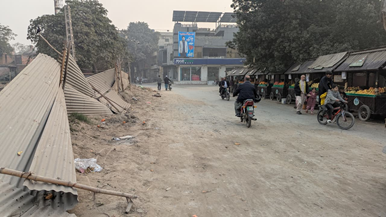
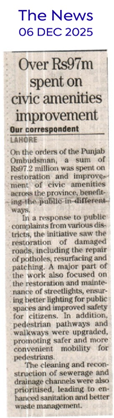
The Office of the Ombudsman Punjab took proactive measures to address public complaints related to deteriorating civic infrastructure across the province. Acting on grievances received from multiple districts, the Ombudsman Punjab directed the concerned departments to undertake immediate corrective actions to restore essential public amenities.
The interventions covered the repair of damaged roads, restoration of malfunctioning street lights, cleaning and reconstruction of drainage systems, addressing uncovered water supply points, and improving waste management practices. These measures were aimed at resolving long-standing civic issues that posed risks to public safety, sanitation, and daily mobility.
An expenditure of approximately Rs. 97.2 million was incurred to bring civic amenities up to acceptable standards. The improvements resulted in safer, well-lit public spaces, enhanced pedestrian movement, improved sanitation, and a better quality of life for citizens, particularly in urban and semi-urban areas.
UN-RECOGNIZED K-ANTI-CORRUPTION SYSTEMS TO BE SHARED DIRECTLY WITH KAZAKHSTAN.
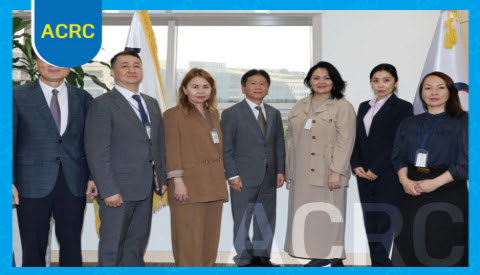
– The ACRC will conduct a three-day anti-corruption training program in Kazakhstan from November 25 to 27, 2025, to disseminate Korea’s flagship anti-corruption systems, including the Comprehensive Integrity Assessment of Public Institutions (CIA) and the whistleblower protection system.
(25, November. 2025, ACRC)
The Anti-Corruption and Civil Rights Commission (ACRC, Chairperson Ryu Chul Whan) announced that it will share Korea’s flagship anti-corruption systems the Comprehensive Integrity Assessment of Public Institutions (CIA) and the whistleblower protection system with Kazakhstan directly.
From November 25 to 27, 2025, the Anti-Corruption Training Institute (ACTI) under the ACRC visited Astana, the capital of Kazakhstan, and Almaty, one of the country’s major cities, and ran a training course on institutional improvements in corruption prevention for around 100 participants. Participants included officials from the Agency of the Republic of Kazakhstan for Civil Service Affairs and the Anti-Corruption Service of the National Security Committee, as well as other anti-corruption-related agencies, along with compliance officers from public institutions and public enterprises.
This program was carried out as part of the ACRC’s official development assistance (ODA) projects. As a follow-up to the invitation training program hosted by the Government of Kazakhstan in June 2025, it was designed to support the effective introduction of Korea’s anti-corruption systems in Kazakhstan, including the Comprehensive Integrity Assessment of Public Institutions (CIA).
The Republic of Korea is the only country in the world to have achieved both democracy and economic development in tandem. It is regarded as a model country, as reflected in its steady upward trend in Transparency International’s annual Corruption Perceptions Index (CPI). Accordingly, requests for training from countries seeking to learn Korea’s anti-corruption policies and implementation experience have continued to increase.
In particular, the Comprehensive Integrity Assessment of Public Institutions (CIA) first introduced by the Republic of Korea in 2002 as the world’s first system of its kind won the 1st prize in the category of “Preventing and Combating Corruption in the Public Service” at the 2012 United Nations Public Service Awards (UNPSA), and has been shared with about ten countries, including Indonesia, Viet Nam, Thailand, Uzbekistan, and Algeria.
In addition, Korea’s protection system for corruption reporters and public interest whistleblowers has been internationally recognized for its excellence, including being featured in the United Nations Office on Drugs and Crime (UNODC)’s 2015 “Resource Guide on Good Practices in the Protection of Reporting Persons.”
Kim Se-shin, Director of the ACRC’s Anti-Corruption Training Institute, said, “Given that Kazakhstan is the Republic of Korea’s largest trading partner among Central Asian countries and a key partner for cooperation in Central Asia, we will further expand cooperation and exchanges in the field of anti-corruption.”
He added, “We will continue to disseminate K-anti-corruption policies throughout the international community, take the lead in advancing democracy worldwide, and further enhance the Republic of Korea’s international standing.”