Category Archives: Related Links
PROBLEMS OF SCHOOL GOING CHILDREN RESOLVED POSITIVELY.

The Office of the Commissioner for Human Rights in the Republic of Tatarstan received an application from a resident of the village of Vysoka Gora – citizen N. The applicant told about the difficulties faced by families living in the residential complex «Atmosphere». Thus, due to the lack of a school bus driver, children were not able to get to school and the construction of a road directly connecting the residential complex with the educational institution was postponed.
In view of the above, and with a view to protecting children’s right to accessible education, I have requested the Executive Committee of the High Mountain Municipality to consider the matter and take the necessary measures.
As a result of the work done, all the necessary measures have been taken. The school bus route was approved: Vysokogorskaya Secondary School No. 6 named after Kh. Gabashi – Atmosfera residential complex – Vysokogorskaya Secondary School No. 6 named after Kh. Gabashi. Today, the bus runs regularly along the route, providing children with a safe and comfortable way to school and back.
LEGAL AID DAY FOR CONVICTS HELD.

A Legal Aid Day for Convicts was held at Penal Colony No. 19 of the Federal Penitentiary Service of Russia for the Republic of Tatarstan.
Representatives of the Federal Penitentiary Service of Russia for the Republic of Tatarstan, the Ministry of Justice of Russia for the Republic of Tatarstan, the Prosecutor’s Office of the Republic of Tatarstan, the Kazan Employment Center, the Ministry of Labor, Employment, and Social Protection of the Republic of Tatarstan, the Pension and Social Insurance Fund of the Republic of Tatarstan, and the Military Commissariat of the Republic of Tatarstan, as well as a lawyer and a notary, provided consultations.
A total of ten convicts have asked for advice. They were concerned about medical and pension benefits, commutation of the unserved portion of their sentence to a more lenient sentence, disability registration, changing the type of sentence due to disability, and issues related to disagreements with the court verdict and the medical and social assessment decision. All requests were carefully reviewed, and the applicants received the necessary clarifications.
Such activities help people in detention to better understand their rights and legal opportunities, as well as prepare for reintegration into society. I am sure that timely legal support is an important step on the way to successful re-socialization!
ACRC DETECTED 11 FORMER PUBLIC OFFICIALS DISMISSED FOR CORRUPTION IN ILLEGAL EMPLOYMENT AND REQUESTED DISMISSAL AND CRIMINAL REFERRAL.

– ACRC published the results of inspection into employment status of 1,612 public officials including those dismissed for corruption over the past five years
– Most cases involved employment at companies related to their duties held while in office…
– For three still illegally employed individuals, the Commission requested that their employment should be terminated
The Anti-Corruption and Civil Rights Commission (ACRC, Chairperson Ryu Chul Whan) has carried out an inspection into the employment status of 1,612 public officials in the first half of this year, who were dismissed for corruption while serving in public institutions or were sentenced to fines of 3 million won or more after leaving office for corruption-related acts (hereinafter “dismissed-for-corruption officials”) within the past five years. As a result of the inspection, the Commission found 11 individuals who violated employment restriction regulations.
* Dismissed-for-corruption officials are prohibited for five years from reemployment at public institutions, organizations related to the corruption, or for-profit companies closely related to the department (institution) where they served (Act on the Prevention of Corruption and the Establishment and Operation of the Anti-Corruption and Civil Rights Commission, Article 82)
Among the violators, eight were employed by for-profit firms related to their official duties that they had held while in public office, two by public institutions, and one by an organization related to the corrupt conduct.
Their former employers before dismissal were central administrative agencies (3), local governments (3), and public service-related organizations (5).
Major cases of violation include the following: A former public official A at a central government agency was dismissed in Dec. 2023 for embezzlement and subsequently landed a job at a firm that had been evaluated and inspected by the division where he previously served, receiving 4.76 million won in monthly pay.
A former central government official B was sentenced to imprisonment for accepting entertainment and for instigating disclosure of confidential information, and afterward he received 12 million won as consulting fees from a firm that provided entertainment and later worked at a public institution earning 4.26 million in monthly wage.
A former local government official C was dismissed in June 2023 for bribery, and then employed by a company from which his former department had procured from, receiving 4.35 million won per month.
For seven out of the 11 illegally employed individuals, the Commission requested the heads of the institutions that these individuals had previously served to refer them to investigative authorities on charges of violating the post-employment restriction regulation for dismissed-for-corruption officials*.
* Violation carries up to two years’ imprisonment or a fine up to 20 million won (Act on the Prevention of Corruption and the Establishment and Operation of the Anti-Corruption and Civil Rights Commission, Article 89)
It turned out that of the seven referral targets, four have since retired from their jobs, but three remain illegally employed.
The Commission therefore demanded the heads of the firms to which the dismissed-for-corruption officials belong to that measures be taken to have those three removed from their positions.
Kim Eung Tae, Director General of the Inspection and Protection Bureau of the ACRC, said, “We will put more efforts into strict enforcement of the post-employment restriction system for dismissed-for-corruption officials in order for public officials remain vigilant against corruption so that a trustworthy public office can be established.”
PRESIDENT OUTLINES DETAILS OF THE FESTIVAL FOR THE PROMOTION OF TRANSPARENCY AND THE ELIMINATION OF CONFLICT-OF-INTEREST SITUATIONS.
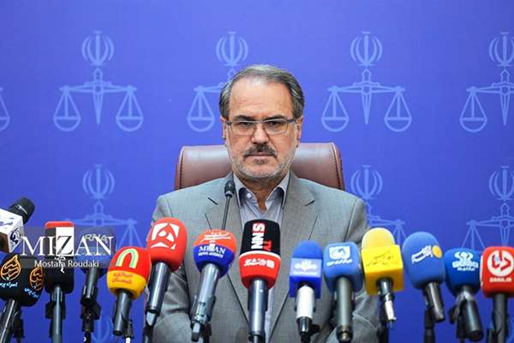
258 indicators defined to evaluate 254 executive bodies / Public disclosure of agencies’ performance in transparency and conflict-of-interest prevention / Recognition of top-performing institution Tehran Dr. Khodaeiyan, the President of the General Inspection Organization of the Islamic Republic of Iran, has elaborated on the objectives and details of the upcoming Festival for the Promotion of Transparency and the Elimination of Conflict-of-Interest Situations, organized in line with the Judiciary’s Transformation and Excellence Document.
He announced that the performance of executive bodies in enhancing transparency and addressing conflicts of interest will be publicly released, and outstanding organizations will be recognized for their efforts.
According to the Public Relations Department of the General Inspection Organization, the festival will take place on December 8 (18 Azar), coinciding with International Anti-Corruption Day. Dr. Khodaeiyan explained that the initiative has been designed and implemented based on Measure No. 113 of the Judiciary’s Transformation Document.
Implementing the Judiciary’s Transparency Mandate
He stated that under this directive, the General Inspection Organization is tasked with promoting transparency, resolving conflicts of interest, and holding an annual festival to evaluate and honor leading executive bodies.
Comprehensive Evaluation through 258 Indicators
Dr. Khodaeiyan explained that 258 evaluation indicators were derived from existing laws and regulations related to transparency and conflict-of-interest prevention. Officials from the relevant institutions received training, and these indicators were formally communicated to all agencies. In the first phase, organizations conducted self-assessments, followed by on-site verification by the Organization’s inspectors. Finally, agencies will be ranked electronically based on the scores they achieve through the national evaluation system.
Transparency: A Prerequisite for Combating Corruption
Addressing the festival’s philosophy from the Judiciary’s perspective, Dr. Khodaeiyan stressed that: “If we aim to eradicate corruption—or at least reduce it—and ensure that officials adhere to the law and fulfill their duties, transparency is one of the essential prerequisites.”
Public Access to Information
He further defined transparency as ensuring that citizens have access to information that belongs to them. “Government bodies act on behalf of the people, and therefore the information they hold belongs to the public. It is the people’s right to be informed, and transparency allows them to remain aware of public affairs,” he said.
Removing Conflicts of Interest to Prevent Corruption
The President of the General Inspection Organization noted that a conflict of interest arises when personal interests intersect with official responsibilities. “In such cases, some may prioritize personal or factional interests over organizational goals. Each institution must identify, declare, and take effective measures to eliminate its conflict-of-interest situations,” he explained. He emphasized that this initiative by the Judiciary will provide the foundation for reducing conflicts of interest within institutions and represents a significant step toward corruption prevention.
Legal and Religious Foundations of Transparency
Dr. Khodaeiyan highlighted that transparency and the elimination of conflicts of interest are rooted in higher-level policy frameworks and Islamic principles. He quoted the Supreme Leader of the Islamic Revolution, who has emphasized that transparency originates from Islamic teachings, referencing the words of Imam Ali (PBUH): “The right that people have over me is that I do not conceal any secret from them, nor hide any word from them.” He added that under the Transparency Law, the three branches of government are obligated to publish all administrative processes, relevant laws and regulations, personnel details, and concluded contracts on their public systems, ensuring full accessibility for citizens.
Examples of Transparency in Practice
Dr. Khodaeiyan cited several examples:
- The public nature of court hearings in the Judiciary,
- The publication of tenders and auctions by government agencies,
- And the requirement for public disclosure of administrative decisions.
“When officials know that their actions are visible to the public, they perform their duties with greater care, and opportunities for abuse are reduced,” he added. He further referred to other key laws—such as the Law on the Publication and Free Access to Information, the Law on Promoting Administrative Integrity and Combating Corruption, and provisions within the Sixth and Seventh Development Plans—which all underscore the central role of transparency in governance.
Transparency in Electoral Financing
Referring to the Law on Transparency of Electoral Expenditures of Members of the Islamic Consultative Assembly, Dr. Khodaeiyan noted that all financial contributions to parliamentary candidates must be transparent, identified, and lawful. “When transparency is enforced in campaign financing, unlawful funds can no longer influence elections. Transparency and conflict-of-interest prevention depend on the faithful implementation of such legal obligations,” he said.
Judiciary’s Commitment to Enforcing Transparency Laws
Dr. Khodaeiyan stressed that the Head of the Judiciary has repeatedly instructed the General Inspection Organization to ensure full enforcement of transparency-related laws, starting with the Judiciary itself.
Agencies that fail to meet their obligations in this regard, he said, will be publicly identified.
Public Announcement of Agency Performance
He added that during the upcoming festival, attended by senior national officials, both top-performing organizations and those that have not taken adequate measures will be introduced to the public.
Evaluation of 254 Executive Bodies
Concluding his remarks, Dr. Khodaeiyan said that 254 executive bodies have been reviewed for this year’s festival. So far, only 11 institutions have yet to upload their data, but they have pledged to do so within the next two days. After data verification, results will be finalized, and on December 8 (18 Azar)—International Anti-Corruption Day—the performance rankings of all agencies will be publicly announced.
OMBUDSMAN ATTENDS ASIAN OMBUDSMAN ASSOCIATION MEETING AND SIGNS MEMORANDUM OF UNDERSTANDING ON BILATERAL COOPERATION WITH OMBUDSMAN OF THAILAND.
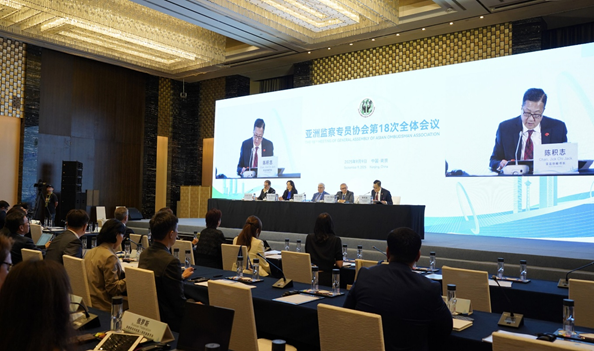
The Ombudsman, Mr. Jack Chan, as the Secretary of the Asian Ombudsman Association (“AOA”), led a delegation to Nanjing to attend the annual Board of Directors Meeting and the 18th General Assembly of AOA held today (9 September), with the aim to promote exchanges and strengthen ties with Asian ombudsman counterparts and enhance the development of the ombudsman system, while telling good stories of the Hong Kong Special Administrative Region’s advancement from stability to prosperity under the principle of “One Country, Two Systems” and leveraging its important role underpinned by strong support from the motherland and close connections with the world.
The meeting was hosted by the National Commission of Supervision (“NCS”) of the People’s Republic of China. Other participating board members included Pakistan, Azerbaijan, Iran, Korea, Japan, Tatarstan and Türkiye. Representatives from ombudsman institutions in countries and regions such as Russia, Thailand, Kyrgyzstan, Macao Special Administrative Region, Vietnam and Sri Lanka also attended the General Assembly.
During the meeting, Mr Chan met with Deputy Secretary of the Communist Party of China Central Commission for Discipline Inspection and Vice Chairman of the NCS, Mr. Fu Kui, and presented the Office’s performance over the past year and its recent work initiatives. Mr Chan extended gratitude for the NCS’s continued support and recognition of the Office’s work.
On the same day, Mr. Chan signed a Memorandum of Understanding (“MoU”) on Bilateral Cooperation with the Chief Ombudsman of Thailand, Mr Somsak Suwansujarit, witnessed by the President of AOA and Federal Ombudsman, Pakistan, Mr. Ejaz Ahmad Qureshi. The collaboration emerged from their participation in the Board Meeting of the International Ombudsman Institute in Morocco in May this year. The MoU is intended to enhance information exchange and experience sharing in ombudsmanship, establish a long-standing partnership, and showcase Hong Kong’s distinctive advantage as a “super connector”, while fostering expanded cooperation on an international scale.
An international workshop themed “Effective Ombudsmanship for People’s Livelihood” will be held tomorrow (10 September), where Mr Chan will serve as a guest of honour and deliver a keynote speech. The Office’s delegation will return to Hong Kong on 11 September.
WAFAQI MOHTASIB PRESIDES OVER THE GENERAL ASSEMBLY MEETING OF ASIAN OMBUDSMAN ASSOCIATION AT NANJING – CHINA.
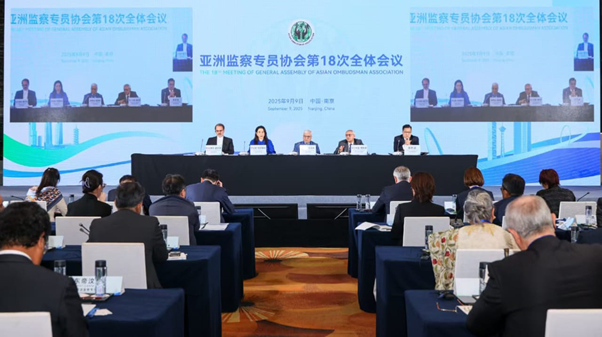
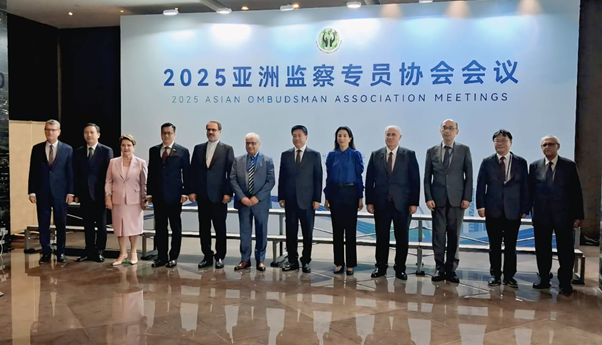
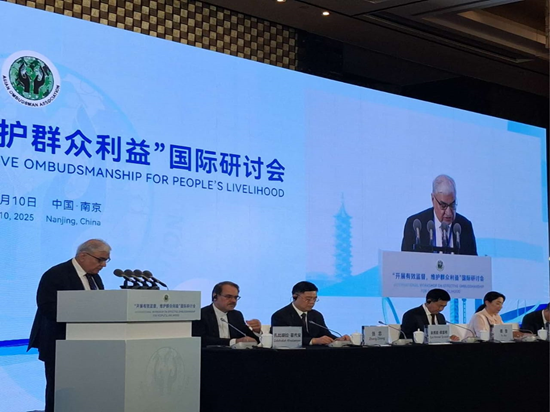
- Wafaqi Mohtasib presides over the General Assembly meeting of Asian Ombudsman Association at Nanjing – China
- Addresses International Workshop on ‘Effective Ombudsmanship for People’s Livelihood
- Calls for greater sharing of experiences and best practices amongst ombudsman institutions
Nanjing (China): September 10, 2025 – The Wafaqi Mohtasib Mr. Ejaz Ahmad Qureshi has said that the ombudsman institutions working across the globe are striving to promote good governance, rule of law and efficient public administration. He was addressing the 26th Annual Meeting of the Board of Directors and the 18th General Assembly meeting of the Asian Ombudsman Association at Nanjing, China here today.
Mr. Qureshi, who is also the current President of the 47-member strong Asian Ombudsman Association (AOA) called for greater sharing of experiences and best practices amongst the ombudsman institutions. He added that ombudsman institutions are playing a critical role in providing free and expeditious redressal of grievances and streamlining the systems and procedures for efficient service delivery by state institutions.
The AOA Board of Directors, which besides Pakistan, includes heads of Ombudsman institutions from Azerbaijan, China, Hong Kong, Iran, Japan, Korea, Tatarstan and Türkiye took stock of the activities of the Association in the outgoing year. It reviewed activities undertaken by the member countries at the national level for the promotion of ombudsmanship and considered measures for upgrading facilities at the Association’s Resource Centre established within the AOA Secretariat in Islamabad.
The General Assembly meeting was followed by an International Workshop on ‘Effective Ombudsmanship for People’s Livelihood’ which was attended by a large number of delegations from the Asian region and beyond. In his keynote address, Mr. Qureshi, stated that ombudsmanship plays a pivotal role in fostering healthy environment where citizen’s rights are fully safeguarded. He also highlighted the role of ombudsman institutions in the implementation of the UN Sustainable Development Goals and stated that human progress remains the corner stone of all developmental efforts. Any movement forward in this direction, therefore, required regular exchange of views, sharing of experiences and best practices amongst the global ombuds fraternity and other stakeholders.
APPOINTMENT OF H,E. MUTAHER ZEB, AS PROVINCIAL OMBUDSMAN, KHYBER PAKTUNKHWA.
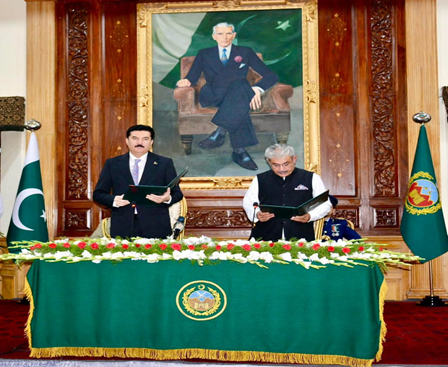
Syed Jamal-Ud-Din Shah concluded his tenure as Provincial Mohtasib Khyber Pakhtunkhwa after completing a four-year term. On August 4, 2025, Mr. Mutaher Zeb officially assumed the office, with an oath administered by the Governor at a ceremony in the Governor’s House. In his address, he pledged to uphold justice, fairness, and transparency in public administration. A seasoned public servant with 33 years of experience, Mr. Zeb has held key positions across various provincial departments and served as Political Agent in tribal regions. He holds a Master’s in English Literature.
PUBLIC DEFENDER PARTICIPATES IN INTERNATIONAL SYMPOSIUM OF OMBUDSMEN.
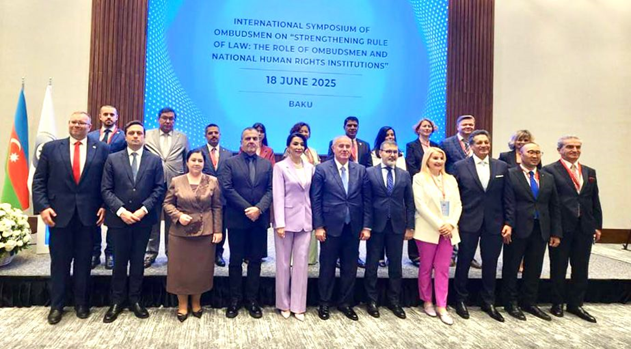
Public Defender of Georgia Levan Ioseliani participated in the International Symposium of Ombudsmen, which was held in Baku on June 18, 2025, organized by the Ombudsman of Azerbaijan, Sabina Aliyeva. The theme of the symposium was “Strengthening the Rule of Law: The Role of Ombudsmen and National Human Rights Institutions”.
At the high-level meeting, ombudsmen from Asia, Africa and Eastern Europe, members of the European Network of National Human Rights Institutions (ENNHRI), discussed the issues of realizing constitutional rights and ensuring equal rights for all; they also discussed the challenges and best practices of international cooperation and protection of refugee rights.
THE CHIEF OMBUDSMAN OF TURKIYE RECEIVES THE OMBUDSMAN TURKMENISTAN.
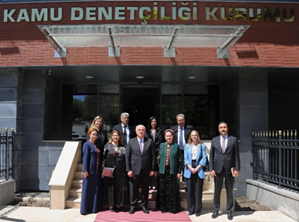
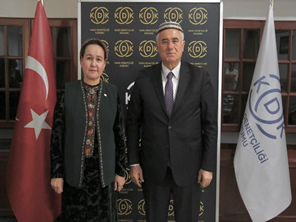
On 5 May 2025, Chief Ombudsman of Turkiye and President of OICOA Mr. Mehmet Akarca received the Ombudsman of Turkmenistan Ms. Yazdursun Gurbannazarova. The meeting, organized within the scope of the Turkmenistan Ombudsman Institution’s study visit to protect and monitor children’s rights in cooperation with UNICEF, was also attended by Ms. Fatma Benli Yalçın, Ombudsman Responsible for Children’s Rights.
In his remarks, Chief Ombudsman Mr. Mehmet Akarca emphasized that Ombudsman Institutions play a key role in protecting human rights, upholding the rule of law, promoting good governance in administrations, and fostering a culture of seeking legal remedies.