Category Archives: AOA News Letter
DR. KHODAEIYAN HIGHLIGHTS THE ROLE OF THE GIO IN FACILITATING PUBLIC COMPLAINTS AND SUPPORTING WHISTLEBLOWERS WORKSHOP.
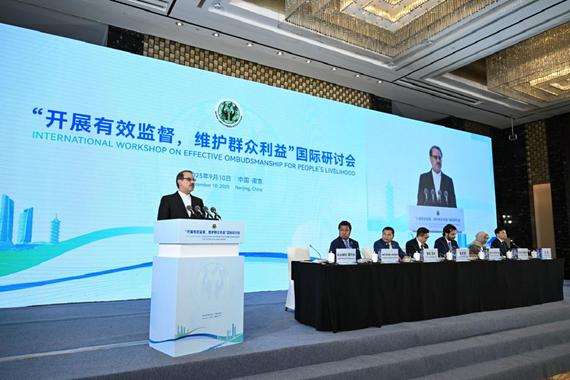
According to the Public Relations Office of the General Inspection Organization (GIO) of Iran, at the international seminar “Effective Ombudsmanship for People’s Livelihood”, held within the framework of the 18th General Assembly of the Asian Ombudsman Association, Dr. Khodaeiyan, President of the GIO, emphasized the fundamental role of public oversight in enhancing the quality of government services. He highlighted the direct link between “general public supervision” and “whistleblower protection” with transparency, accountability, and public trust.
In his speech, he underscored that the concepts of general oversight and whistleblower protection hold a central position in Iran’s legal and religious culture, analogous to Article 8 of the Constitution concerning the principle of “enjoining good and forbidding wrong”. He also noted that the international community, through anti-corruption conventions, obliges governments to protect whistleblowers and highlights the importance of secure reporting channels.
Dr. Khodaeiyan further outlined the existing legal framework in Iran, including Articles 8, 90, and 174 of the Constitution. He emphasized the effective role of the GIO as the official ombudsman institution in facilitating public complaints, ensuring prompt follow-up, and implementing legal reforms. He stated that oversight and legal measures in the country provide a powerful mechanism for creating a “cycle of transparency, accountability, and trust.”
He also referred to Iran’s advanced approach to whistleblower protection, including the enactment of the Whistleblower Protection Law in 2023, which provides safeguards such as identity confidentiality, prohibition of any retaliatory actions, and both material and moral incentives.
Additionally, he highlighted the launch of the “National Whistleblower Support System” as a secure platform for public reporting, which enables follow-up on the stages of investigation and quality control of reports.
In conclusion, Dr. Khodaeiyan invited the Asian Ombudsman Association to expand regional cooperation, proposing that the exchange of experiences regarding whistleblower protection, establishment of secure reporting channels, and creation of a shared knowledge base could represent a significant step forward in promoting transparency and good governance.
THE OMBUDSMAN OFFICE HAS INTRODUCED A NEW EDUCATIONAL BOOKLET FOR JOURNALISTS AND MEDIA OUTLETS ON THE RIGHT OF ACCESS TO INFORMATION.
UNESCO proclaimed 28 September as the International Day for Universal Access to Information on November 17, 2015. In 2025, the world marks the 10th anniversary of this important occasion.
Under the Constitutional Law on the Ombudsman of Azerbaijan, the Commissioner is responsible for monitoring how state authorities, municipalities, public legal entities, and their officials comply with the obligations set out in the Law on Access to Information.
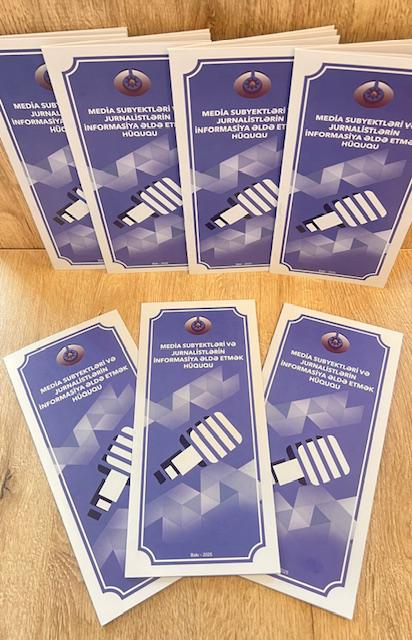
In 2025, as Azerbaijan marks the 30th anniversary of its Constitution and the 150th anniversary of the national press, the Ombudsman Institution has issued a new booklet, “The Right of Media Entities and Journalists to Information,” ahead of this international day.
This must be noted that this right was enshrined in the Constitution and plays a vital role in the work of journalists and media outlets. The booklet aims to support media professionals in better understanding the Law on Access to Information, exercising this right effectively, improving their legal awareness, and fostering stronger cooperation between information holders and the media.
The booklet provides information on key topics, including the right of access to information, the responsibilities of information holders, procedures and deadlines for information requests, reasons for refusal, as well as how the Ombudsman reviews complaints about violations of this right and their authority to issue relevant protocols.
REAFFIRMING JUSTICE, RESTORING TRUST: OMBUDSMAN PUNJAB IN ACTION.
The Office of the Ombudsman Punjab continues to serve as a beacon of accessible justice, transparency,and public trust, providing effective redressal for grievances against maladministration in government departments. Through direct intervention, field outreach, and strong enforcement of citizens’ rights, the institution remains committed to empowering the underserved and protecting public interest.
Institutional Access Enhanced: Launch of the Outreach Van Campaign in South Punjab
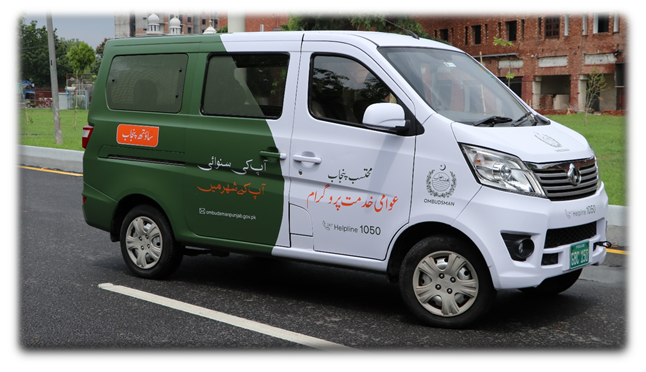
In line with its mandate to extend the reach of administrative justice to underserved populations, the Office has operationalized the “Awami Khidmat Program | Outreach Van Campaign” across South Punjab. This initiative forms an integral part of the wider Sunwai Campaign, aimed at institutional accessibility and public empowerment.
Operating under the slogan “Aap ki Sunwai, Aap ke Sheher Mein”, the outreach van enables:
- On-site complaint registration
- Citizen guidance on complaint procedures (free of cost, without legal representation)
- Public awareness sessions across districts
- Promotion of institutional access via Helpline 1050, mobile application, and QR codes.
This initiative reflects the Office’s strategic intent to foster inclusive governance and ensure the availability of redress mechanisms at the grassroots level.
“SUSTAINABLE DEVELOPMENT STARTS WITH INTEGRITY!” ACRC AND APEC COMMIT TO STRENGTHENING ANTI-CORRUPTION COOPERATION.
– The ACRC successfully concluded the 41st APEC Anti-Corruption and Transparency Experts Working Group (ACTWG) Plenary Meeting and the APEC High-Level Dialogue on Anti-Corruption Cooperation (AHDAC), held over three days from July 30 to August 1.
– The ACRC convened APEC’s first-ever High-Level Dialogue on Anti-Corruption Cooperation (AHDAC), bringing together ministerial- and vice-ministerial-level officials from member economies to share anti-corruption policies and discuss international cooperation.
The Anti-Corruption and Civil Rights Commission (ACRC, Chairperson Ryu Chul Whan) announced the successful conclusion of the 41st APEC ACTWG Plenary Meeting and the APEC High-Level Dialogue on Anti-Corruption Cooperation (AHDAC), held at Songdo ConvensiA in Incheon, Republic of Korea, from July 30 to August 1.
APEC member economies reached a broad consensus on the need to strengthen anti-corruption policies across the Asia-Pacific and held in-depth discussions on practical cooperation measures to put that consensus into practice.
On July 31, the inaugural AHDAC brought together ministerial- and vice-ministerial-level officials from major member economies—including the Republic of Korea and Japan—as well as senior representatives of international organizations such as the World Bank (WB). Through their keynote addresses, speakers underscored the importance of collective efforts to prevent corruption.
The speakers stressed that effectively preventing corruption requires multi-stakeholder cooperation—not only between the public and private sectors, but also with civil society and academia—and that such collaboration is essential to building a fair and trusted society.
They further reaffirmed that joint efforts to prevent corruption are a prerequisite for achieving the sustainable growth and shared prosperity pursued by APEC.
Following the keynote session, two days of expert panel discussions featured lively exchanges among APEC member economies, international organizations, private enterprises, civil society, and academia, centered on three main agenda items: ▴ Cooperation to Fight Cross-Border Corruption (Session 1); ▴ Engaging with Private Sector to Enhance Integrity (Session 2); ▴ Cooperation on Anti-Corruption Education and Training (Session 3).
Session 1 focused on joint response measures to transnational corruption offenses, including cooperation on mutual legal assistance, asset recovery, and digital forensics. Session 2—with participation from the OECD, the World Bank, and private-sector experts, including Oracle—introduced integrity management strategies leveraging ESG* and AI, as well as approaches to strengthen public-private partnerships.
* ESG (Environmental, Social, and Governance): an evaluation framework that assesses corporate value by considering not only financial performance but also social and environmental activities.
In Session 2, Min Sungsim, Director General of the Anti-Corruption Bureau at the ACRC, emphasized the need to broaden the response beyond traditional concepts of corruption, such as bribery, to include improper solicitation, conflicts of interest, and abuse of power, and presented diverse cases of public-private cooperation for effective implementation.
In Session 3 (August 1), participants shared innovative strategies for cooperation in the education sector, including cases of international cooperation on anti-corruption education, integrity education for future generations, and the development of content for integrity education.
As a panelist in Session 3, Kim Se-shin, Director of the ACRC’s Anti-Corruption Training Institute, emphasized that relying solely on legal and institutional measures is insufficient to address the increasingly diverse and complex manifestations of corruption; raising ethical awareness among public officials and the general public and strengthening integrity capabilities are among the most fundamental means of prevention. He also introduced a range of educational activities targeting future generations.
Chairperson Ryu Chul Whan stated, “With this High-Level Dialogue, the cooperation framework in the Asia-Pacific to combat and prevent corruption has been further strengthened. As Korea’s lead anti-corruption agency, the ACRC will continue to do its utmost to build a clean Korea that earns the trust of both the Korean public and the international community.”
WORKSHOP AT NED UNIVERSITY HELD ON 02.09.2025 TO SELECT 10 AMBASSADORS FOR OMBUDSMAN SINDH.
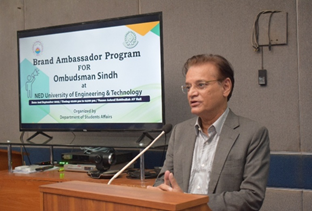
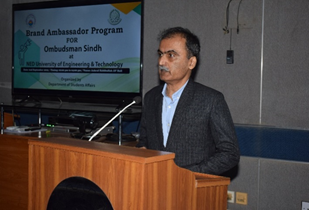
A workshop was held on 02nd Sept, 2025 at the NED University Karachi chaired by
Mr. Muhammad Sohail Rajput, Honourable Provincial Ombudsman Sindh to select ten students of NED University as Brand Ambassadors of Provincial Ombudsman Sindh. The students will be given task to disseminate information about the role and functions of the Ombudsman among the students and the public at large.
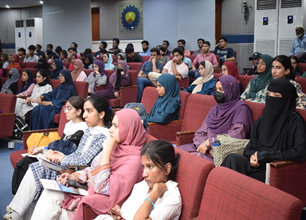
The Honourable Ombudsman Sindh addressed the large number of students of NED University and stated that the Ombudsman institution is an important feature of the legal system to provides fast and inexpensive justice to the masses, however majority of the population is unaware of it. There is a need to raise awareness about the Institution in order to resolve the problems of people and improve service delivery.
We are striving to expand our outreach and accessibility to facilitate dispensation of administrative justice to the general public closer to their homes. Our aim is to protect people against violation of their rights, abuse of power, unfair decisions and maladministration. In this regard, we have taken many initiatives to increase awareness about our institution such as the media outreach through social media, Quarterly Newsletter and Annual Reports, public messages through print and electronic media, Pana flex displayed at important public places and SMS campaign. In addition, Khulli Kathehri are regularly being held by our Regional Offices and complaints are resolved on the spot. Through these efforts we were able to increase our fresh complaints and admitted 7827 complaints against 2318 in the same period (Jan to July’2025) last year and gave relief in 7023 cases. Today we are here to utilize the capabilities of youth of this institution to disseminate our message.
He added that Pakistan has substantial youth population i.e. about 60% of population is under 30 years old and 26% is between 15 and 29 years and is potential for economic growth and innovation if effectively managed through education and employment opportunities. He added that the students selected as Ambassadors will build a bridge between Ombudsman office and students in particular and with the community at large, which will promote good governance and accountability of government departments.
The purpose of workshop is also to instill the concept of civic responsibilities and advocacy skills in the youth of Sindh by carrying out the community outreach of Ombudsman mandate to student community and general public. He informed that his office has already selected 10 Ambassadors each from five universities i.e. Hamdard, Sindh Medressatul Islam, Salim Habib, Sukkur IBA, SZABIST University, who have been disseminating the message of the institute through social media and community meetings. He also underlined how important it is for students to educate the society about resilience, their legal rights and the channels through which they may address issues.
Prior to this Dr. Muhammad Tufail Ahmed, worthy Vice Chancellor of Sindh NED University welcomed the Honourable Ombudsman Sindh and his team and mentioned the activities and achievements of the University and its role in providing best skilled youth to the country and also assured that student selected as Ambassador will carry the message of Ombudsman Institution effectively to the general public
Ms. Rehana G. Ali Memon, Advisor and Mr. Masood Ishrat, Registrar, Secretariat Provincial Ombudsman Sindh also briefed the participants about the concept of Brand Ambassador Program and working of Provincial Ombudsman Sindh through a detailed presentation.
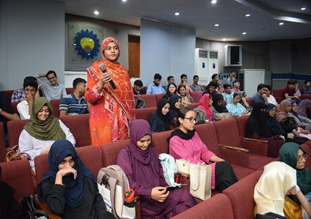
In the end question and answer session was held where the Honorable Ombudsman Sindh answered the question raised on the working of Ombudsman by the students.
THE OMBUDSPERSON REMAINS FOCUSED ON PROTECTING THE RIGHTS OF CITIZENS FACING HARDSHIP.
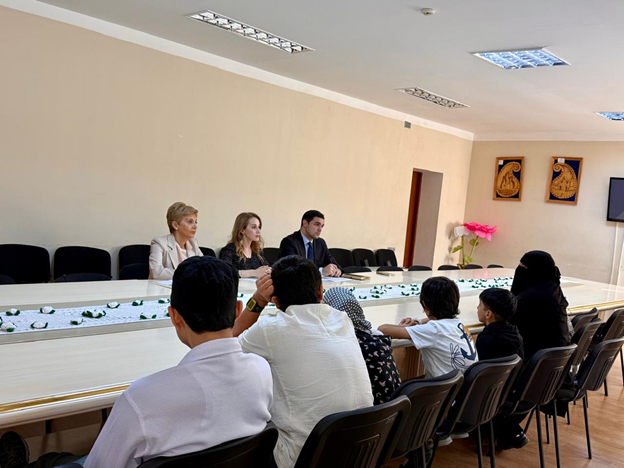
On 17 September 2025, Azerbaijan repatriated seven of its citizens from camps in Syria, including one woman and six children.
Following the instruction of Ombudsperson Sabina Aliyeva, staff of the Office visited the repatriated individuals accommodated in a social service facility of the Social Services Agency under the Ministry of Labor and Social Protection of the Population, to assess how their rights are being upheld.
At the meeting, the woman and children were briefed on the Ombudsperson’s mandate, activities, and avenues for appeal. They were guided also on issues such as the children’s social adaptation, education, documentation, and related needs.
Furthermore, discussions were also held with the institution’s management and staff to learn about the support provided to the accommodated individuals.
The issue remained under focus of the Ombudsperson.
TRANSPARENCY AND CONFLICT OF INTEREST RESOLUTION: CORNERSTONES OF CORRUPTION PREVENTION.
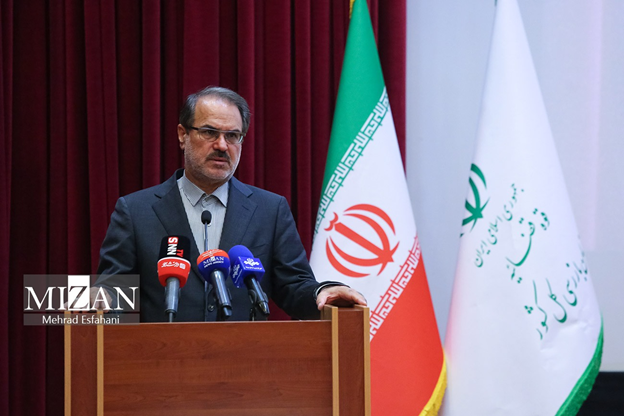
Dr. Khodaeiyan, President of the GIO – General Inspection Organization of Iran, emphasized at the opening ceremony of the National Festival on “Promoting Transparency and Eliminating Conflict of Interest Situations” that the fight against corruption is a collective duty, and the most effective way to counter it is through transparency and the elimination of conflicts of interest. He described this two-day educational conference as an opportunity for public culture-building against corruption and noted that enhancing administrative integrity is among the most important means of safeguarding the Islamic Republic and fulfilling the aspirations of the martyrs of the Sacred Defense.
Paying tribute to the Sacred Defense Week, Khodaeiyan identified the unity and cohesion of the Iranian nation as the main factors behind its great victories, and stated that honoring the martyrs’ ideals and protecting the Islamic system today can only be achieved by strengthening administrative health. He likened corruption to termites that silently and gradually destroy infrastructures, stressing that in sound governance, prevention must take precedence; in this regard, “transparency” and “conflict of interest resolution” are two fundamental pillars of corruption prevention.
The President of the GIO noted that the Islamic Republic seeks a society free of corruption and discrimination, while corruption thrives in darkness and under the shadow of conflicting interests. Referring to the statements of Imam Khomeini (RA) and the Supreme Leader on combating corruption, he pointed out that the GIO has compiled the Leader’s extensive directives on this matter. He further highlighted key transparency-related laws, such as the “Freedom of Information Act,” the “Asset Disclosure Act for Public Officials,” and the “Transparency Law of the Three Branches of Government,” stressing that their proper enforcement enhances accountability and public trust, and that any unwarranted classification of documents as “confidential” creates grounds for corruption.
He also referred to the “Law on Transparency and Oversight of Campaign Financing in Parliamentary Elections,” explaining that its correct implementation obliges candidates to declare their financial contributions and identify their supporters, thereby preventing individuals from entering parliament solely on the basis of financial backing. He defined conflict of interest as situations in which a public official’s decisions serve his personal interests or those of close associates, stressing the necessity of identifying and eliminating such cases. He considered the organization of the Transparency Festival (on 9 December, the International Anti-Corruption Day) as a continuation of the 2022 National Transparency Conference, announcing the development of evaluation indicators and the introduction of leading institutions in law implementation.
In conclusion, Khodaeiyan called upon all officials to fully implement the directives of the Supreme Leader and higher-level legal frameworks, emphasizing that the cost of preventing corruption is far less than the cost of combating it after its occurrence.
PROMOTING INTEGRITY: CCAC’S MULTIFACETED CAMPAIGN FOR CLEAN ELECTIONS IN MACAO, CHINA.
The Commission Against Corruption (CCAC) of Macao plays a vital role in ensuring fair and transparent elections. It combats electoral bribery by monitoring campaign activities. Citizens can report suspected violations via hotline, online platform, or in-person visits to the CCAC. The CCAC also conducts on-site inspections and intervenes early when irregularities arise.
In preparation for the 2025 Legislative Assembly Elections, the CCAC launched a comprehensive campaign to promote clean elections in Macao, China. As part of its outreach efforts, the CCAC organised a series of community promotion tours, which attracted thousands of participants. To further engage the public, the CCAC expanded its presence across social media platforms, released tailored animated content and launched a radio series to address public concerns.
The CCAC organised a sticker design contest to promote clean elections, which received several hundred entries from participants in both the youth and open categories. The contest culminated in an award ceremony celebrating the winning designs. Additionally, a WeChat game was launched, offering participants the chance to win prizes by answering questions related to election law and clean election scenarios.
The CCAC also participated in the Legislative Assembly Elections Campaign Kick-off Day on 30th August, where it promoted the values of clean elections among candidates, campaign teams and voters.
The Legislative Assembly Elections were successfully held on 14th September 2025, thanks to the joint efforts of the CCAC and the citizens of Macao, China.
CHIEF OMBUDSMAN MR. MEHMET AKARCA ATTENDED ASIAN OMBUDSMAN ASSOCIATION MEETINGS AND INTERNATIONAL WORKSHOP IN CHINA.
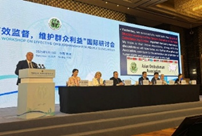
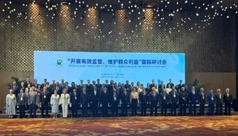
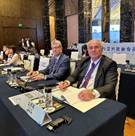
Chief Ombudsman Mr. Mehmet Akarca and Ombudsman Mr. Sadettin Kalkan attended the 26th Board of Directors and 18th General Assembly Meetings of the Asian Ombudsman Association (AOA), held in Nanjing, China on 9-10 September 2025.
During the program, bilateral meetings were held with Vice Chairman of the National Commission of Supervision of China Mr. FU Kui and High Commissioner for Human Rights (Ombudsman) of the Russian Federation Ms. Tatiana Moskalkova.
Chief Ombudsman Mr. Mehmet Akarca also delivered a speech at the International Workshop on “Effective Ombudsmanship for People’s Livelihood,” highlighting the role of Ombudsman Institutions in promoting access to justice, protecting fundamental rights, ensuring good administration, and fostering public trust. He emphasized that strong Ombudsman Institutions improve public services, contribute to social harmony, and benefit society as a whole.
ACRC PAID REWARDS OF APPROX. 300 MILLION WON TO 32 CORRUPTION AND PUBLIC INTEREST WHISTLEBLOWERS.

– ACRC offered about 300 million won in rewards to 32 whistleblowers for corruption and public interest violations this month (August)… The revenues recovered through corruption and public interest reports by public institutions reached about 3.1 billion won.
(26, August. 2025, ACRC)
The Anti-Corruption and Civil Rights Commission (ACRC, Chairperson Ryu Chul Whan) announced that it paid about 300 million won in rewards to 32 whistleblowers for corruption and public interest violations in August.
According to data compiled by the ACRC, the amount of revenues recovered by public institutions through corruption and public interest reports this month reached about 3.1 billion won. The top three sectors in which the biggest rewards were received were: employment (about 160 million won, 55.5%); research and development (about 60 million won, 21.2%); and welfare (about 20 million won, 8.2%).
< Cases of Reward Payment by Sector >
| Sector | Main content |
| Employment | Over 87 million won was paid in rewards to a whistleblower A for reporting an owner of a sports facility who falsely claimed employment retention subsidies by pretending employees were on leave while they were actually working. |
| Approx. 20 million won was paid in rewards to a whistleblower B for reporting a representative of a company who falsely submitted s to fraudulently claim the youth employment project grant by pretending a former employee was still working. | |
| R & D | Over 45 million won was paid in rewards to a whistleblower C for reporting a company representative who fraudulently claimed R&D funds by falsely registering participants in a public institution’s research and development project. |
| Approx. 16 million won was paid in rewards to a whistleblower D for reporting a company representative who conspired with other company to issue false tax invoices to illegally claim R&D funds during a research and development project. | |
| Welfare | A total of 9 million won was paid in rewards to whistleblowers E and F, 4.5 million won for each, for reporting individuals who illegally received basic living security benefits by receiving wages in cash despite having higher income than his recognized income. |
| A reward of 4 million won was paid to a whistleblower G for reporting a case where the reported individual illegally claimed single-parent family support subsidies by not disclosing his and his de facto spouse’s incomes. |
Furthermore, the ACRC additionally paid approximately 7 million won in rewards to six whistleblowers for cases where only partial rewards were initially provided, due to incomplete recovery of revenues by public institutions, after these institutions have seen additional recovery to their revenues.
Kim Eung Tae, Director General of the Inspection and Protection Bureau of the ACRC, said, “The ACRC uncovers corruption and public interest infringements that occur in a clandestine manner in our society through reports, and provides corresponding rewards to whistleblowers,” adding that “we will continue to provide rewards in an active manner to whistleblowers to encourage more active reporting.”