Category Archives: AOA News Letter
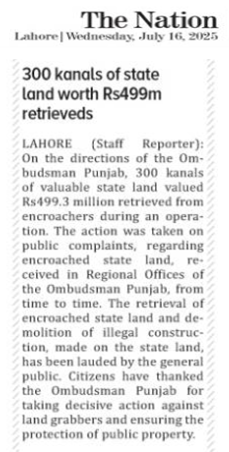
RETRIEVAL OF ENCROACHED STATE LAND WORTH RS. 499 MILLION.

In a high-impact intervention, the Ombudsman Punjab oversaw the retrieval of 300 kanals of state land, valued at over Rs. 499 million, from illegal occupants across various districts.
This action, taken in response to public complaints, not only recovered precious government resources but also demonstrated the institution’s resolve against land grabbing and administrative negligence. Citizens across the province expressed gratitude for the decisive action taken to safeguard public property.
This province-wide operation reflects the Ombudsman’s strong commitment to protection of state assets, curbing maladministration, and ensuring accountability in public land management. The public has widely lauded this decisive action as a measure of institutional strength and integrity.
COMMISSIONER AGAINST CORRUPTION AO IEONG SEONG ATTENDED THE AOA MEETING IN NANJING AND VISITED THE JIANGSU PROVINCIAL COMMISSION OF SUPERVISION.
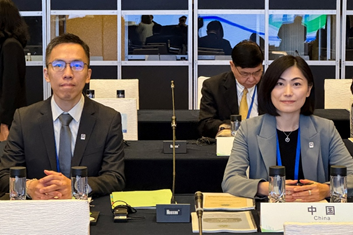
The Commissioner Against Corruption, Ao Ieong Seong, led a delegation of the CCAC of Macao to attend the 18th Meeting of the General Assembly of the Asian Ombudsman Association (AOA) in Nanjing in recent days. The delegation also visited the Jiangsu Provincial Commission of Supervision.
The event was organised by the National Commission of Supervision, with the aim to gather the Asian member institutions to jointly discuss regional affairs and exchange supervisory work experience. Dozens of supervisory and ombudsman institutions in countries and regions including Japan, South Korea, Thailand, Russia and Pakistan sent their representatives to attend the meeting.
President of the AOA, Ejaz Ahmad Qureshi, reported a series of events hosted by the association, the 2023/2024 audited financial situations of the AOA accounts and some other matters in the meeting. Afterwards, an international workshop themed “Effective Ombudsmanship for People’s Livelihood” was held.
In addition, Ao Ieong Seong and the delegation visited the Jiangsu Provincial Commission of Supervision where they met with its Director, Zhang Zhong. Ao Ieong Seong stated that the CCAC will promote to fulfil the governance requirement of implementing a rule-of-law society and achieve the SAR Government’s goal of good governance. Zhang Zhong introduced the anti-corruption work of the Jiangsu Provincial Commission of Supervision and shared the experience of integrity building.
The Head of the Research Department of the Ombudsman Bureau of the CCAC, Ng Soi Hong, and some others also attended the meetings.
The Commissioner Against Corruption, Ao Ieong Seong, and the Head of the Research Department of the Ombudsman Bureau, Ng Soi Hong, attending the meeting
OMBUDSMAN ANNOUNCES RESULTS OF FULL INVESTIGATION INTO HOSPITAL AUTHORITY’S DEPOSIT REFUND ARRANGEMENTS FOR ASSISTIVE DEVICE LOAN SERVICE.

The Ombudsman, Mr. Jack Chan, today (26 September) announced the completion of a full investigation into the Hospital Authority (“HA”)’s deposit refund arrangements for the assistive device loan service, with 12 recommendations on improvement measures made.
Hospitals under HA have assistive devices available for loan, free of rental charge, to patients with clinical needs, aiming to facilitate their rehabilitation progress and daily living during the initial post-discharge period. HA requires borrowers to pay a deposit refundable upon the proper return of the loaned devices.
Mr. Chan said, “The Office received a complaint that after returning the wheelchair to the Occupational Therapy Department (“OTD”) of a hospital under HA, the complainant brought a written certificate issued by the OTD confirming that the wheelchair had been properly returned to the Shroff Office to request a refund of the deposit. However, the staff insisted that the complainant could not obtain a refund without presenting the deposit receipt. The complainant considered the certificate from the OTD, together with his own identity document, sufficient to prove the return of the wheelchair and his identity as the borrower. He alleged that the hospital concerned was unreasonable in requiring him to present the deposit receipt as a prerequisite for the refund.
“Assistive devices help patients in need manage daily living activities and facilitate their rehabilitation progress. We commend HA for providing free-of-charge assistive device loan service to support patients and their carers. As the refund of deposits involves financial transactions, we acknowledge that HA must handle these with caution. Nevertheless, during our full investigation, we were concerned about the inconvenience caused to the public by the HA’s requirement and any room for improvement.
“The Office’s investigation found that hospitals already record the complainant’s name and deposit amount in the computer system at the time of payment. On the day of returning the wheelchair, the Deposit Refund Notice issued by the Allied Health Department certifying that the borrower has returned the device intact, and identity document presented by the complainant were sufficient to confirm the return of the wheelchair and his identity. After confirming the hospital’s records in the computer system, it was actually unnecessary for Shroff staff to require the complainant to present the deposit receipt for verifying such information and status. Hence, in our view, the hospital concerned insisting that the complainant present the deposit receipt for refund collection after returning the assistive device was overly rigid, inflexible and redundant in practice. HA should modernise and enhance its existing arrangements. This would help avoid the inconvenient situations where members of the public are denied a refund for not bringing a receipt.”
The Office is pleased to note that HA is in the process of reviewing and enhancing the procedures for the assistive device loan service. HA agreed that borrowers will no longer be required to present the deposit receipt when applying for a refund. This Office in this full investigation made 12 recommendations for improvement to HA, and HA expressed its agreement and full commitment to implementing them.
The main recommendations for improvement made by this Office to HA include:
- expediting the enhancement of arrangements and workflow for the assistive device loan service at public hospitals to standardise the current practice of allowing the authorisation of a representative to collect deposit refunds, and removing the requirement for borrowers to present the deposit receipt when applying for a refund;
- after completing the enhancements, clearly specifying in the relevant internal guidelines and the booklet for the borrowers the supporting documents the authorised representative of borrowers must present to collect deposit refunds;
- sharing this case with staff responsible for handling applications for borrowing assistive devices and related deposits, and providing staff training to ensure their awareness and understanding of the newly formulated guidelines; and
- Formulating measures to ensure that all public hospitals consistently adhere to the new guidelines in handling assistive device loan cases in future.
The full investigation report has been uploaded to the website of the Office of The Ombudsman for public information.
A DELEGATION FROM THE DIRECTORATE GENERAL FOR PRISONS AND DETENTION HOUSES PAID A VISIT TO THE OMBUDSMAN INSTITUTION.
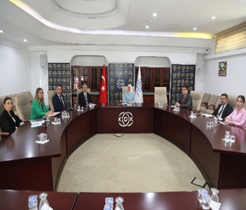
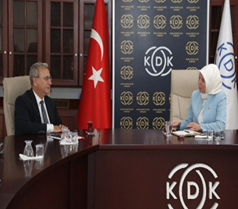
Deputy General Directors of Prisons and Detention Houses Mr. Fatih Güngör and Mr. Namık Kemal Varol, Head of Department Ms. Armağan Buran, and Judge Ms. Burcu Dölek paid a visit to the Ombudsman Institution, on 21 August 2025.
During the meeting with Ombudsman Ms. Fatma Benli Yalçın and experts from the Ombudsman Institution, information was shared and views were exchanged regarding the work carried out for children.
WAFAQI MOHTASIB’S INSPECTION TEAM VISITS BISP.
- WAFAQI MOHTASIB’S INSPECTION TEAM VISITS BISP,
- TAKES SERIOUS NOTICE OF IRREGULARITIES IN DISBURSEMENT OF FINANCIAL ASSISTANCE,
- SUGGESTS TRANSFER OF FINANCIAL ASSISTANCE DIRECTLY INTO BANK ACCOUNTS OF BENEFICIARIES
Islamabad: 08 August, 2025 – An Inspection Team from the Federal Ombudsman (Wafaqi Mohtasib) Secretariat headed by a Senior Advisor, Mr. Ahmad Farooq, which visited the Benazir Income Support Programme (BISP), Head Office here today to look into a large number of complaints regarding irregularities there, submitted its preliminary Report to the Wafaqi Mohtasib.
The Inspection Team asked the BISP Administration to examine the possibility of transferring the amount of financial assistance directly into the bank accounts of the beneficiaries. It also instructed to conduct a thorough probe into the allegations of corruption levelled by some of the beneficiaries against certain officials of the organization. The Team also directed that the women, who have been declared ineligible for grant of assistance, may be intimated in writing of the reasons which would spare them of the hassle of visiting the office repeatedly.
The Inspection Team also interacted with the women present there. Some of them complained that they have been made to visit the office repeatedly and a certain amount was often deducted unfairly from the prescribed grant. Likewise, the women considered ineligible for the grant of assistance, have not been informed of the reasons in clear terms. ‘The Administration rather collects their CNICs from them and put on these future dates in indelible ink, which rendered them spoiled and unsuitable for future use’, they disclosed.
Earlier, the Wafaqi Mohtasib’s team was briefed on various ongoing projects by the BISP Administration. It was informed that the basic purpose of the Programme was to help the persons and families living below the poverty line and the organization was presently disbursing financial relief to more than 10 million deserving families in addition to making arrangements for the education and brought up of children including provision of healthy food for the new born.
OMBUDSMAN SINDH SETS REGIONAL BENCHMARK IN PUBLIC OUTREACH, COMPLAINT RESOLUTION, AND HUMANITARIAN COLLABORATION
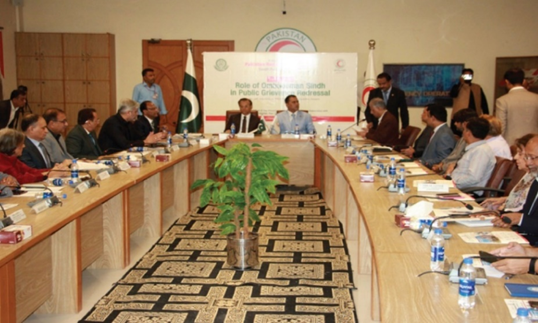
The Office of the Provincial Ombudsman Sindh, in partnership with the Pakistan Red Crescent Society (PRCS) Sindh, hosted a high-impact awareness seminar on 24th July 2025 aimed at enhancing citizen engagement, improving access to justice, and fostering collaborative humanitarian action.
In his presidential address, Mr. Mohammad Sohail Rajput, Provincial Ombudsman Sindh, highlighted the urgent need to bridge the gap between institutions and the public. “Out of a population of 55.5 million, only 9,000 complaints have been filed – an indication of limited public awareness and institutional trust,” he noted. Impressively, over 6,700 of these complaints have already been resolved. Mr. Rajput also outlined a series of forward-looking reforms, including the digitization of the complaint redressal mechanism, the launch of a bilingual mobile application, and an upcoming Memorandum of Understanding with PRCS Sindh to strengthen joint efforts in public service delivery and disaster response.
Mr. Rehan Hashmi, Chairman, PRCS Sindh, praised the Ombudsman’s leadership and emphasized the critical role of outreach in enabling citizens to access free, timely, and impartial justice.
Insightful presentations were delivered by Mr. Imdad Hussain Siddiqui, Director, Climate and Disaster Justice Unit, Ombudsman Sindh Secretariat; Mr. Masood Ishrat, Registrar, Ombudsman Sindh Secretariat; and Mr. Kanwar Waseem, Provincial Secretary, PRCS Sindh.
The seminar brought together provincial leadership and representatives from UN agencies, international NGOs, community-based organizations (CBOs), local support organizations (LSOs), civil society organizations (CSOs) and other humanitarian partners. Their active participation highlighted a growing momentum towards collaborative, citizen-centric governance and resilient public institutions.
This milestone event positions the Provincial Ombudsman Sindh as a regional model for innovation in ombudsmanship, emphasizing transparency, digital inclusion, and cross-sectoral cooperation to protect and empower citizens.
MECHANISMS TO COMBAT VIOLENCE AGAINST WOMEN AND CHILDREN IN SOCIAL NETWORKS.
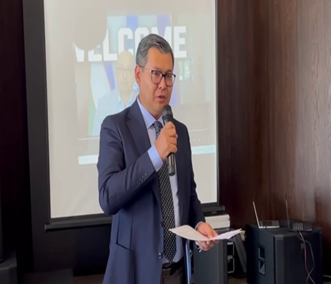
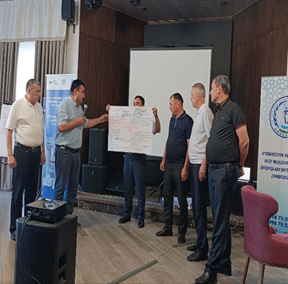
On 11 August 2025, at the initiative of the Commissioner of the Oliy Majlis for Human Rights (Ombudsman), and in cooperation with the Ministry of Justice of the Republic of Uzbekistan, the United Nations Development Programme (UNDP) Country Office in Uzbekistan, and the Ministry for Foreign Affairs of Finland, a two-day seminar on “Mechanisms to Combat Violence Against Women and Children in Social Networks” commenced.
The seminar is attended by experts from Latvia’s “Marta” Centre, staff of the Secretariat of the Commissioner of the Oliy Majlis for Human Rights (Ombudsman), as well as representatives of non-governmental non-profit organizations and civil society institutions.
The relevance of the topic lies in the fact that, to properly identify cases of cyberviolence, provide legal and practical assistance to victims, and effectively organize inter-agency cooperation, the staff of the Ombudsman must possess modern knowledge and skills. This, in turn, will contribute to increasing legal awareness among the population and implementing international recommendations in practice.
According to the World Health Organization, one in ten women in the online space experiences some form of cyberviolence from the age of 15. Research by the European Institute for Gender Equality shows that cyberviolence can affect anyone; however, women and girls are more likely to become its main target. Such violence can cause serious harm to their physical and mental health and may also lead to financial difficulties.
Within the framework of the seminar, participants are receiving information on the types and forms of cyberviolence, manifestations of discrimination in the online space, as well as the distinctions between “freedom of expression” and discriminatory content. Through practical exercises, they will analyze real-life situations, explore methods of assisting victims, work with digital evidence, and study tools for the early detection and prevention of cyberviolence based on international experience.
VISITS WERE MADE TO THE INSTITUTIONS OF THE MINISTRY OF HEALTH.
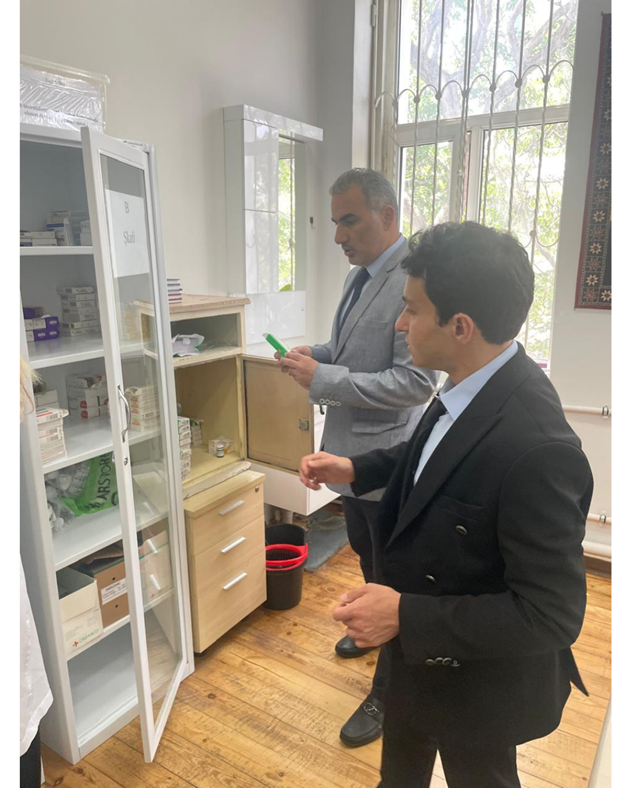
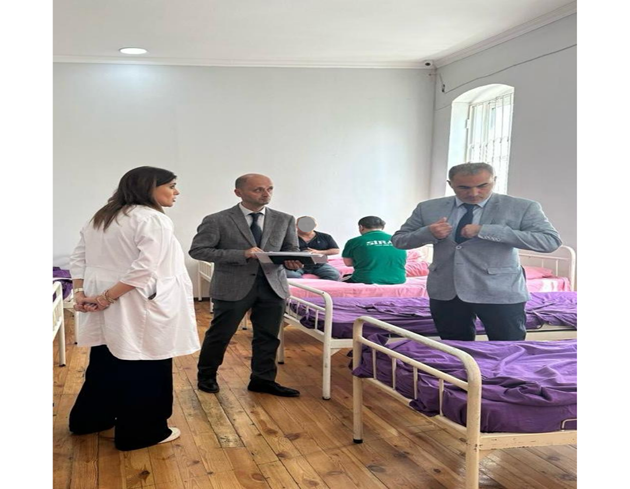
On the instructions of Sabina Aliyeva, the Commissioner for Human Rights of the Republic of Azerbaijan (Ombudsman), visits were made to the Clinical Psychiatric Hospital No. 2 of the Ministry of Health of the Republic of Azerbaijan and the Baku Drug Center within the framework of the National Preventive Mechanism mandate and the activities of the Working Group in the field of “Mental health and human rights” under the Ombudsman.
The purpose of the monitoring organized on the basis of the Optional Protocol of the UN Convention against “Torture and Other Cruel, Inhuman or Degrading Treatment or Punishment”, the Constitutional Law “On Human Rights Commissioner (Ombudsman) of the Republic of Azerbaijan”, and the Law of the Republic of Azerbaijan “On Psychiatric Assistance” was to investigate the treatment and conditions in these institutions, to study the issues of ensuring patients’ rights and the condition of the services provided.
It was determined that both inpatient and outpatient treatment was carried out in the Clinical Psychiatric Hospital No. 2, some deficiencies that existed during previous visits to the institution were eliminated, new employees were appointed to the vacant positions, and renovation works were carried out a few months ago. Recommendations were made in the direction of improving living conditions, documentation work and strengthening control in this area, taking patients out for more outdoor walks.
At the same time, it was determined that only outpatient treatment measures were taken in the Baku Drug Center operating on the first floor of the residential building. It has been observed that both the number of physicians is low and the size of the facility is small.
It should be noted that although it is stated that both enterprises are supposed to be moved to new, more spacious buildings, it is very important to speed up this matter.
At the end of the visits, a legal educational conversation was held with the management and employees of the institutions, legal educational publications of the Ombudsman’s Office and information boards related to the “916” Call Center were presented.
The Ministry of Health will be addressed in order to eliminate the deficiencies identified during the visit.
KHODAEIYAN: INSPECTIONS MUST BE FIELD-ORIENTED, TRANSPARENT AND EFFECTIVE .
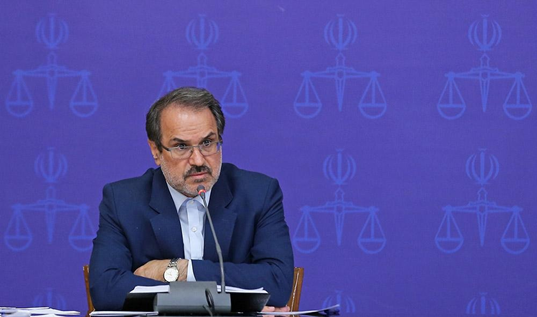
The head of the General Inspection Organization of Iran (GIO), Dr. Khodaeiyan, stressed the need for more precise and impactful inspections, emphasizing unannounced visits to executive and service agencies, monitoring the supply chain of essential goods, and addressing energy imbalances as top priorities. Speaking at a national meeting of senior GIO managers, he said: “The current situation of the country requires inspections to be more field-oriented than ever before. Our mission is to prevent corruption, remove bottlenecks, and institutionalize transparency across governance.” Dr. Khodaeiyan recalled the organization’s active role during the 12-day imposed war, when inspectors were present in hospitals, markets, and service centers, preventing problems through direct supervision. He also underlined the importance of timely and hopeful communication with the public, calling for swift handling of complaints received via the 136 hotline. “Responding promptly to citizens’ demands strengthens the nation’s social capital,” he noted. Highlighting the fight against corruption, Khodaeiyan announced that a Transparency Festival will be held as part of the Judiciary’s Transformation and Excellence Document. He also reaffirmed strict enforcement of laws, including the ban on one person serving on multiple boards of directors, and prohibiting government employees from joining private company boards.
The GIO chief further stressed continuous oversight of key laws such as the Population Youthfulness Law, business licensing reforms, and consumption pattern corrections. He warned that inspectors must not allow mismanagement or negligence to open the way for corruption. Addressing the Seventh Development Plan, he said the organization will monitor its implementation actively to ensure it avoids the shortcomings of previous plans. He also linked the Year’s slogan to supporting production and investment, calling for the Investment Headquarters for Production to hold active sessions and supervise decisions. On the subject of cognitive warfare, Khodaeiyan noted: “Today, cyberspace, media, social networks, and artificial intelligence have replaced traditional battlefields. The enemy distorts realities, magnifies weaknesses, and downplays achievements to create despair. The solution is the jihad of clarification: accurate, hopeful, and timely communication by all institutions.”
At the start of the meeting, Dr. Ali Hadi, Deputy for Strategic Affairs, presented a progress report on the GIO’s 2024–2025 programs.
COMMISSIONER FOR HUMAN RIGHTS REVIEWS WORK OF REHABILITATION UNITS FOR CONVICTS.
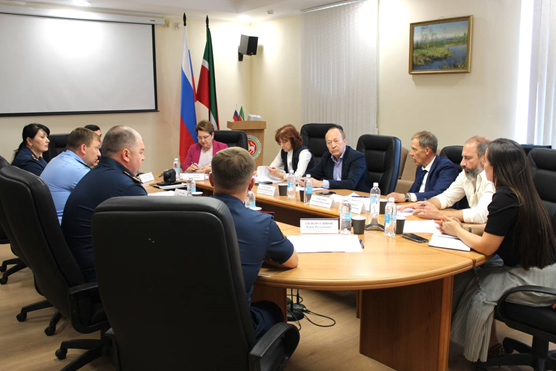
Commissioner for Human Rights held a meeting on the work of rehabilitation units for convicts suffering from addiction to narcotic drugs and psychotropic substances. This is a very serious issue, both for the correctional system and for society as a whole.
She discussed performance indicators of existing rehabilitation programmes and staffing. Considered the possibility of organizing a rehabilitation unit on the basis of another correctional colony.
I believe it is important that such initiatives are supported and further developed. The work of rehabilitation units is a chance for real change of a person’s fate, to return to a healthy and decent way of life.
We plan to prepare a video with the participation of the convicted persons undergoing rehabilitation. They will share how participating in the program changes their perception of themselves, others and life in general.