GENERAL INSPECTION ORGANIZATION (GIO) MARKS THE 44TH ANNIVERSARY OF ITS ESTABLISHMENT.
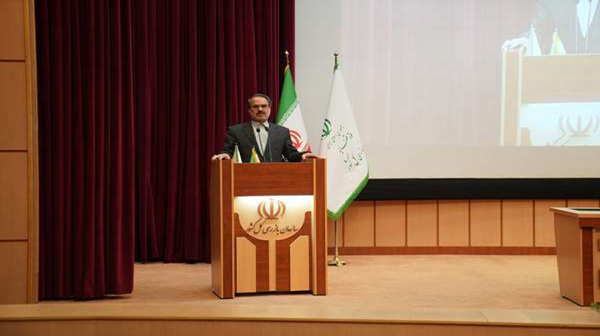
At the ceremony marking the 44th anniversary of the establishment of the General Inspection Organization of Iran (GIO), the President of the Organization emphasized:
The GIO is advancing toward smart oversight, public-centered governance, and firm action against corruption / The Organization never obstructs the lawful activities of managers and institutions
At the ceremony commemorating the 44th anniversary of the establishment of the General Inspection Organization of Iran, Justice. Khodaeiyan, the President of the Organization, elaborated on its new approaches and programs.
According to the GIO’s Public Relations Office, Justice. Khodaeiyan, addressing the ceremony attended by the First Deputy Chief of the Judiciary, congratulated all GIO staff on the anniversary and stated: “The anniversary of the Organization provides an opportunity to review past performance and assess the extent to which legal objectives have been achieved. It is also the right time to envision the future and plan more precisely to realize the goals set by law.”
Emphasizing the legal and governmental position of this supervisory body, he said: “The General Inspection Organization is a constitutional institution established under Article 174 of the Constitution, mandated to oversee the proper implementation of laws and the sound conduct of affairs.”
Referring to the rationale behind the establishment of this supervisory institution, he added: “The framers of the Constitution established the GIO to enhance administrative integrity, ensure accountability among officials, and guarantee the fight against corruption.”
Justice. Khodaeiyan underlined that the GIO’s main duty is to uphold justice — a justice that encompasses judicial, social, economic, political, and cultural dimensions — and achieving it depends on ensuring proper implementation of the law.
Citing the views of the late Imam Khomeini (RA), he said: “From the viewpoint of the Founder of the Islamic Revolution, wherever the law is implemented, justice prevails; wherever it is neglected, oppression arises. The Supreme Leader also considers adherence to law the main criterion of justice. Accordingly, the GIO regards the promotion of a culture of legality and effective oversight of law enforcement as its core mission.”
The President of the GIO then pointed to the organization’s new strategies in its current phase of transformation and excellence, noting: “In this period, we have placed several key principles on our agenda. We believe the GIO must be technology-driven, knowledge-based, and people-centered.”
Highlighting the need to employ technology in oversight processes, he stated: “In our transformation path, we have shifted toward smart supervision. The rapid growth of information technology compels all institutions to move toward systemic, electronic, and intelligent processes. Traditional methods can no longer ensure effective oversight.”
He continued: “Accordingly, the GIO’s technological infrastructure has been upgraded, and modern smart supervisory systems have been designed and implemented to align inspections with digital transformation and intelligent governance.”
Justice. Khodaeiyan identified “public-centered oversight” as another fundamental approach, saying:
“The best inspectors are the people themselves. The public’s capacity for oversight in the Islamic Republic is vast, and whenever this capacity has been utilized, we have achieved success.”
He added: “In this regard, the protection of whistleblowers has been seriously pursued so that both the law and its executive bylaw are finalized. The regulation for granting rewards to whistleblowers has been approved by the Honorable Head of the Judiciary, and the whistleblowing portal is operational — enabling citizens to submit reports and track their status.”
Referring to the knowledge-based orientation of the Organization, he said: “Given the breadth of the GIO’s responsibilities, success in fulfilling its critical mission requires using the latest scientific and research findings.”
He added: “Accordingly, the Center for Training and Research on Administrative Health and Anti-Corruption has been strengthened, and scientific cooperation with universities and research institutes has expanded.”
The GIO President continued: “The Organization has obtained a publishing license for specialized works, and over 80 professional titles have been published in the fields of inspection, supervision, and corruption prevention. A scientific journal has also been launched, with two issues published so far.”
He went on: “Furthermore, the quarterly ‘Experiences of Nations’ has been launched to provide comparative studies in anti-corruption, and 14 scientific cooperation agreements have been signed with universities and research bodies, including the University of Tehran, Iran University of Science and Technology, Allameh Tabataba’i University, Imam Sadiq University, the National Defense University, the Majlis Research Center, and the Guardian Council.”
Highlighting another major focus area, he said: “Transparency and conflict-of-interest management are key pillars of the GIO’s Transformation Charter and are being pursued seriously. Effective anti-corruption efforts can only be realized through transparency, which becomes sustainable when it turns into a public demand.”
He added: “Accordingly, the First National Conference on Transparency was held in 2022 with the participation of the heads of all three branches of government. The Permanent Secretariat for Transparency was established in the GIO, and this December, the Festival on Transparency and Conflict-of-Interest Elimination will be held, during which leading institutions in this field will be recognized.”
Justice. Khodaeiyan stressed: “In this period, our focus has not been limited to confronting corrupt actors; rather, preventing corruption has become a top priority. Corruption-prone areas have been identified, and countermeasures have been communicated to relevant bodies. Many such vulnerabilities across different institutions have already been corrected or eliminated.”
He added: “In line with the directives of the Supreme Leader and the orders of the Head of the Judiciary, special task forces have been formed to support production, the Law on Youth Population Growth, and knowledge-based companies, while closely supervising the implementation of the country’s general policies.”
He went on to say: “Another of our approaches is expanding the on-site presence of inspectors among the people and executive agencies. GIO inspectors, both overtly and covertly, are present in institutions and monitor service delivery and legal compliance through direct engagement with citizens.”
Emphasizing the principles of independence, impartiality, and ethics, he said: “All colleagues must place moral conduct, impartial judgment, and adherence to law at the core of their work. Every action of the GIO must be grounded in law and free from political pressure or influence. Any deviation from impartiality undermines public trust. The Organization must resist any form of corruption without discrimination and solely within the framework of the law.”
Discussing oversight challenges, he noted: “Unfortunately, the culture of accepting oversight has not yet become institutionalized among some managers. Contrary to certain claims that the GIO stifles managerial initiative, this supervisory body only intervenes when violations or illegal actions are detected and never obstructs lawful managerial activities.”
He concluded: “If any illegality or corruption occurs anywhere in the country, it is our duty to intervene immediately. As the nation’s highest supervisory authority, we are responsible for preventing injustice and corruption through the enforcement of law.”
Finally, referring to the GIO’s firm stance against corruption, Justice. Khodaeiyan said: “Despite repeated warnings and notices, some individuals continue to engage in corrupt practices, for which there is absolutely no leniency.”
In conclusion, the President of the General Inspection Organization of Iran stressed: “The GIO has no red lines or exceptions in the fight against corruption. Wherever violations or corruption are detected, they are addressed decisively and, in accordance with the law, referred to judicial authorities for action.”