Category Archives: NEWS BULLETIN
Federal Ombudsman directs prompt implementation of decisions by the Sui Gas Companies
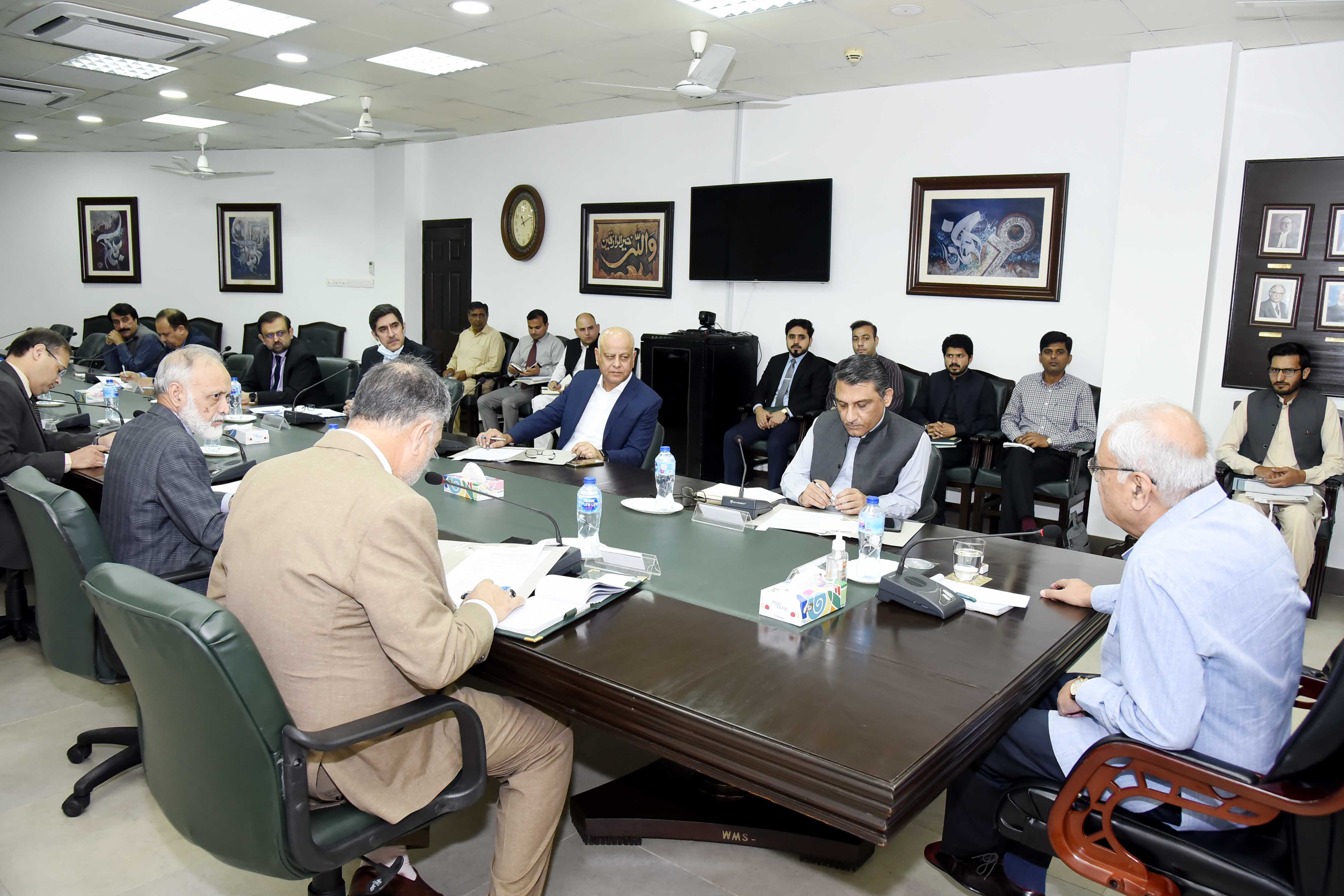
SECRETARY PETROLEUM AND MD SNGPL ASSURES FULL & TIMELY IMPLEMENTATION
Mr. Ejaz Ahmad Qureshi, the Federal Ombudsman has directed the management of Sui Northern Gas Pipelines Limited (SNGPL) to take prompt actions on the decisions of his Office and urged that serious notice will be taken of any delay in non-implementation of its findings. He was chairing a high level meeting to review implementation of Wafaqi Mohtasib findings by SNGPL. The meeting was attended by the Secretary Petroleum & Natural Resources and Managing Director SNGPL alongwith his team. He added that Consumers with small bills are asked to visit the SNGPL office repeatedly causing immense hardship. The Wafaqi Mohtasib directed the SNGPL to improve its redressal system to the general public. He further added that the SNGPL should appoint an officer of BS-20 as a Focal Person to redress the grievances of general public promptly with fairness.
The Secretary Petroleum and Managing Director, SGNPL assured the Federal Ombudsman that urgent necessary steps will be taken forthwith to ensure prompt implementation of WM’s decisions and upgrading of service delivery by the SNGPL.
Special Report on Impact of COVID 19 on Children’s Rights in Georgia
On April 18, 2022, the Public Defender of Georgia presented a special report assessing the impact of the Covid 19 pandemic on children’s rights and the measures taken by the State. The report was prepared with the support of the UNICEF Regional Office for Europe and Central Asia (UNICEF ECARO), the UNICEF Georgia Office and the European Network of Ombudspersons for Children (ENOC).
Protection of children’s rights has encountered new challenges in almost every direction due to the Covid 19 pandemic. The special report assesses the impact of measures taken by the State in the context of the pandemic from March 2020 to May 2021 in three main areas of children’s rights: protection from violence, right to general education and alternative care.
The results of the study made it clear that the measures taken by the State to prevent the spread of the pandemic aggravated the rights situation of children in Georgia. In particular, children’s risks of being abused or witness abuse increased during the pandemic, while the mechanisms for detecting such cases further decreased. Despite the increased risks, there has been no significant increase in referrals to the state agencies.
The study revealed serious problems relating to the effective inclusion of children with disabilities and children with special educational needs in the educational process, quality of education, access to the Internet and technology, etc.
When enforcing the regulations developed for the management of the pandemic, the State did not provide adequate support to child care institutions. The measures taken by the State severely restricted the face-to-face communication of the juveniles in state care with their families, friends and social workers, as well as their access to various psychosocial services.
At the opening of the online event, the Public Defender briefly reviewed the findings of the study and noted that from January 2020 to June 8, 2021, the number of cases of child abuse referred by the Office of Resource Officers to the Agency for State Care decreased by 197 compared to 2019, while the number of cases of child abuse referred to the Ministry of Internal Affairs increased only by 47 compared to 2019. Most of the cases concerned early marriage and the risks of early marriage.
“We believe that the findings of the special report and the recommendations developed on the basis of the findings will be interesting for the relevant agencies in terms of identifying and addressing the challenges posed by the Covid 19 pandemic, as well as planning measures for future crises and considering the best interests of the child. In addition, it is especially important to listen to the opinion of children and ensure their involvement when making any decision relating to them,” – said the Public Defender.
Ghassan Khalil, UNICEF Representative in Georgia, also delivered a welcoming speech at the presentation.
The results of the study were presented by Ketevan Sokhadze, Head of the Department of the Rights of the Child of the Public Defender’s Office, Goga Khatiashvili, researcher on violence against children and their psychosocial rehabilitation, Mariam Janiashvili, expert on children’s right to education, and Nana Gochiashvili, researcher on the rights of children placed in state care.
Representatives of local and international non-governmental organizations, diplomatic corps accredited in Georgia and experts working on the above-mentioned topics took part in the discussion of the report.
Evaluation of Effectiveness of Institutional Mechanisms for Gender Equality in Georgia
On April 15, 2022, the Public Defender’s Office of Georgia, in cooperation with UN Women and with the support of the Norwegian Ministry of Foreign Affairs, held an online presentation, where it evaluated the effectiveness of institutional mechanisms for gender equality and presented a study prepared by the Public Defender’s Office.
In her opening speech, Ekaterine Skhiladze, Deputy Public Defender of Georgia, stressed the importance of a well-thought-out and unified vision of the State for the creation of an effective institutional mechanism for gender equality, which in turn ensures the strengthening and sustainability of the existing mechanisms.
Kaori Ishikawa, UN Women Country Representative to Georgia, Nino Tsilosani, Member of Parliament of Georgia, and Maka Peradze, Head of the Human Rights Secretariat of the Administration of the Government of Georgia, also delivered welcoming speeches at the conference. Expert Lika Jalaghania evaluated the effectiveness of institutional mechanisms for gender equality and introduced the main findings of the study.
The study found that national mechanisms for gender equality still need institutional strengthening and refinement, which is related to the lack of systemic nature of the mechanism. The role of national mechanisms is largely reflected in their consultative functions and, consequently, their influence on policy-making and coordination is weak. Adequate human and financial resources are crucial in the implementation of gender mainstreaming; Unfortunately, this remains a problem in Georgia, which further affects the general situation of women’s rights and gender equality in the country. Another challenge is the lack of readiness and coordination of institutional mechanisms for gender equality. As for the agencies, despite the significant measures taken by them, the programmes and projects implemented by them are chaotic and not based on a unified approach. Unfortunately, this trend indicates that gender equality issues are still not a priority in the country.
The online presentation was moderated by Ekaterine Skhiladze, Deputy Public Defender of Georgia. The meeting was attended by representatives of the governmental and non-governmental sectors.
ACRC to Give the Reported an Opportunity to Explain to Secure Fairness and Objectivity in Handling Corruption Reports
The Anti-Corruption and Civil Rights Commission (ACRC, Chairperson Jeon Hyun Hui) announced that as the revision to the Act on the Prevention of Corruption and the Establishment and Management of the Anti-Corruption and Civil Rights Commission (“the Corruption Prevention Act”) has allowed it to verify the reported matters not just from a reporting person but also from the reported when handling corruption reports, it will give the reported an opportunity to explain to resolve concerns over false accusations or defamation of the reported while managing to protect the identification of a reporting person in the course of doing so.
The ACRC chairperson Jeon Hyun Hui said in a briefing at the Seoul Government Complex on March 17, “As we implement the system to verify the reported matters from the reported* after 20 years of enforcing the Corruption Prevention Act, we will try to ensure that the system is settled without any side effects.”
* When the Commission handles corruption reports it received, if it cannot determine whether audit, investigation or inspection (referral) of the reported matters is necessary even after the verification of the matters from a reporting person, it can verify the matters from the reported only if the reported agrees.
The ACRC said that while the system, which started to be implemented in mid-February, may reduce violations of the rights and interests of the reported, including false accusations and defamation, there can be also side effects that the reported finds who reported or destroys evidence in the process of verifying the matters from the reported.
Accordingly, to improve the fairness of its report handling and not to destroy the purpose of the reporter protection system, the ACRC prepared and implements procedures for accurate verification and detailed standards for granting opportunities to explain to the reported as follows:
[Inform the reporter of the system of verifying reported matters from the reported] First, in the stage of receipt of corruption reports, the Commission informs a reporting person of the system and explains that he/she can be punished pursuant to the Criminal Act, etc. in case where he/she files a false report that may cause false accusations or defamation of the reported and that he/she can be also excluded from the subject of protection under the Corruption Protection Act, in order to prevent the abuse of reporting.
[Cases where an opportunity to explain is given to the reported]
An opportunity to explain is given to the reported if: whether the report is falsely filed or not is the point in dispute; the evidence is not clear; who should be held accountable for the corruption in question needs to be clarified.
In particular, when the Commission grants an opportunity to explain to the reported, it will provide guidance on the ‘the protection and reward system for reporters’ and ‘the provision of punishment for violations of confidentiality and taking disadvantageous measures’ in order to alarm the reported not to cause harm to reporters.
If reporters suffer damage or fear harm due to the granting of an opportunity to explain to the reported, the Commission will take swift measures to recognize the status of reporters for more thorough protection.
[Cases where an opportunity to explain is not granted to the reported]
On the other hand, considering that violation of prohibition of publishing personal information of reporters is punished by imprisonment for not more than five years or by a fine not exceeding 50 million won under Article 88 of the Corruption Prevention Act and that corruption detection through reporting is important, the Commission does not grant an opportunity to explain to the reported if: there is a concern over exposure of the identity of reporters; there is a concern for the reported to destroy evidence or fleeing; and the reported refuse to be given an opportunity to explain.
ACRC chairperson Jeon Hyun Heui said, “we cannot rule out the possibility of a conflict of legal interests between protection of reporters and prevention of false accusation or defamation due to the introduction of the verification system. We will try to develop the system to be more trusted by the people by dealing with corruption report cases fairly and with a sense of balance between reporters and the reported.”
Azerbaijani Ombudsman Institution raises awareness the public on right of access to information
Azerbaijan Ombudsman Institution continues awareness-raising activities. The next such event, which was held in Shemkir and Tovuz districts was on the topic of the protection of the right to information.
This awareness event had brought together local government agencies and representatives of local executive authorities and some members of the staff of the Ombudsman Institution, including Lamiye Zeynalova, Head of the Department on Protection of the Right to Information, and Sabuhi Abbasov, Head of the Ombudsman’s Ganja Regional Center.
During the events, the participants were informed about the activities of the Ombudsman in the field of control over the execution of the national Law on Access to Information by information holding stakeholders, outlining also relevant application review, monitoring and analyses procedures.
In conclusion, the participants were presented booklets on “Let’s know our right of access to information” and “Let’s ensure the right of access to information”, which were produced by the Ombudsman Institution.
Ombudsman spoke about assistance to citizens who arrived from Ukraine
On April 1 and 3 of this year, the first organized groups of forced migrants from the Donetsk and Lugansk People’s Republics arrived in our republic.
The number of internally displaced persons is 1,380, of which 327 are children. 905 people are accommodated in 8 temporary accommodation centers.
In the Republic of Tatarstan, for this purpose, in 2020, a WeTogether headquarters was created, which included large volunteer organizations: Medical Volunteers, Youth of the ONF, the republican branch of the Russian Red Cross and others. The Information and Resource Center for Volunteering of the Republic of Tatarstan unites municipal resource centers for volunteering throughout the republic, which made it possible to quickly mobilize more than 1,000 volunteers to provide assistance to internally displaced persons.
More than 300 tons of humanitarian aid have already been collected. Everyone can get involved in the work, because at the moment there are many options to help: donate funds, bring the necessary items to humanitarian aid collection points, become a volunteer, organize a cultural event. Dealing with any situation is easier when we do it together.
Ombudsman Sindh calls for implementation of recommendations
Sindh Education & Literacy Department (SE&LD) is being vigorously pursued by the Secretariat of the Provincial Ombudsman Sindh (POS) on the implementation of the study on the “issues of girl’s education in sindh”.
The main findings of the Study conducted by Sindh Education Foundation (SEF) on initiative of POS from the Regional subsidy of International Ombudsman Institute (IOI) for the year 2018-19 were limited accessibility of girls to post primary schools, non-availability of female teachers in the schools, poor quality education, lack of functional and secure washroom and the boundary walls etc. The recommendations were mainly to provide incentives to increase girls’ education, awareness to all the stakeholders on the importance of girls’ education, gender balance and reviewing policies from gender perspective and analysis of the intervention undertaken for increasing girls enrolment to gauge their effectiveness.
The Study was launched by the Chief Minister Sindh who fully agreed with all the recommendations with special emphasis on mothers to lead the School Management Committees (SMCs) and involving the local administration at all levels to ensure proper functioning of girls schools in their areas and to retain girls in school and also bring back to school.
The SE&LD is being vigorously pursued by the Provincial Ombudsman Secretariat for implementation of the recommendations and SE&LD has made headway by issuing a notification for female (mother) heading the SMC, the already notified out of school enrollment committees at Divisional, District & Taluka level have been made active to assist and monitor efforts of the SE&LD, GoS, for universal enrollment of out of school children.
An out of school children Emergency Center established in Reform Support Unit (RSU) has become active and started working on awareness, upgraded 54 Primary Girls School into Elementary Schools of rural areas in Sindh with JICA assistance, localized recruitment is being done to avoid transport problems for female teachers, operationalization of Non-Formal Education in 5 districts with the highest out of school children (OOSC) in Sindh at Umerkot, Mirpurkhas, Tharparkar, Jacobabad and Kashmore to enroll 90,000 children through opening of 3000 NFE Centers, SEF signed an MOU to establish 50 centers, having enrolment of 1800 girls at post primary level in the most challenging areas of Shikarpur through Adult and Adolescent Program (AALTP).
The Secretariat of the POS is in constant touch with SE&LD to expedite action on the implementation of recommendations and also involved its Regional Directors in School Enrolment Committees at all level and to conduct awareness on importance of girls’ education with all stakeholders.
Federal Ombudsman presented Annual Report, 2021 to the President of Pakistan.
- The President urged the Federal Ombudsman to enhance outreach of Federal Ombudsman to far-flung areas by using latest IT tools.
- The President stresses to provide speedy justice
President Dr. Arif Alvi has urged the Wafaqi Mohtasib of Pakistan to increase the outreach of his office to far-flung areas of the country and utilize the latest IT tools for quick redressal of people’s complaints against maladministration of government departments at their doorsteps. He especially asked the Mohtasib to provide speedy justice to the complainants against the high-handedness of utility companies as most of the complaints were related to excessive billing by DISCOs and gas companies. The President made these remarks while talking to the Wafaqi Mohtasib (WM) of Pakistan, Mr Ejaz Ahmed Qureshi, who called on him and presented the Annual Report-2021 of the organization, at Aiwan-e-Sadr. Secretary to the Wafaqi Mohtasib Secretariat, Mr Ejaz Ahmed Khan, also attended the meeting.
The Wafaqi Mohtasib briefed the President about the performance and achievements of the institution during the year 2021. He highlighted the fact that last year, his office received 110,398 complaints out of which 106,732 were resolved whereas 92.7% of these findings were implemented during 2021. It was further highlighted that out of the total complaints, 42,000 were received online. He also apprised the President of the steps taken to redress the grievances of the people of remote areas by establishing Complaint Cells and Regional Offices in different areas of the country. He also stated that under the Integrated Complaint Resolution (ICR) System, 180 different agencies of the Federal Government have so far been integrated with the CMIS of the WMS for facilitating quick disposal of complaints.
Underlining the need for providing quick and free-of-cost justice to the common man, the President asked the Mohtasib to increase outreach of WMS using modern IT tools, create awareness through media about its functions and services, and establish more linkages with various government departments. He asked the Mohtasib to hold meetings with government organizations to dispose of people’s complaints expeditiously in accordance with the principles of justice and discourage the practice of frivolous complaints as it increases the workload of government departments as well as the Wafaqi Mohtasib.
The President appreciated the performance and expansion in outreach and scope of activities of the Mohtasib and assured him of his support in further strengthening the institution and broadening his role in providing speedy justice to the aggrieved citizens.
The Ombudsman held a reception of citizens
On March 30, 2022, the Authorized Person of the Oliy Majlis for Human Rights (Ombudsman) Feruza Eshmatova held another reception of citizens.
During the reception, which was attended by about 100 citizens, appeals on judicial, pension, housing, employment, social assistance, alimony, credit and other issues were accepted and taken under control. According to some appeals, citizens were given appropriate legal advice and explanations. According to some appeals, citizens were given appropriate legal advice and explanations.
The Ombudsman received all citizens who came that day for a personal reception.
For reference: Reception of citizens is held on Mondays and Fridays from 10:00 to 13:00 and from 15:00 to 17:00 according to the schedule established by the specialists of the Authorized Person of the Oliy Majlis for Human Rights (Ombudsman).
Ombudsman paid a visit to the Vocational Rehabilitation Center for persons with disabilities
Human Rights Commissioner (Ombudsman) of Azerbaijan, Ms. Sabina Aliyeva paid a visit to the Vocational Rehabilitation Center for Persons with Disabilities under the Social Services Agency of the Ministry of Labor and Social Protection of the Population.
During the visit, the Ombudsman got acquainted with the activities of the rehabilitation facility, vocational preparedness of persons with disabilities (PWDs) and the organization of the vocational rehabilitation and social services rendered to them.
The chief of the Agency Mr. Vugar Behbudov gave the information to the Ombudsman about the activity of the Center and services provided for the PWDs.
Ms. Aliyeva familiarized with the conditions in the facility, held talks with the PWDs engaged in the vocational courses there, listened to their views and made her recommendations.
Furthermore, Ombudsman also got acquainted with the training process of the National Team of the Boccia Sports Federation involved in the training, met with the team members and wished them success.