
Category Archives: AOA News Letter
GENERAL INSPECTION ORGANIZATION (GIO) MARKS THE 44TH ANNIVERSARY OF ITS ESTABLISHMENT.
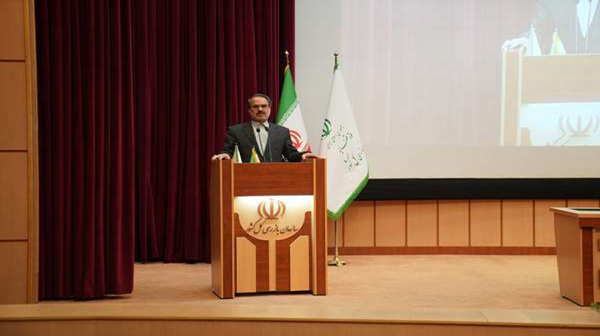
At the ceremony marking the 44th anniversary of the establishment of the General Inspection Organization of Iran (GIO), the President of the Organization emphasized:
The GIO is advancing toward smart oversight, public-centered governance, and firm action against corruption / The Organization never obstructs the lawful activities of managers and institutions
At the ceremony commemorating the 44th anniversary of the establishment of the General Inspection Organization of Iran, Justice. Khodaeiyan, the President of the Organization, elaborated on its new approaches and programs.
According to the GIO’s Public Relations Office, Justice. Khodaeiyan, addressing the ceremony attended by the First Deputy Chief of the Judiciary, congratulated all GIO staff on the anniversary and stated: “The anniversary of the Organization provides an opportunity to review past performance and assess the extent to which legal objectives have been achieved. It is also the right time to envision the future and plan more precisely to realize the goals set by law.”
Emphasizing the legal and governmental position of this supervisory body, he said: “The General Inspection Organization is a constitutional institution established under Article 174 of the Constitution, mandated to oversee the proper implementation of laws and the sound conduct of affairs.”
Referring to the rationale behind the establishment of this supervisory institution, he added: “The framers of the Constitution established the GIO to enhance administrative integrity, ensure accountability among officials, and guarantee the fight against corruption.”
Justice. Khodaeiyan underlined that the GIO’s main duty is to uphold justice — a justice that encompasses judicial, social, economic, political, and cultural dimensions — and achieving it depends on ensuring proper implementation of the law.
Citing the views of the late Imam Khomeini (RA), he said: “From the viewpoint of the Founder of the Islamic Revolution, wherever the law is implemented, justice prevails; wherever it is neglected, oppression arises. The Supreme Leader also considers adherence to law the main criterion of justice. Accordingly, the GIO regards the promotion of a culture of legality and effective oversight of law enforcement as its core mission.”
The President of the GIO then pointed to the organization’s new strategies in its current phase of transformation and excellence, noting: “In this period, we have placed several key principles on our agenda. We believe the GIO must be technology-driven, knowledge-based, and people-centered.”
Highlighting the need to employ technology in oversight processes, he stated: “In our transformation path, we have shifted toward smart supervision. The rapid growth of information technology compels all institutions to move toward systemic, electronic, and intelligent processes. Traditional methods can no longer ensure effective oversight.”
He continued: “Accordingly, the GIO’s technological infrastructure has been upgraded, and modern smart supervisory systems have been designed and implemented to align inspections with digital transformation and intelligent governance.”
Justice. Khodaeiyan identified “public-centered oversight” as another fundamental approach, saying:
“The best inspectors are the people themselves. The public’s capacity for oversight in the Islamic Republic is vast, and whenever this capacity has been utilized, we have achieved success.”
He added: “In this regard, the protection of whistleblowers has been seriously pursued so that both the law and its executive bylaw are finalized. The regulation for granting rewards to whistleblowers has been approved by the Honorable Head of the Judiciary, and the whistleblowing portal is operational — enabling citizens to submit reports and track their status.”
Referring to the knowledge-based orientation of the Organization, he said: “Given the breadth of the GIO’s responsibilities, success in fulfilling its critical mission requires using the latest scientific and research findings.”
He added: “Accordingly, the Center for Training and Research on Administrative Health and Anti-Corruption has been strengthened, and scientific cooperation with universities and research institutes has expanded.”
The GIO President continued: “The Organization has obtained a publishing license for specialized works, and over 80 professional titles have been published in the fields of inspection, supervision, and corruption prevention. A scientific journal has also been launched, with two issues published so far.”
He went on: “Furthermore, the quarterly ‘Experiences of Nations’ has been launched to provide comparative studies in anti-corruption, and 14 scientific cooperation agreements have been signed with universities and research bodies, including the University of Tehran, Iran University of Science and Technology, Allameh Tabataba’i University, Imam Sadiq University, the National Defense University, the Majlis Research Center, and the Guardian Council.”
Highlighting another major focus area, he said: “Transparency and conflict-of-interest management are key pillars of the GIO’s Transformation Charter and are being pursued seriously. Effective anti-corruption efforts can only be realized through transparency, which becomes sustainable when it turns into a public demand.”
He added: “Accordingly, the First National Conference on Transparency was held in 2022 with the participation of the heads of all three branches of government. The Permanent Secretariat for Transparency was established in the GIO, and this December, the Festival on Transparency and Conflict-of-Interest Elimination will be held, during which leading institutions in this field will be recognized.”
Justice. Khodaeiyan stressed: “In this period, our focus has not been limited to confronting corrupt actors; rather, preventing corruption has become a top priority. Corruption-prone areas have been identified, and countermeasures have been communicated to relevant bodies. Many such vulnerabilities across different institutions have already been corrected or eliminated.”
He added: “In line with the directives of the Supreme Leader and the orders of the Head of the Judiciary, special task forces have been formed to support production, the Law on Youth Population Growth, and knowledge-based companies, while closely supervising the implementation of the country’s general policies.”
He went on to say: “Another of our approaches is expanding the on-site presence of inspectors among the people and executive agencies. GIO inspectors, both overtly and covertly, are present in institutions and monitor service delivery and legal compliance through direct engagement with citizens.”
Emphasizing the principles of independence, impartiality, and ethics, he said: “All colleagues must place moral conduct, impartial judgment, and adherence to law at the core of their work. Every action of the GIO must be grounded in law and free from political pressure or influence. Any deviation from impartiality undermines public trust. The Organization must resist any form of corruption without discrimination and solely within the framework of the law.”
Discussing oversight challenges, he noted: “Unfortunately, the culture of accepting oversight has not yet become institutionalized among some managers. Contrary to certain claims that the GIO stifles managerial initiative, this supervisory body only intervenes when violations or illegal actions are detected and never obstructs lawful managerial activities.”
He concluded: “If any illegality or corruption occurs anywhere in the country, it is our duty to intervene immediately. As the nation’s highest supervisory authority, we are responsible for preventing injustice and corruption through the enforcement of law.”
Finally, referring to the GIO’s firm stance against corruption, Justice. Khodaeiyan said: “Despite repeated warnings and notices, some individuals continue to engage in corrupt practices, for which there is absolutely no leniency.”
In conclusion, the President of the General Inspection Organization of Iran stressed: “The GIO has no red lines or exceptions in the fight against corruption. Wherever violations or corruption are detected, they are addressed decisively and, in accordance with the law, referred to judicial authorities for action.”
ACRC MEET PARENTS CALLING FOR IMPROVEMENTS TO SPECIAL-EDUCATION SCHOOL FACILITIES.

– On September 24, 2025, the Anti-Corruption and Civil Rights Commission (ACRC) held a roundtable at Korea Yukyoung School in Songpa-gu with parents and relevant agencies.
– The participants discussed comprehensive solutions, including securing classrooms for the postsecondary vocational program.
To address the collective grievances raised by parents seeking improvements to the educational environment at a special-education school for students with developmental disabilities, the Anti-Corruption and Civil Rights Commission (ACRC, Chairperson Ryu Chul Whan) visited Korea Yukyoung School in Songpa-gu, Seoul, on September 24, 2025, and heard the views of parents and relevant agencies.
Korea Yukyoung School*, established in 1993 to support the independence and social adaptation of students with developmental disabilities, is the only special-education school in Songpa-gu and currently enrolls 189 students with developmental disabilities in 29 classes.
* Korea Yukyoung School: Kindergarten (1 class), Elementary (12 classes), Middle (6 classes), High (6 classes), Post secondary vocational program (4 classes)
Although the school added two classes to its postsecondary vocational program in 2011, delays in budget allocation have resulted in instruction taking place in classrooms with a floor area smaller than the minimum standard. In addition, facilities such as the vocational-training room, special-purpose classrooms, and the nurse’s office have fallen below the minimum standard floor area, leaving students with developmental disabilities studying in substandard conditions.
Since 2012, parents at Korea Yukyoung School have filed numerous civil petitions with the competent offices of education, requesting improvements to the educational environment, but these were not accepted. Accordingly, in June 2025, 3,260 parents and others from Korea Yukyoung School submitted a collective civil complaint to the ACRC requesting improvements to the educational environment for students with developmental disabilities.
After personally visiting the school and inspecting the facilities, Chairperson Ryu Chul-whan listened to the grievances of students with developmental disabilities and their parents and explored reasonable solutions at a meeting attended by officials from the Seoul Metropolitan Office of Education, the Songpa District Council, the Seoul Gangdong–Songpa Office of Education, and Korea Yukyoung School.
Chairperson Ryu Chul-whan stated, “Through the September 24 roundtable, we will work with the relevant agencies to devise measures at an early date to improve the educational environment so that students with developmental disabilities can learn without discrimination.” He added, “Going forward, the ACRC will continue to make sustained efforts to resolve the grievances of vulnerable groups in need of compassionate protection.”
OFFICE OF THE OMBUDSMAN ANNOUNCES RESULTS OF DIRECT INVESTIGATION OPERATION INTO RESPITE SERVICES FOR SUPPORTING CARERS OF ELDERLY PERSONS AND PERSONS WITH DISABILITIES.
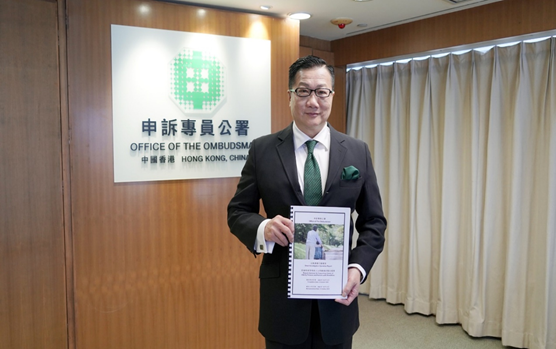
The Ombudsman, Mr. Jack Chan, today (9 October ) announced the completion of a direct investigation operation into the respite services for supporting carers of elderly persons and persons with disabilities, with 25 major recommendations for improvement made to the Social Welfare Department (“SWD”).
Please click here to watch the live replay of our press conference.
In recent years, tragic incidents have happened from time to time when carers succumb to unbearable pressures. At least 15 injury or fatal incidents relating to carers have occurred in the past three years in Hong Kong. Cases involving “the elderly caring for the elderly”, “the elderly caring for the disabled”, and “the disabled caring for the disabled” are increasingly prevalent.
Mr. Chan said, “Carers are the most important, or even the sole pillar, for many elderly persons and persons with disabilities. They have made invaluable contributions to their families and society, and should be recognised and supported by society. Each and every one of these tragedies is extremely shocking and heartbreaking. Respite services form an indispensable part of the support measures for these great carers, allowing them to take a break.
“The Office of the Ombudsman (“Office”) acknowledges and commends the current-term Government’s efforts in strengthening the support for carers and the results, including innovative and effective measures such as introducing the 24-hour Designated Hotline for Carer Support (“Hotline”), setting up a one-stop Information Gateway for Carers, engaging the District Services and Community Care Teams to implement the Scheme on Supporting Elderly and Carers, and launching the Carer Support Data Platform for identification of and proactive follow up on high-risk carers. Regarding respite services, the current-term Government’s efforts and achievements in expanding the service network are also praiseworthy.
“Respite services offered by service providers are directly or indirectly supported by public funds through different forms of government funding. Therefore, it is entirely legitimate for members of the public to expect these publicly funded providers to offer reasonable services to carers.
“Our direct investigation reveals two major problems. First, the service utilisation rates vary significantly across districts, and service distribution is uneven. Second, some service providers have a poor record of providing services, are suspected of being unduly selective in admitting applicants, and even create unnecessary obstacles for service applicants. They have certainly failed to live up to society’s expectations of fulfilling their mission of helping the needy.”
Investigation Officers of the Office scrutinised information and conducted multiple covert telephone operations, calling the Hotline and 46 day care units and residential care homes disguised as carers to enquire about respite service vacancies, application procedures, ancillary facilities and fee structures. Eight site inspections were also conducted to understand the actual enquiry and application handling by different types of service providers and the Hotline.
The Office found that the overall utilisation rates of respite services remained persistently low. In the past few years, the average utilisation rates ranged from only 50 per cent to 60 per cent for the elderly, and were even lower for persons with disabilities at only 10 per cent to 20 per cent. The utilisation rates of certain providers and districts are below 10 per cent, or are even at 0 per cent. Meanwhile, on the whole, utilisation rates varied significantly across the 18 districts. This reflects that the existing resources have not been fully or evenly utilised. Take day respite services as an example: in the past few years the average utilisation rates across the 18 districts ranged from 20 per cent to 138 per cent for the elderly, and from 4 per cent to 63 per cent for persons with disabilities. For districts with particularly strong service demands, carers will face huge difficulties in applying for the service, showing that the support for carers is still inadequate.
The consolidated findings from covert telephone operations and site inspections revealed that many service providers will assess the physical and mental condition of applicants (i.e. care recipients) before deciding on whether to admit them, by requiring them to attend an in-person interview at the premises before submitting a formal application. For carers who need the services urgently, the requirement of a prior interview could frustrate and cause increased stress to them. Moreover, some service providers require applicants to undergo additional medical examinations at their own expense beyond the basic scope specified by SWD. Such examinations could include a chest X-ray, blood and urine tests, physiotherapy and even mental health assessments, etc, which would create unnecessary obstacles and financial burdens for carers. SWD currently permits service providers to impose extra requirements for medical examinations without clear regulations, and it is difficult to assess whether these extra items are necessary.
The Office also encountered astonishing responses of some service providers during the covert telephone operations. Some refused to disclose vacancy availabilities to carers or even unreasonably rejected their applications for different reasons. Some declined applicants who wished to use respite services for only a few days, or only accepted application for use of respite services for months. Some declined applications on an urgent basis, claiming insufficient staffing to offer respite services, and requiring applicants to visit the premises in person and confirm its suitability before disclosing vacancies. The Office also encountered extremely unhelpful staff who failed to respond to enquiries and hastily ended the call after instructing the caller to consult social workers instead. Meanwhile, many service providers immediately replied that there were no vacancies when responding to telephone enquiries, contrary to the information displayed in the SWD’s Vacancy Enquiry System for Respite Services and Emergency Placement (Enquiry System). During the Office’s investigation, Hotline social workers shared that they encountered similar difficulties when using the Enquiry System for respite service matching.
Furthermore, elderly persons and persons with disabilities are mostly frail and inconvenient to travel. They might even be wheelchair bound. When elderly carers accompany their family to respite service units, they might encounter immense difficulties in walking up or down the staircases or travelling by public transportation. They might give up respite service if they cannot afford taxi fare. The investigation revealed that very few service providers operate transfer services for users. It is noteworthy that the Hotline provides reimbursement of taxi fares on an accountable basis for callers in need, and even outreach services for escorting users to the respite premises. If promoted and expanded, such measures are beneficial to more carers, the elderly and persons with disabilities.
Mr Chan said, “Consolidating our findings, we cannot rule out that the low utilisation rates are partly attributable to the lukewarm attitude of some service providers, their improper handling of service enquiries and applications, suspected undue selection of applicants and even creation of unnecessary obstacles for service applicants, as well as not attaching importance to updating vacancy information in the Enquiry System.
“The mission of social welfare services is to alleviate poverty, support the disadvantaged and provide care for needy persons. The practitioners shoulder heavy responsibilities and society places high expectations on them. However, our investigation revealed that certain service providers did not fulfil their mission, as they disregarded the welfare of needy carers, elderly and persons with disabilities. The performance of these service providers is most disappointing. Such black sheep certainly failed to live up to society’s expectations and jeopardised the professionalism of the social welfare sector and the trust of our citizens.
“We must emphasise that all these service providers are subsidised by SWD and are using public funds to provide services; this is not pro bono volunteer work. They have a duty to offer quality services to people in need, not to mention vulnerable groups in serious need of help. SWD, as the regulatory authority, also bears an undeniable responsibility. Despite a strong demand for respite services, the utilisation rates of certain providers and districts are below 10 per cent, or are even at 0 per cent. SWD and the service providers concerned should deeply reflect on the actual reason for the very low utilisation rates. In fact, some service providers with utilisation rates at 0 per cent had improved this immediately and even significantly raised their utilisation rates following supervision by SWD, demonstrating that proactive efforts could yield tangible results. The Office considers it incumbent on SWD to explore feasible measures to increase service providers’ proactiveness, and to strengthen service monitoring vigorously.
“Although the performance of some service providers was unsatisfactory, there are also service providers which are committed to serving people in need. The Office acknowledges and appreciates their contribution. I appeal to all in the social welfare sector to put forth their best efforts for the well-being of carers, improve respite services to share their burdens and relieve their pressure in a timely manner, prevent tragedies and benefit society.”
Overall, the Office has made 25 major recommendations for improvement to SWD regarding the operational arrangements for respite services, including application procedures, ancillary facilities and information provided for carers, service planning, utilisation and monitoring, and publicity and promotion. The Office is pleased to note that SWD has accepted all the recommendations.
The Office’s major recommendations for improvement to SWD include:
- request service providers to review the necessity for prior interviews with applicants, and encourage streamlining of application procedures as far as possible, such as conducting telephone or video assessments;
- thoroughly review the current medical examination requirements imposed by all service providers; any providers requiring additional examination items beyond the basic scope must justify the necessity and obtain prior approval from SWD;
- explore jointly with service providers the establishment of a pre-registration mechanism under which carers can complete registration procedures in advance, and service providers can gain an early understanding of users’ conditions and level of care. Carers in need of services anytime can simply sign a declaration confirming that the situation has not changed, allowing them to obtain services at the shortest possible notice for emergency relief;
- step up reminding service providers of their responsibility of the timely updating of vacancy information and other details in the Enquiry System, and enhance monitoring to ensure compliance;
- encourage service providers currently operating a transfer service with their own vehicles to extend it beyond long-term care residents to also support respite service users as far as possible. For providers without their own transfer service, encourage them to proactively seek assistance from the Hotline for its social workers to offer transport assistance and an accompaniment service for users in need;
- continue making regular spot checks by means of telephone investigations disguised as carers, and expand the scope to cover all types of service providers; make recommendations to any service providers with inadequacies found and implement monitoring measures;
- based on the demand and utilisation patterns of different types of respite services, explore feasible measures to increase service providers’ proactiveness to offer respite services, thereby raising utilisation rates;
- comprehensively review the distribution of respite service places to address the supply imbalance across districts; and
- step up encouraging service providers to organise more experiential activities to help carers better understand respite services, boost their confidence, and allow elderly persons and persons with disabilities to adapt to the respite environment in advance.
WAFAQI MOHTASIB (FEDERAL OMBUDSMAN)’S INTERVENTION LEADS TO EFFECTIVE CONTROL OF AIR POLLUTION.
- Mohtasib’s intervention leads to effective control of air pollution.
- Environmental Protection Agency (EPA) introduces SOPs.
Islamabad: 17 October, 2025 – Following the Wafaqi Mohtasib (Federal Ombudsman)’s intervention and notice of long queues of vehicles in Islamabad’s Red Zone for emission testing and consequent inconvenience to citizens, the Environmental Protection Agency (EPA), operating under the Ministry of Climate Change and Environmental Coordination has submitted a comprehensive plan of action for vehicular emission control in the federal capital area. The Organization has also addressed the issue of congestion due to rush of vehicles, in coordination with the ICT administration.
It may be recalled that some weeks earlier, a number of concerned citizens had approached the office of Wafaqi Mohtasib, urging him to take notice of the situation arising out of the long queues of vehicles in an area close to the Parliament and other important buildings of the federal capital. He, subsequently summoned senior officials of the EPA & ICT and instructed them to resolve the issue for easing the congestion. He also advised that the objective be achieved in a more systemic and organized manner, without bothering the ordinary citizens.
The action plan submitted in pursuance of the Mohtasib’s directions, envisages a public awareness campaign, third party verification, emission compliance certification, heavy transport checking etc. in the short term to address the growing challenge of controlling vehicular emission in Islamabad. It will specifically target the diesel engine driven old public transport, whereas, in the long term, the plan suggests an electric vehicle promotion programme, including an EV charging infrastructure network, a mandatory 10% EV quota for government fleets and alike.
The proposed strategies, if implemented in letter and spirit, will result in dealing with the pressing issue of pollution in a comprehensive manner. This will also involve greater coordination between EPA and ICT in avoiding hardship to citizens and improving quality of air index.
PUBLIC DEFENDER VISITS SMALL GROUP HOMES AND SHELTER FOR MOTHERS AND CHILDREN IN SHIDA KARTLI REGION.
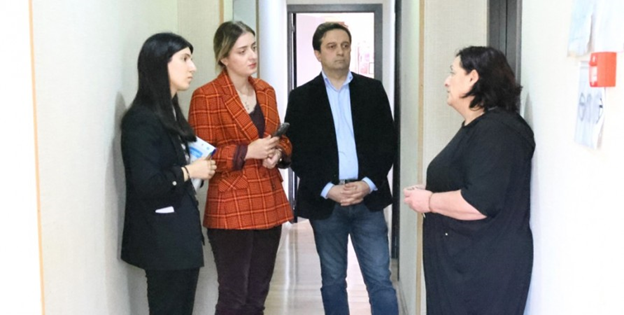
On September 18, 2025, the Public Defender of Georgia, Levan Ioseliani, visited small group homes and a shelter for mothers and children in the Shida Kartli region, met with children in state care and shelter beneficiaries, and received information about their living conditions.
During a conversation with representatives of the institutions, as well as social workers and a psychologist from the guardianship and care body, the Public Defender inquired about the situation in terms of protecting the rights of the child. Special attention was paid to the importance of taking into account the best interests of children, their relationship with their biological families, informal education, and preparation for independent living.
The Public Defender of Georgia continues to assess the rights of children in state care and shelter beneficiaries and emphasizes that, given the crucial role of their support services and each professional working with them, it is necessary to strengthen existing services, including preventive services, and introduce additional services, which is crucial for the protection and realization of their rights.
EXPERIENCE AND DIALOGUE: INTERNATIONAL SEMINAR ORGANIZED FOR THE STAFF OF THE OMBUDSMAN’S OFFICE.
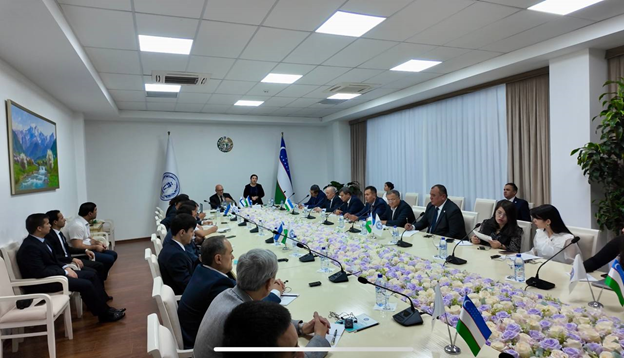
On 17–18 September 2025, an international seminar-training was organized in Tashkent for the staff of the Office of the Commissioner of the Oliy Majlis for Human Rights (Ombudsman), in cooperation with the Ministry for Foreign Affairs of Finland and the Rule of Law Centre at the University of Helsinki.
The seminar focused on combating human trafficking, studying cases of violence against women, and fighting corruption. International expert — Deputy Chancellor of Justice of Finland Mikko Pumalainen — shared information on Finland’s legal practices and effective mechanisms, drawing on his many years of professional experience.
The seminar-training was held in the format of open dialogue and Q&A sessions. Participants discussed ways to further improve measures in both countries to counter human trafficking, prevent gender-based violence, and strengthen anti-corruption efforts.
The Ombudsman’s institution pays special attention to regularly enhancing the qualifications of its staff. By engaging international experts in training programs, employees enrich their knowledge and skills, mastering new methods and approaches for effective work in the field of human rights.
This event marked the fourth seminar organized in cooperation with Finland. Previous discussions addressed mechanisms for handling citizens’ appeals, the powers of the Chancellor of Justice and the Parliamentary Ombudsman, procedures for working with the public, as well as the risks of artificial intelligence and its regulation. In December 2024, Ombudsman staff also became acquainted with the activities of the Office of the Parliamentary Ombudsman of Finland.
The organization of such seminars and trainings within the Ombudsman’s institution contributes to studying best practices in the protection of human rights and strengthening international cooperation.
For reference: Finland is considered one of the world’s leading countries in terms of the rule of law and the protection of human rights. According to the Transparency International ranking, Finland consistently occupies top positions in anti-corruption efforts. In 2024, it ranked 2nd among 180 countries in the Corruption Perceptions Index (CPI) with 88 points.
PUBLIC DEFENDER MEETS WITH EMPLOYEES OF MARNEULI DAY CARE CENTER FOR PERSONS WITH DISABILITIES AND BENEFICIARIES’ FAMILY MEMBERS.
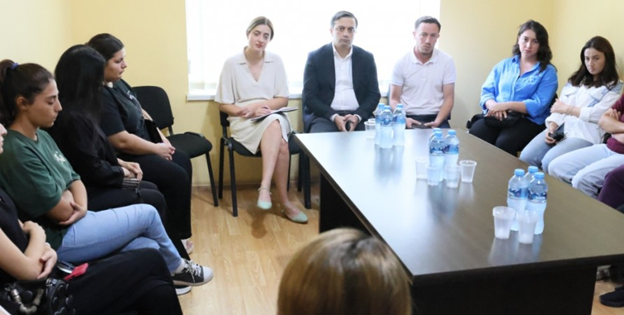
On September 4, 2025, the Public Defender of Georgia, Levan Ioseliani, arrived in Marneuli and met with employees of the Marneuli Social Services Center “Child, Family, Society” and beneficiaries’ family members at the Public Defender’s Kvemo Kartli Office.
The meeting discussed the problems at the day care center, including the challenges related to providing services in villages located far from the regional center, and the scarcity of financial resources, which, as a result, prevents the attraction of qualified personnel. Representatives of the beneficiaries expressed their desire to increase the working hours of the day care center.
During the conversation, special attention was paid to the existing stereotypical attitude and stigma towards persons with disabilities, the need to support them and raise awareness among the public, including family members and relatives of persons with disabilities.
The Public Defender of Georgia constantly monitors services for persons with disabilities, identifies problems and prepares recommendations for the relevant state agencies to solve the problems.
OMBUDSMAN INSTITUTION OF TÜRKIYE HOSTED SOUTH KOREAN DELEGATION IN ISTANBUL.
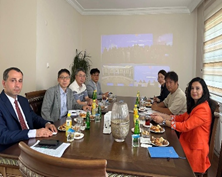
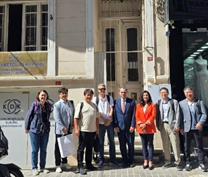
The Ombudsman Institution of Türkiye hosted South Korean delegation at its Istanbul Office on 3 September 2025. The delegation included Mr. Nam-Doo Kim, Director General of the Anti-Corruption and Civil Rights Commission (Ombudsman), as well as Directors General from the National Tax Service, the Ministry of Education, the Ministry of the Interior and Safety, and the Land and Housing Corporation. The meeting featured a presentation on the mandate, activities, and sample decisions of the Institution and offered a valuable opportunity to enhance bilateral cooperation.
PDHJ OECUSSE ENGAGES DIT STUDENTS ON HUMAN RIGHTS AND GOOD GOVERNANCE
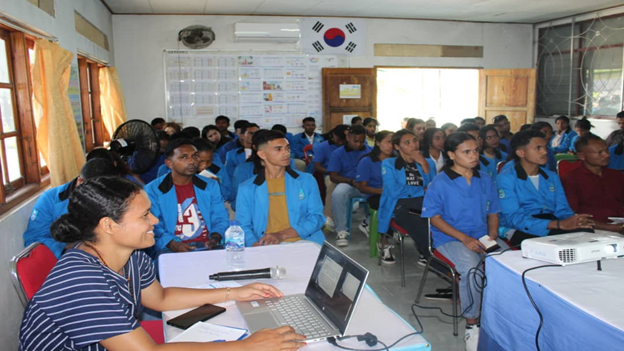
RAEOA, 4 September 2025 – The PDHJ Regional Delegation Office in Oecusse conducted a socialization activity with students and lecturers of the Dili Institute of Technology (DIT) Regional Oecusse campus. The session focused on raising awareness about the institution’s role in protecting human rights and promoting good governance. A total of 75 students participated, including 44 men and 31 women.
The activity was led by the Director of PDHJ Regional Delegation RAEOA, Bartolomeu Gonçalves, with the involvement of the Regional Police Commander of RAEOA, Assistant Superintendent Ângelo Quelo, and the President of Sub-KRAM Oecusse, Jeferino da Cruz Salu. Participants expressed satisfaction in joining the initiative, highlighting the importance of state institutions engaging with students to help prevent violations in communities and within public services.
Representing the Rector of DIT RAEOA, Vicente da Conceição expressed gratitude to PDHJ for selecting the university as a partner in disseminating information on human rights protection and good governance in Timor-Leste. He underlined the commitment to continue collaboration with PDHJ, noting that in past years similar sessions had already been carried out, and DIT will remain engaged in requesting PDHJ’s support to strengthen awareness among students.
Students from both DIT RAEOA and DIT Dili actively participated with enthusiasm, raising questions and sharing their perspectives on real challenges faced in Timor-Leste, particularly regarding the quality of public services that communities often experience as inefficient. They recommended that oversight institutions like PDHJ continue monitoring the delivery of public services in Oecusse to ensure they are fair, timely, and effective for all citizens.
DELEGATION LED BY THE OMBUDSMAN FAMILIARIZED WITH THE ACTIVITIES OF THE DANISH NATIONAL PREVENTIVE MECHANISM.

On 23 September 2025, members of the delegation led by the Commissioner of the Oliy Majlis of the Republic of Uzbekistan for Human Rights (Ombudsman), as part of their official visit, familiarized themselves with the activities of the Danish National Preventive Mechanism (NPM). In Denmark, monitoring within the NPM is entrusted to the Parliamentary Ombudsman.
In total, 13 institutions are subject to monitoring under the Danish NPM. At the outset, the Danish Ombudsman delivered a presentation to the delegation members on the system of independent and systematic oversight of human rights in closed institutions.
On the same day, members of the Uzbek delegation also visited the Western Prison of Copenhagen, built in 1895 and part of the city’s penitentiary system. The institution provided information on detention conditions, the education and medical services available, as well as measures aimed at rehabilitation and reintegration.
The Western Prison of Copenhagen is a large facility where persons under investigation are held. According to the information provided, the prison is designed for around 600 places, yet currently accommodates more inmates than its official capacity. Although the cells are designed for single occupancy, due to overcrowding, some cells house two detainees.
It was highlighted that detainees in the facility also have the right to work and are granted at least one hour of outdoor exercise daily.
In addition, prisoners are entitled to short-term visits of 1.5 hours once every two weeks.
Furthermore, in accordance with the Istanbul Rules, prisoners undergo a medical examination upon admission to the facility.